
Why Searches Got Longer After AI Briefing
From short keywords to questions with context, long tail now means something different
After AI Briefing, people search with longer questions. How long tail changes, how to plan content and question clusters, and what AI Mode data means for Korea.
Since Naver AI Briefing arrived, what is changing is not search volume but the shape of what people type into the search box. People used to enter a short keyword, open several documents, and compare them on their own. Now more people ask one sentence with all their conditions and context, then follow up from the answer AI Briefing puts together. This post covers why this shift is happening and how to rethink your content strategy.
What people type into the search box is getting longer
"AI is replacing search" does not really explain the change in search behavior. More precisely, the first input of a search is changing. People have started using the search box less like a field for words and more like a field for describing a problem.
Searches used to look like this.
Gangnam dermatologistB2B SEOERP comparison
With AI Briefing attached to search, questions get a bit longer.
Recommend a dermatologist in Gangnam with evening hours who is good at acne scar consultationsWhat content should a B2B SaaS company create first to show up in AI searchWhen a small manufacturing company chooses an ERP, should it look at accounting or inventory first
Short keywords still matter. But the problem a user is actually trying to solve does not fit inside a short keyword. AI Briefing nudges users to spell out that missing context at greater length.
That changes what a long-tail query means, too. Long tail used to be closer to a bundle of long, low-volume keywords. In the AI search era, long tail is closer to a question that combines conditions, situation, intent, and constraints.
What to watch out for when comparing with Google AI Mode
Google is officially describing a similar direction. In its official materials on AI Mode, Google explained that the average AI Mode query is much longer than a traditional search query, and said that people use more complex and planning-type questions in AI Mode [2].
But you should not carry these figures straight over to the Korean market. Google AI Mode figures are data observed inside Google's own service. Naver AI Briefing differs in its search environment, user habits, content ecosystem, and local information structure. There is not yet enough basis to say the same multiple will show up in the Korean search market.
What you can take from the comparison is a direction, not a number.
- In AI-assisted search, people ask longer questions
- Contextual questions and follow-up questions matter more than one-off keywords
- The results page goes beyond a list of links to become an exploration space that mixes answers, sources, and suggested questions
- Content gets surfaced more by question intent and answer structure than by word matching
That much is safe. Concluding that "queries got several times longer on Google, so Korea will be the same" is not.
Why are long questions increasing?
People did not suddenly start writing long sentences. The search interface changed, and writing longer started to pay off.
In traditional search, the longer you wrote a question, the vaguer the results often got. So users broke their questions apart themselves to help the search engine understand. They searched brand names, place names, feature names, and problem names separately.
AI Briefing works the other way. The more conditions a user adds, the more convincingly the answer gets organized. Searching CRM recommendation is too broad, but writing Recommend a CRM for an early-stage B2B SaaS team to manage its sales pipeline, under 100,000 KRW a month makes it easier for the AI to set comparison criteria.
At that point, search moves from finding information to supporting a decision.
| Search before | Search after AI Briefing |
|---|---|
| Focused on finding information | Focused on supporting decisions |
| Word matching | Understanding question intent and situation |
| Comparing a list of results | AI summary + follow-up questions |
How should keyword strategy change?
Traditional SEO strategy usually starts from a head keyword. You find a high-volume word, check how competitive it is, and work that word into your title and body. That is still necessary, but in an AI Briefing environment it is not enough on its own. Now you need to expand keywords into groups of questions.
Say you are covering the keyword AI search optimization. The traditional approach often looked like this.
- What is AI search optimization
- How to do AI search optimization
- AI search optimization checklist
In the AI search era, you need to add the context of real questions.
- Why doesn't our brand show up in ChatGPT answers
- What do we need to fix for our content to be cited in Naver AI Briefing
- Why do we need GEO separately if we already do SEO
- What should we check when competitors appear in AI answers and we don't
The first group is explanatory content; the second is problem-solving content. The more AI Briefing spreads, the closer brand content needs to move toward the second.
A practical example: regrouping search queries into question clusters
Suppose a hospital is creating content about knee pain. A traditional keyword list looks roughly like this.
- Knee pain causes
- Knee pain hospital
- Knee arthritis symptoms
In the AI search era, you need to regroup the same topic into a question cluster.
The front of my knee hurts when I go down stairs, could it be arthritisShould I see a doctor if pain on the outside of my knee keeps going after runningWhat treatments can someone in their 50s with knee pain try before surgery
Each of these questions may have low search volume on its own. But the user's intent is much sharper. These are the kinds of questions AI Briefing can easily summarize, compare, and link to the next question.
The same goes for B2B SaaS. If you only look at the head keyword project management tool, competition is fierce. But real buyers ask specific things like What can a startup switch to when Jira is too heavy. Content that answers questions like this is more likely to make it into AI answers than a simple keyword article.
Track question types separately
It is important not to put short searches and long searches in the same table. The query ERP and the question When a small manufacturing company adopts an ERP, should it build inventory management or accounting first may belong to the same market, but you should not treat them as the same query.
An AI search report should separate at least the following units.
| Query type | Description | Example |
|---|---|---|
| Short query | Centered on a brand name, category name, or single keyword | CRM, ERP |
| Long query | A long query that includes conditions and situation | affordable CRM for an early-stage startup |
| Question query | Phrased as a what, why, how, or when question | when should we adopt a CRM |
| Request query | Asks for a recommendation, comparison, summary, or checklist | recommend a CRM, summarize a CRM comparison |
| Follow-up query | An additional question that comes after an AI answer | (after the first question) which of those support Korean? |
| Comparison query | A query comparing A and B | Salesforce vs. Korean CRMs |
| Local query | A query that includes location, time, or ability to visit | CRM consulting firms near Gangnam |
Splitting queries this way is how you actually see the change in search behavior after AI Briefing. For short keywords, rank tells the story; for long queries, your position inside the answer does; for follow-up questions, how you stack up against competitors does.
A checklist content teams can use right away
To respond to the change in search behavior after AI Briefing, reorganizing your existing content around questions comes before writing lots of new articles.
- For each head keyword, write 20 long questions real users might ask
- Sort each question into information seeking, comparison, purchase evaluation, how-to, or risk checking
- Check whether your existing content answers that question directly within one paragraph
- If the answer is scattered, restructure it into an FAQ, comparison table, checklist, or case paragraph
- Keep the head keyword in the article title, but rewrite body subheadings to sound closer to real questions
- Write definitions, criteria, steps, exceptions, and caveats clearly so they can be cited in AI answers [3]
The point here is not "forcing long questions into the title." It is reflecting users' questions naturally in the structure of your content.
The search competition of the future starts before the answer
As AI Briefing becomes common, users will already see summaries, comparisons, and suggested questions before they click a search result. Brands then compete in the context before the answer, not after the click. What question does the user ask, which sources does the AI draw on, by what criteria is the answer organized, and where do the follow-up questions lead? These four things will matter more in search strategy from here on.
Short keywords are not going away. But short keywords alone have a hard time capturing what users are actually worried about. The search box is still a place to enter keywords, and it is also becoming a place where users describe their situation.
How to share this shift within your team
It is hard for a content team to handle this shift alone. The long questions customers actually ask are often heard first by sales, customer support, and CS channels rather than the content team. A practical response is to build a routine of regularly collecting real sentences from consultation logs, inquiry boards, and review comments and feeding them into your question clusters.
For example, once a month, pull 20 recurring questions from recent customer inquiries, sort them into the five categories of information seeking, comparison, purchase evaluation, how-to, and risk checking, and make a table of whether your existing content answers each one. If you find missing questions, prioritize them in your next content plan; if you already cover them, check again whether the answer is in a paragraph structure AI Briefing can easily pick up. As this routine builds up, your brand content gets closer and closer to the language real users use.
If you track short queries, long queries, and follow-up question patterns separately with TRAIL Search, you can first see which types of questions your brand is missing from.
For related reading, see SEO isn't over in the Naver AI Briefing era: how Korean GEO differs from Google GEO, What is the AI Briefing citation count? Whether it's a Naver ranking factor and how to put it in reports, and The next KPI the Naver AI tab revealed: sourceability, actionability, and the path to booking and purchase after the answer.
Frequently asked questions
Does a rise in long-tail queries mean search volume is falling?
No, it does not mean search volume has dropped. The key point is not volume but that the shape of what people type into the search box is changing. People are moving from splitting a need into several short keyword searches to asking one sentence that carries the conditions and context.
Can we apply Google AI Mode query length data directly to the Korean market?
Be careful. Google AI Mode figures are observed inside Google's own service, so there is little basis for saying the same multiple applies to Naver, where the search environment, user habits, and content ecosystem are different. It is safer to borrow only the direction, longer questions and more follow-up exploration, not the numbers.
Do we still need short head keywords?
Yes. A head keyword anchors the topic. But on top of it you need to design groups of longer questions that carry conditions, situations, and intent, so your content gets closer to the questions real users ask.
References
Summary
- Since AI Briefing launched, there is a clear shift in what people type into the search box: from short keywords to longer questions that carry conditions and context.
- In the AI search era, long tail is no longer a bundle of long, low-volume keywords; it is closer to questions that combine conditions, situation, intent, and constraints.
- Google has also said officially that the average AI Mode query is much longer than a traditional search query, but carrying that multiple straight over to the Korean market is not safe.
- Content teams should keep their head keywords but build 20 long questions real users might ask for each one, sort them into information seeking, comparison, purchase evaluation, how-to, and risk checking, and reflect them in their content structure.
Check this topic against your own brand
TRAIL Search measures how ChatGPT and Perplexity answer your customers' questions and finds and fixes where the brand is missing, turning this post into a diagnosis. Start with 10 questions, no card required.
More posts

How ChatGPT search works: the language changed in 4 days
ChatGPT moved its search calls from JSON to a pipe format: five call types, freshness windows, and why AI visibility tracking must keep running.
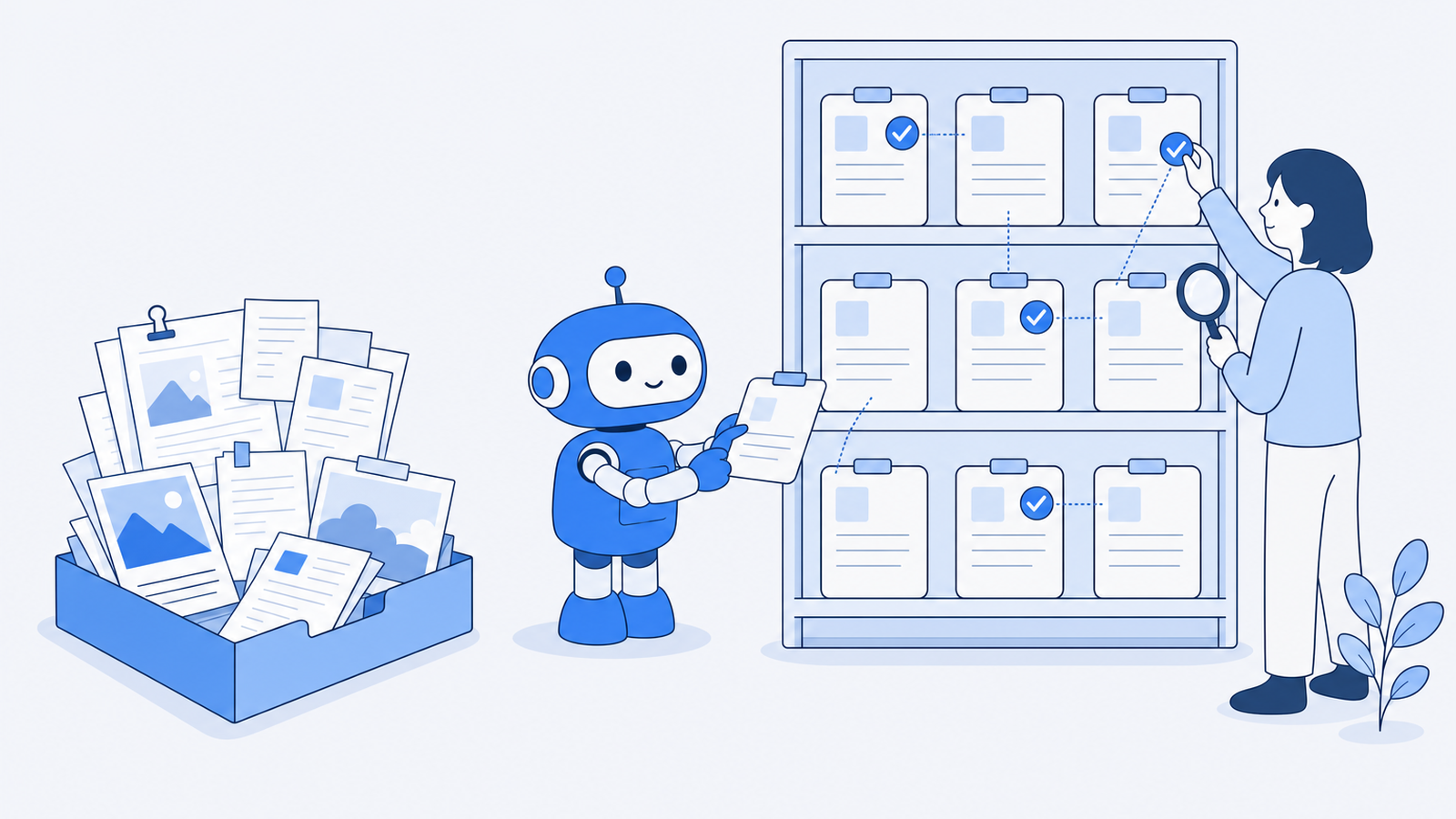
The LLM wiki and Open Knowledge Format for agent knowledge
Karpathy's LLM wiki and Google's Open Knowledge Format, read from the originals: a format for agent knowledge bases, the RAG difference, and v0.2 trust fields.
What is different about Gemini 4 Argon? Verification
What is different about Gemini 4 Argon compared with earlier models? We check the 1M-token output limit and use cases plus the criteria for verifying AI output.
Keep reading on this topic
- Why Reddit search grew again: AI cites community signalsAI answers favor real community reviews, comparisons, and complaints over official feature lists. How brands can use community signals, by industry.
- GPTBot vs OAI-SearchBot: Is AI Crawling a Search Signal?AI bot crawling may signal a new search channel, but crawl counts aren't visibility. GPTBot vs. OAI-SearchBot, scale vs. Googlebot, and how to track it.
- Naver AI Briefing Didn't End SEO: Korean GEO vs Google GEOSEO basics still matter in the Naver AI Briefing era. What Naver Mate is, Naver's content quality bar, and how to get cited as a source in AI Briefing.
This post is part of the Trend category, which collects all 14 posts on the topic. See all posts in Trend