Reading AI crawler logs: do more GPTBot visits help?
Separate user fetch, training, and discovery to see the real signal
Lots of AI bots in your logs doesn't mean more AI search visibility. How to read GPTBot-style logs, training vs. user fetch, and what logs can confirm.
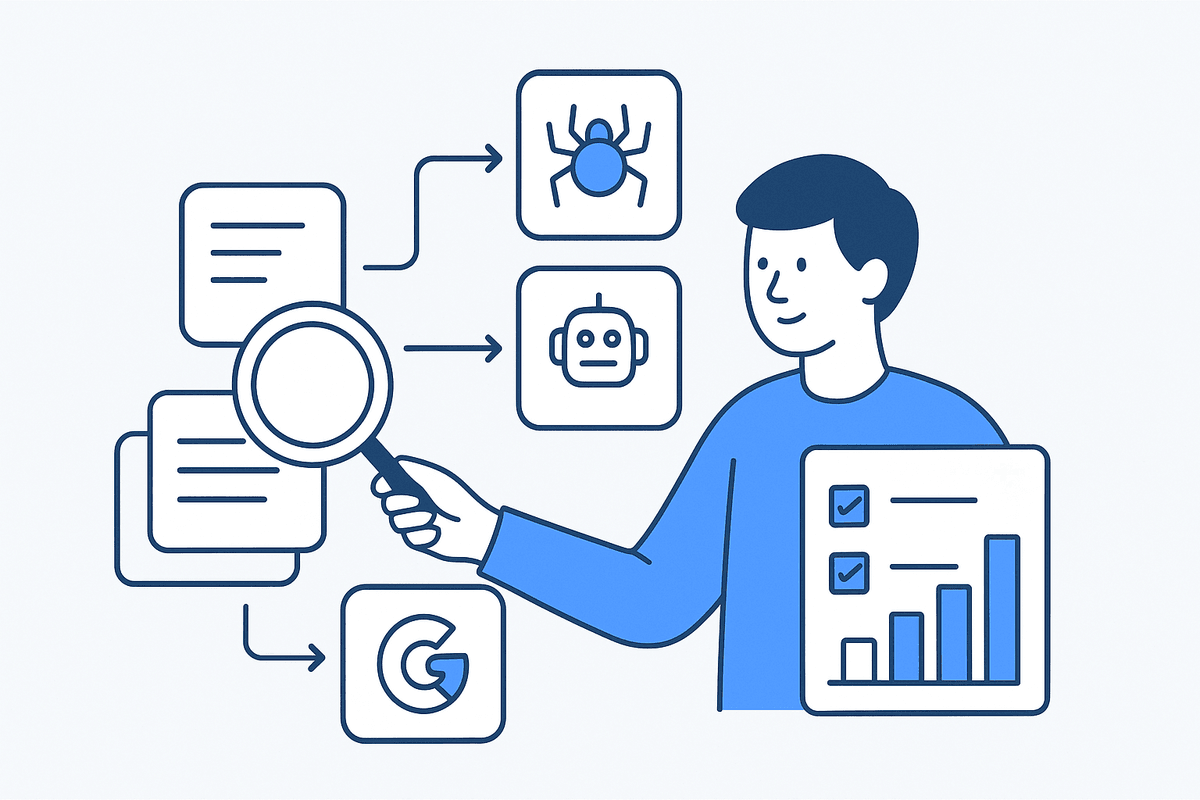
AI crawler logs can be a welcome signal, but by themselves they don't mean AI search visibility. What to look at first in your logs isn't total visit volume. It's whether a visit is access that may connect to handling a real user query, data collection for model training, or simply exploration that sweeps the site's structure. Don't jump straight from "lots of AI bots came" to "our content is more visible in AI answers."
Why reading raw bot hits as visibility is risky
When you open an AI crawler report, the numbers are the first thing you see. The problem starts when you read access with different purposes as one lump.
Some visits may be fetches to respond to a real user request. Some may be data collection for a model training pipeline. And some may be an exploration stage that isn't yet directly connected to what users see.
So the total visit count can look good while the real question, "are we more visible in AI answers?", gets a different answer. That's why interpretation has become more important than the number.
How training, discovery, and user fetch differ
The key is to read the three visit types separately.
| Type | What it's closest to | How far it can be read as visibility | Common misconception | Practical reading |
|---|---|---|---|---|
| User fetch | Fetching a page needed while handling a real user query | High | Concluding that AI share went up the moment you see this | The supporting signal closest to visibility, but reading it alone is still risky |
| Training | Data collection for model training or retraining | Low to medium | Assuming that since you're in training data, you'll show up well in answers now | May be a long-term asset signal, but it isn't the same as current visibility |
| Discovery | URL discovery, exploring site structure | Low | Concluding that because there's a visit, you'll soon be cited or visible | Only a signal that you can be discovered; far from actual visibility results |
In one line: user fetch is closest to visibility, training is closer to future potential, and discovery is still closer to the entry stage.
Why this distinction matters in practice
Skipping this distinction leads to two mistakes. The first is overestimation. If you report "AI search visibility improved" because discovery-type visits went up, you can lose credibility next quarter when actual citation metrics don't follow. The second is underestimation. If you hastily change your content strategy because training-purpose visits dropped, you can miss asset signals that need to build up over the long term.
For accurate interpretation, the basics start with verifying that the User-Agent in your logs really is the official crawler. Google publishes official documentation on how to verify its crawlers (IP ranges, reverse DNS lookups) [1], and separately documents each crawler's purpose and behavior [2]. With AI search engine crawlers too, if you just count visits without this basic verification, you risk mistaking spoofed traffic for a real signal.
A practical checklist for reading logs
- Verify User-Agent and IP together: the User-Agent alone can be faked. It's safer to follow the verification procedures in the official documentation.
- Separate access patterns: a pattern concentrated on specific URLs over a short time is closer to user fetch, while a pattern that sweeps the whole site in sequence is closer to discovery.
- Look at the mix, not the total: rather than whether visits went up this month, check whether the share of user fetch went up.
- Look at it alongside citation metrics: don't report crawler logs on their own; put them next to tracking of citations and mentions in actual AI answers.
Connecting log observation to content structure improvements
AI crawler observability isn't a goal in itself. The ultimate goal is to make "our content get cited more in AI answers." GEO research reports that content including statistics, quotations, and authoritative sources raises the probability of being cited [3]. If your logs keep showing only discovery, check whether your content is being discovered but lacks a structure trustworthy enough to be cited.
Why logs alone aren't enough
The limits of log analysis are clear. You can tell that a crawler fetched your page, but it's hard to know from logs alone which AI answers that visit was actually reflected in, and in what context. Closing this gap requires directly observing AI answers to real prompts.
TRAIL Search (search.traillabs.ai) defines target prompts and diagnoses whether your brand is actually mentioned and cited across multiple AI engines. If crawler logs show "were we discovered," this kind of diagnosis tool is the next step, showing "were we actually used in the answer." Only by looking at both together can you find out why citations don't rise even as log numbers grow.
Conclusion: look at the mix, not the number
AI crawler logs are clearly useful data. But the moment you conclude "visibility went up" from total visit volume alone, you can reach the wrong conclusion. Splitting visits into user fetch, training, and discovery to look at the mix, and tracking log signals together with actual citation metrics, is the new observability fundamental for the AI search era.
You can continue with The difference between GPTBot and OAI-SearchBot: can rising AI bot crawling be read as a search channel signal?, How AI search decides a brand is real: a consistency audit guide, and How to monitor AI search citations with prompt tracking: how it differs from keyword rank tracking.
Frequently asked questions
If AI crawlers visit a lot, does that mean my AI search visibility went up?
You can't conclude that. How a visit relates to visibility depends heavily on whether it's access to answer a real user query, data collection for model training, or simply crawling the site's structure.
How do I tell the purpose of a visit from the logs?
It's hard to tell perfectly, but you can estimate the rough nature of a visit from clues like the User-Agent, the page pattern at the time of access (concentrated on individual URLs vs. sweeping the whole site), and access frequency. For accurate verification, it's safer to follow the IP range and reverse DNS verification procedures in the official crawler documentation.
Can log analysis alone tell me all my AI search performance?
No. Logs only tell you whether a crawler fetched a page. It's hard to know from logs alone in what context that visit was reflected in actual AI answers, so you also need diagnosis that directly observes AI answers to real prompts.
References
Summary
- AI crawler logs can be a welcome signal, but visit volume by itself doesn't mean AI search visibility.
- Visits fall into three kinds: user fetch, which may connect to real user queries; training, for model learning; and discovery, which sweeps the site's structure.
- User fetch is closest to visibility, training is closer to future potential, and discovery is still closer to the entry stage.
- Build the habit of looking at the mix rather than the total, together with official crawler verification procedures.
Check this topic against your own brand
TRAIL Search measures how ChatGPT and Perplexity answer your customers' questions and finds and fixes where the brand is missing, turning this post into a diagnosis. Start with 10 questions, no card required.
More posts
Getting cited when Google AI Mode builds the answer
In November 2025 Google put Gemini 3 in AI Mode to build custom layouts and tools per query while keeping links to web sources. Here is what gets cited.
How is AI answer visibility defined and measured?
How is AI answer visibility defined and measured? Three metrics with formulas and paper figures: visibility (GEO), contribution (Shapley), and stability.
The prompt you track is not the query AI actually searched
AI visibility reports score each tracked prompt, but retrieval and citation happen on fan-out sub-queries. What year and English injection mean for measurement.
Keep reading on this topic
- Which content types AI cites, by search intentThe content type AI search cites flips with intent: articles lead informational prompts (45.5%), listicles lead commercial ones (40.9%).
- How are retrieval and citation different in AI search?Retrieval and citation are different stages in AI search. Does ChatGPT cite YouTube? Why our content is missing from AI answers, and what zero citations mean.
- The LLMO trap: training data vs. AI answer citationsSeeding your brand in LLM training data and getting cited in AI answers are different mechanisms. How they differ, what you can measure, and why advice splits.
This post is part of the Analysis category, which collects all 35 posts on the topic. See all posts in Analysis