Prompt Tracking: How to Monitor AI Search Citations
A new GEO-era habit to replace keyword rank tracking
Prompt tracking means regularly asking AI platforms questions to see if they cite your brand. How it differs from rank tracking, prompt design, and cadence.
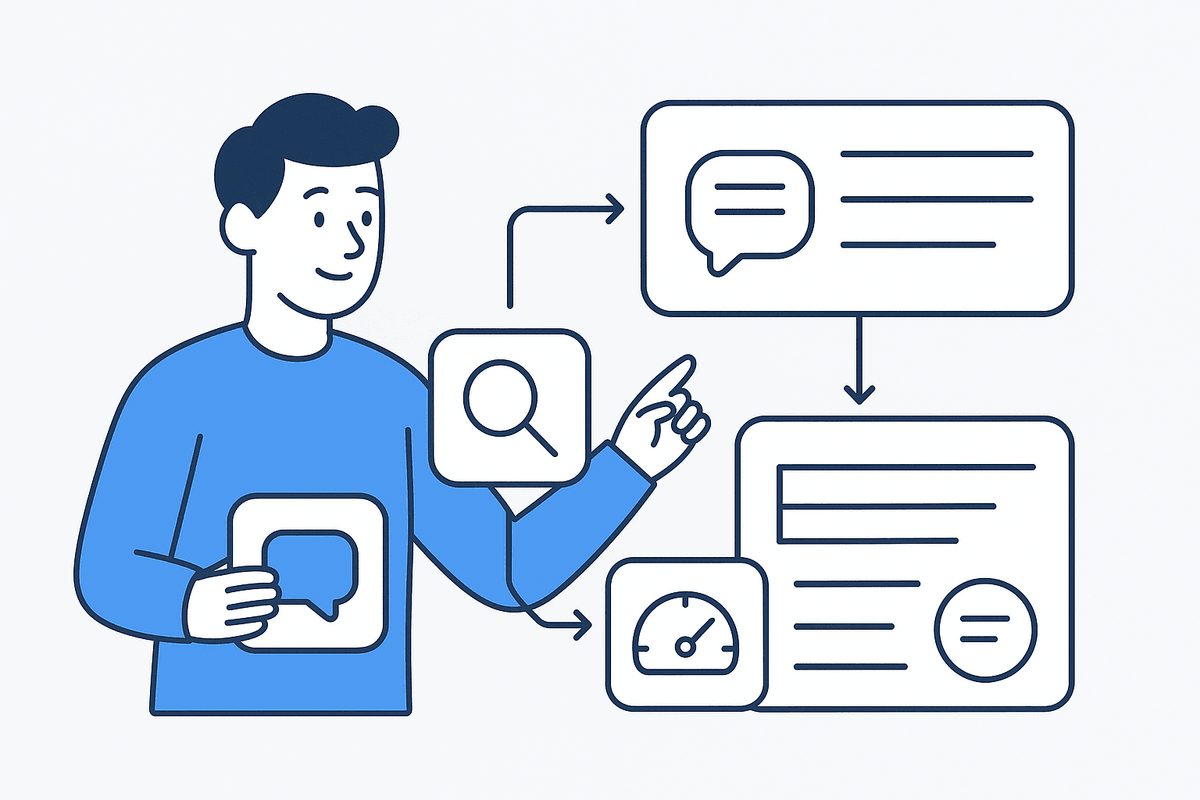
Prompt tracking is a way to regularly enter pre-designed prompts into AI platforms such as ChatGPT, Perplexity, and Gemini and track whether your brand and content are cited in the answers. It plays the same role as tracking keyword rankings in SEO, but what you track is whether you're cited inside AI answers, not your rank in search results.
How is it different from SEO keyword tracking?
| Comparison | SEO keyword tracking | GEO prompt tracking |
|---|---|---|
| What's tracked | Search result rank per keyword | AI citation per prompt |
| How it's measured | Automated tools like Ahrefs and Semrush | Manual or semi-automated tracking |
| Result format | Rank number (1st, 5th) | Citation status (cited / partially cited / not cited) |
| How often it changes | Daily to weekly | Irregularly, when models update |
| Standardization | Established industry standard | Still early in standardization |
Why prompt tracking is needed
AI platforms are becoming a more and more natural part of how people look for information. Users who used to search Google for "the best collaboration tool" now ask ChatGPT the same question. If you don't know whether you're cited at that moment, you have no read at all on the competitive picture in the AI search channel.
It also matters that existing SEO tools can't measure this area. Google Search Console only measures impressions and clicks within Google search results. How often your brand is mentioned on AI platforms is something you need to track separately.
Prompt tracking in 5 steps
Prompt tracking runs in five steps: design the prompts, choose the AI platforms, set the tracking cadence, record and classify the results, and analyze trends into an action plan.
Step 1: Design the prompts to track
The basic approach is to design prompts in three categories.
Brand prompts (track direct citations): "What is [brand]?", "[brand] review", "[brand] vs. competitor"
Category prompts (track your position in the market): "Recommend GEO optimization tools", "How to optimize content for AI"
Competitor prompts (understand the competitive landscape): "Competitor A vs. Competitor B comparison", "Recommend alternatives to Competitor A"
Prompt design determines the quality of your tracking. You get meaningful results only when you use natural questions real users would ask AI. As for volume, starting with about 2–5 brand prompts, 3–8 category prompts, and 2–5 competitor prompts, 10–18 in total, is a reasonable starting point.
Step 2: Choose which AI platforms to track
You don't need to track every AI platform. It's efficient to focus on the 2–3 platforms your target customers use most.
| Platform | Characteristics | Track first for |
|---|---|---|
| ChatGPT | General-purpose, the largest user base | Almost every industry |
| Perplexity | Real-time crawling, provides source links | Media and research-focused brands |
| Google Gemini | Tied to Google Search (AI Overviews) | SEO-focused businesses |
| Claude | Strong at in-depth analysis and document work | B2B, technical fields |
Step 3: Set the tracking cadence
| Cadence | Best for | Number of prompts |
|---|---|---|
| Once a week | Most businesses | 10–20 |
| Once a day | Highly competitive markets, product launches | 5–10 (core only) |
| Every two weeks | Small teams with limited resources | 5–10 |
We recommend once a week as the default. AI models don't update that often, so checking every day is inefficient.
Step 4: Record and classify the results
Record the following fields in a spreadsheet or tracking tool.
| Date | Platform | Prompt | Citation type | Citation position | Competitors cited |
|---|---|---|---|---|---|
| 2026-09-01 | ChatGPT | GEO tool recommendations | URL citation | 3rd | Company A, Company B |
| 2026-09-01 | Perplexity | GEO tool recommendations | Brand name | 1st | Company A |
Classify citation types as URL citation (your page URL is linked directly), brand name citation (your name is mentioned without a URL), recommendation citation (you're included in the form "we recommend…"), and not cited (nothing relevant in the answer).
Step 5: Analyze trends and build an action plan
Once weekly and monthly data build up, analyze the trends. The key points are whether your citation rate is rising or falling, why it differs by platform (why you're cited on ChatGPT but not on Perplexity), and, if competitor citations are increasing, which content is driving it.
Good prompts vs. bad prompts
| Bad prompt | Good prompt | Why |
|---|---|---|
| "SEO" | "Tell me how to optimize for SEO and GEO at the same time" | Too short and the intent is vague |
| "Is [brand] good?" | "Compare GEO optimization tools" | It's more natural to turn a direct brand question into a category prompt |
| "SEO trends 2024" | "As of 2026, how should SEO strategy handle AI search?" | It needs to reflect the current moment |
Interpreting results and taking action
| Situation | Interpretation | Action |
|---|---|---|
| Citation rate rising | GEO strategy is working; AI recognizes your content quality | Keep the current strategy, widen the prompt range |
| Citation rate flat | Content needs updating, or competition is intensifying | Strengthen inline citations, update figures, improve structure |
| Citation rate falling | Competitors improved their content, or the model updated | Analyze the competitor content being cited, then strengthen your own |
If competitors are cited more often than you, analyze the structure of their content (definition sentences, figures, tables), then add sources and evidence to your own content on that topic. GEO research has also confirmed that content with a definition sentence near the top and clearly stated sources is chosen more often in AI answers[1]. Google has also officially explained that AI answers are built by combining multiple sources[2].
Where people commonly get stuck
People commonly get stuck on three problems in prompt tracking: results that change every time, missing citations on one particular platform, and a sudden drop in citation rate.
The same prompt gives different results every time. AI models are non-deterministic. Repeat the same prompt two or three times to calculate an average citation rate, and if the variance is large, revise the prompt to be more specific.
We're not cited on one particular platform. Each AI platform has different criteria for choosing sources. Platforms centered on real-time crawling favor fresh content, while models based on training data tend to prefer established authoritative domains.
Our citation rate suddenly dropped. An AI model update is the main cause. Citation patterns can be unstable for 1–2 weeks after an update, so if it hasn't recovered after two weeks, move on to competitor analysis and strengthening your content.
Prompt tracking isn't something you set up once and forget. Users' question patterns keep changing, so you need a routine of reviewing your prompt list every quarter and adding prompts that fit the moment. If manual tracking feels like too much, you can try TRAIL Search's prompt tracking feature to manage entry, logging, and trend visualization in one place.
For related reading, see How to design an AI search visibility experiment: set a baseline, pick a measurement cadence, change one variable at a time, How to create content AI will cite: 7 practical steps to raise your chance of citation, and Which of two pages will AI cite? The four gatekeepers of competitive citation.
You can continue with Why channel ROI shouldn't be one number: Bayesian MMM, How ChatGPT understands YouTube: it reads the description, and The LLMO trap: training data vs. AI answer citations.
Frequently asked questions
How often should we do prompt tracking?
For most businesses, we recommend once a week as the default. AI models don't change significantly every day, so checking daily is inefficient. In highly competitive markets or right after a product launch, you can also pick just your core prompts and narrow to once a day.
The same prompt gives different results every time. Why?
AI models are non-deterministic. The same question can produce different answers. It's safer to repeat the same prompt 2–3 times and look at the average citation pattern. If the variance is too large, try making the prompt more specific.
Our citation rate suddenly dropped. What should we check first?
An AI model update is often the main cause. Citation patterns can be unstable for 1–2 weeks right after an update, so don't judge right away; keep watching. If it hasn't recovered after two weeks, analyze competitor content and then strengthen the evidence and structure of your own content.
References
Summary
- Prompt tracking plays the same role as keyword rank tracking in SEO, but what it measures is different: whether you are cited on AI platforms.
- Design prompts in three groups, brand, category, and competitor, and write them as natural sentences real users would ask.
- Focusing on the 2–3 platforms your target customers use most and starting with once a week as the default cadence is efficient.
- Whether your citation rate rises or falls, the key is to compare against competitor content structure to understand why and set your next action.
Check this topic against your own brand
TRAIL Search measures how ChatGPT and Perplexity answer your customers' questions and finds and fixes where the brand is missing, turning this post into a diagnosis. Start with 10 questions, no card required.
More posts
Getting cited when Google AI Mode builds the answer
In November 2025 Google put Gemini 3 in AI Mode to build custom layouts and tools per query while keeping links to web sources. Here is what gets cited.
How is AI answer visibility defined and measured?
How is AI answer visibility defined and measured? Three metrics with formulas and paper figures: visibility (GEO), contribution (Shapley), and stability.
The prompt you track is not the query AI actually searched
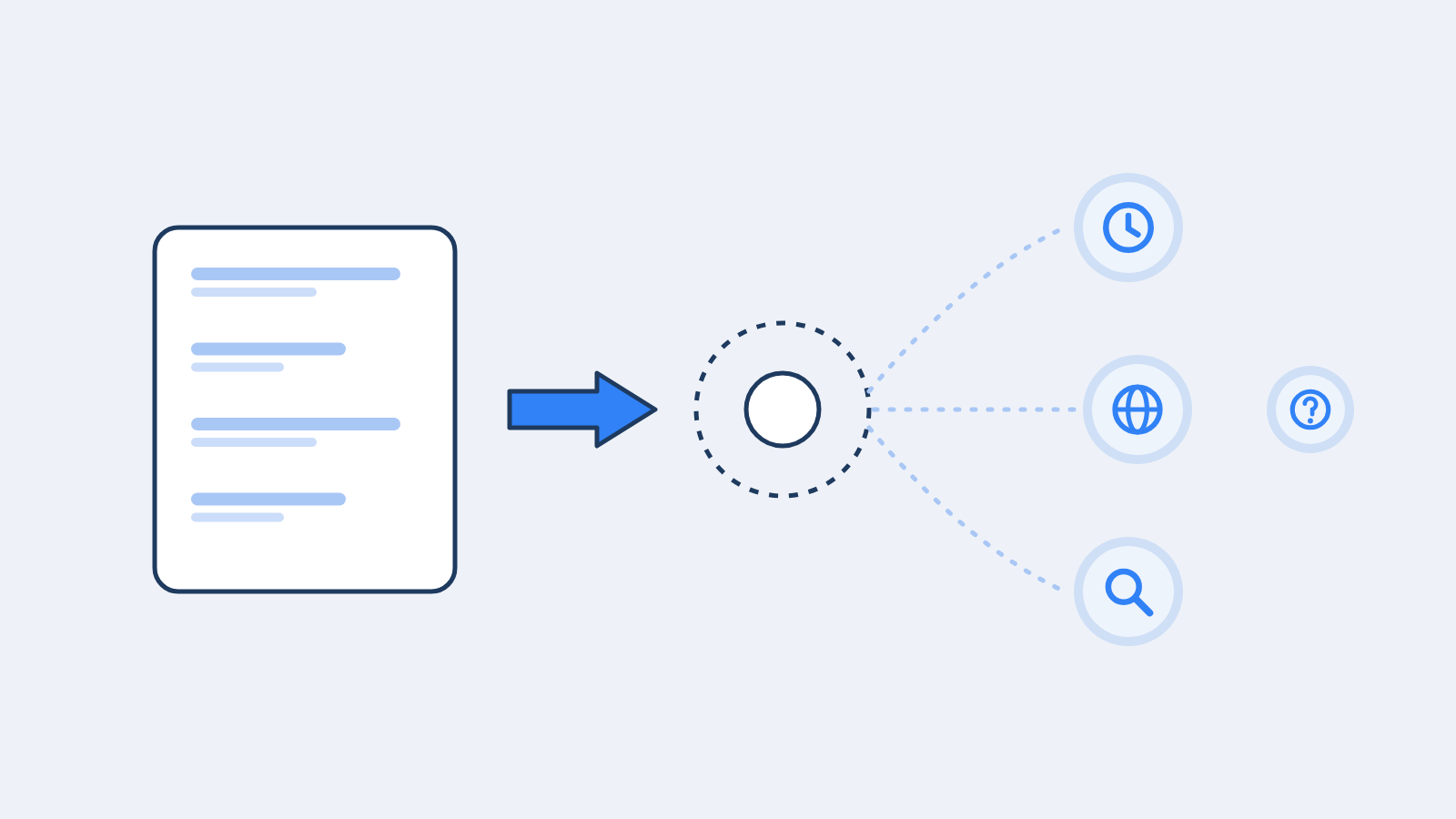
AI visibility reports score each tracked prompt, but retrieval and citation happen on fan-out sub-queries. What year and English injection mean for measurement.
Keep reading on this topic
- Which content types AI cites, by search intentThe content type AI search cites flips with intent: articles lead informational prompts (45.5%), listicles lead commercial ones (40.9%).
- How are retrieval and citation different in AI search?Retrieval and citation are different stages in AI search. Does ChatGPT cite YouTube? Why our content is missing from AI answers, and what zero citations mean.
- The LLMO trap: training data vs. AI answer citationsSeeding your brand in LLM training data and getting cited in AI answers are different mechanisms. How they differ, what you can measure, and why advice splits.
This post is part of the Analysis category, which collects all 35 posts on the topic. See all posts in Analysis