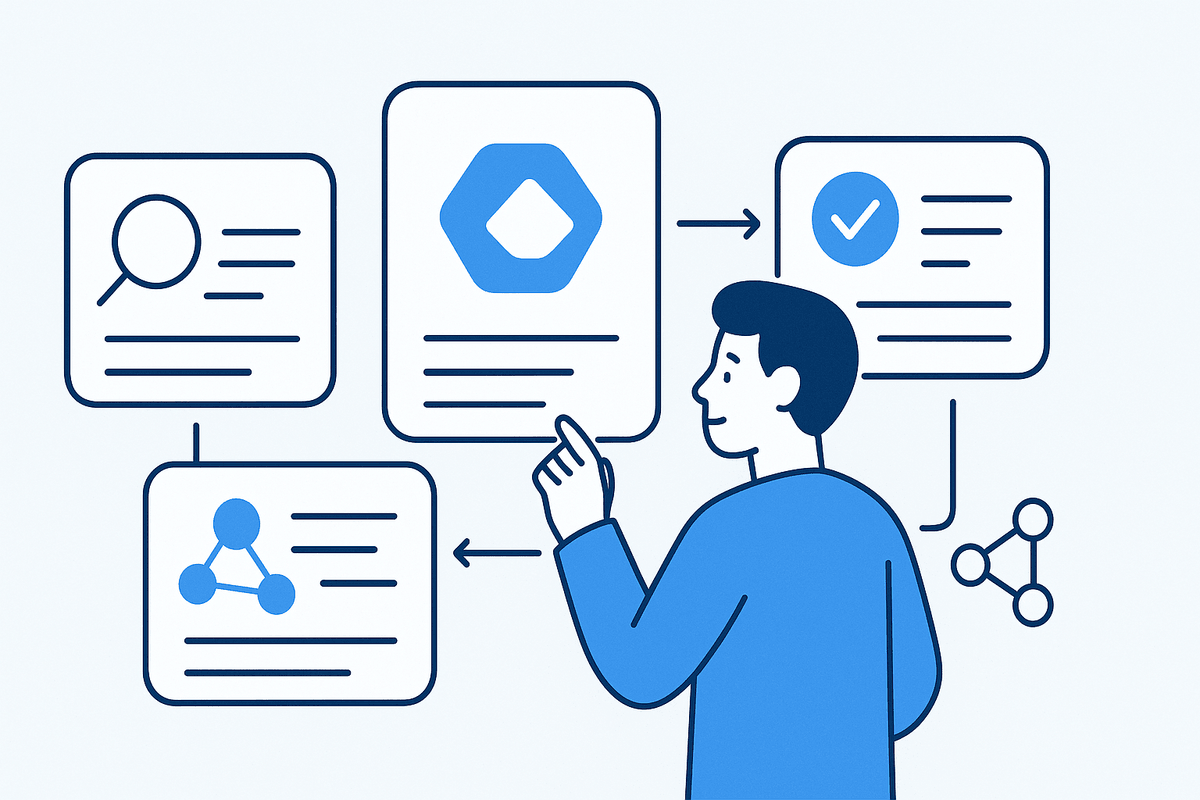
When AI search believes a brand is real: a consistency guide
What the fake-brand experiment shows isn't a manipulation trick but a new standard for reputation management
A fake-brand AI search experiment, read as a consistency signal, not a playbook: what AI trusts, consistency vs. truth, and how engines fail differently.
AI search may reflect how consistently the same brand cues repeat across multiple sources before it reflects whether the brand has actually been verified. In April 2026, an experiment run by SE Ranking and covered by Search Engine Land put real data behind this question[1]. It created a brand that doesn't actually exist and tracked how often it appeared in ChatGPT, Google AI Overviews, Google AI Mode, Perplexity, and Gemini.
On the surface it's sensational. The claim is that a newly made-up brand showed up in AI search answers fairly quickly. But this post isn't about "how to fool AI search with a fake brand." Quite the opposite. The experiment should be read as a case showing why brand reputation management has gotten trickier in the age of AI search.
In traditional search, brand trust was mostly built up through time and links. Old domains, accumulated backlinks, and repeated visits served as proxies for trust. What this experiment suggests is that in AI search, "how consistently it's described" may work faster than "how long it's been around." If you miss that difference, older brands are the ones most likely to get complacent.
What did the experiment do?
SE Ranking created a fictional brand inside a real niche market and tracked its AI search visibility for one month, using one new brand site alongside several domains with an existing history. It ran 825 prompts across 4 AI search environments and observed 15,835 AI answers in the first month alone[1].
The most striking reported result is that most of the fake brand's visibility came from branded questions, not general non-branded ones. According to the article, 96% of the fake brand's visibility came from branded searches, and for questions about the brand's unique claims or characteristics, visibility up to 32 times higher than established competitors was observed[1].
Reading these numbers as "a new brand took over the whole category" is an exaggeration. It's closer to say that "for a set of questions about the brand name and its unique claims, AI search was able to quickly turn repeated cues into answer material."
The part worth noting here is that this experiment is good news for new brands. Brand trust used to be measured by assets that take a long time to build, like domain age, backlinks, and search rankings. But this experiment suggests that a repeated, accessible brand description structure alone may get a brand adopted as answer material relatively quickly for branded questions. Put the other way, even an established brand can end up at a disadvantage against a newcomer if its descriptions are scattered or inconsistent.
Why you shouldn't overread it
A few cautions apply when handling this case.
- The article's author is the CMO of SE Ranking, the company that ran the experiment. The party presenting the experiment and the company that ran it are connected.
- The raw experiment data wasn't available in a form we could verify independently. So the numbers should be treated as "experiment results reported in a public article."
- You can't assume this experiment would produce the same result in every industry and every language.
So the interpretation in this post stays within these lines. It doesn't say AI search believed the fake brand. Nor does it say you can easily manipulate AI search by mass-producing sources. It treats the result only as a signal that AI search can respond to entity consistency, repeated claims, and accessible source structure.
Failure patterns differ by AI search environment
Not every AI search system responded the same way. According to the article, Perplexity sometimes picked a newly indexed page as its first source within 1–3 days, but it cited supporting third-party domains more often than the main brand site. Google AI Mode was relatively stable on unique-brand questions, while Gemini was less stable, and in some unique-brand answers it reportedly didn't cite the brand at all[1].
| AI search environment | Reported observation | Metric brands should watch |
|---|---|---|
| Perplexity | Quickly adopted new pages as first sources, but a large share of citations went to third-party domains | Share of third-party domain citations vs. the main domain |
| Google AI Mode | Relatively stable on unique-brand questions | Coverage of brand-claim questions |
| Gemini | Brand citations missing from some unique-brand answers | Brand non-citation rate, misidentification rate |
| ChatGPT / Google AI Overviews | Included in the overall tracking | Whether the brand is mentioned, recommendation context |
From a brand's point of view, rather than asking "which model is better," you have to accept that each model fails at brand recognition in a different way. So while it's useful to view AI visibility as a single score, in day-to-day operations you also need to look at the sub-metrics that make up that score.
This difference carries straight into the recommendations. If third-party domain citations dominate in Perplexity, fixing your official site alone isn't enough; you need to manage relationships with external review and comparison outlets separately. If Gemini often leaves your brand uncited, you can respond by embedding the brand name and core description more explicitly in the text structure. In other words, if you set the goal of "being visible in AI search" around a single engine, the same problem can keep recurring in other engines.
Content formats offer clues too
The reported performance by content format is also interesting. Deep guides had the strongest citation performance, followed by reviews and comparison content. There was also an observation that several short, repetitive pages appeared in more AI answers than one hub page with several supporting posts.
Reading this as "just make lots of short, repetitive pages" is risky. Low-quality repetitive content can harm both brand trust and search quality over time. The safer interpretation is this: AI search may not understand a brand from one polished hub alone. Entity cues can get stronger when the same brand facts appear consistently across multiple accessible documents and in comparison, review, and explanatory contexts[2].
Consistency and truth are confirmed at different speeds
The tricky part of AI search is that consistency and truth aren't always confirmed at the same speed. When the same brand description repeats across the official site, comparison posts, reviews, and third-party domains, AI search may treat it as a strong entity cue. But whether that cue is a verified fact or a marketing claim is a separate question.
That gap creates brand risk. Say a brand started as "an accounting tool for small businesses" and later broadened its positioning by adding features for mid-sized companies. The official site was updated to reflect the new positioning, but older reviews or partner introduction pages may still carry the old "small businesses only" description. In that case, AI may describe the brand narrowly or broadly depending on which description it has seen more often. The brand never lied on purpose, yet the time lag between descriptions creates a misreading.
A good brand should do the following.
- Make the brand description on your official site clear.
- Organize core features, target customers, use cases, and limitations so they can be repeated.
- Cut exaggeration in comparison content and FAQs and use verifiable criteria.
- Check that the same fact structure holds in external reviews, partner posts, and customer case studies.
- Separately track questions where AI answers misclassify your brand or mix it up with competitors.
Basic content structure and trust signals also line up with the principles Google keeps emphasizing in its official guidance[3]. Rather than relying on special AI-only markup, the basics of creating useful, verifiable content for users still come first.
Two common mistakes in practice
Copying and pasting the same sentence into every channel. Many people mistake consistency for "repeating the same sentence." But meaningless duplication can be read as a low-quality signal. What you actually need is to keep the same fact structure (core features, target customers, differentiators) while expressing it to fit each channel's context. The same facts get unpacked as user-experience context on review sites, as differences from competitors in comparison posts, and as questions and answers in FAQs.
Checking once and calling it done. Brand descriptions naturally drift apart over time. Every time a new product launches or the target shifts, the official site gets updated, but external reviews and old partner pages often stay as they were. You need a routine of re-testing your brand question set each quarter to see whether new gaps have opened.
A checklist to run today
- Build a brand question set. Start with basic questions like "What is our brand?", "Who is it for?", and "How is it different from competitors?"
- Build a unique-claim question set. Turn the features, methodologies, and positions your brand often talks about into questions.
- Look at answers separately by model. Compare how ChatGPT, Perplexity, Gemini, and Google AI Mode describe the same brand differently.
- Check the source mix. Sort out whether the evidence is your official site, a third-party post, or a mention without a source.
- Log misidentifications and omissions. Check whether your brand is mistaken for a competitor, whether features are exaggerated, or whether your core position is missing.
Running this checklist once doesn't take long, but what the results tell you is bigger than you might expect. For the first time, you see with your own eyes what sentences your brand is summarized into inside AI answers, and how close that summary is to the positioning you intended. Many brands, until they run this audit, have never once looked at "how AI describes us."
In AI search, a brand isn't simply shown; it's described. Managing whether that description stays consistent and verifiable is what GEO operations will be about going forward. One option is to start by using TRAIL Search to check how, and how consistently, your brand is described across multiple engines.
For related reading, see What is query fan-out? Watching how AI splits one question into multiple searches, Why GEO became a brand reputation problem: when AI describes your brand wrong, and Competitor SEO and GEO analysis in 8 steps: reverse-engineering why competitors get cited in AI answers.
Frequently asked questions
If we follow this experiment, can we manipulate AI search too?
Don't read it as a manipulation manual. The experiment was run by SE Ranking, an SEO tool company, and the author of the Search Engine Land article works there, so interests are mixed. The raw data is also hard to verify independently. It's safest to treat this case only as a signal that AI search can respond to repeated, consistent brand cues.
Do we still need this audit if our brand is already real?
Yes. Even a real brand can be misread by AI, or confused with a competitor, if different descriptions keep circulating across its official site, reviews, comparison posts, and social channels. Separate from whether the facts are true, you need to audit the consistency of the descriptions on their own.
Is raising consistency enough?
No. Consistency and truthfulness aren't confirmed at the same speed. If repeated descriptions aren't based on verifiable facts, they can damage brand trust over time. Consistency is the starting point; evidence and verifiability have to come with it.
References
Summary
- One experiment found that even a fake brand could quickly appear in AI search for branded questions and questions about its unique claims.
- Read this experiment not as a manipulation manual but as a signal that AI search can respond to repeated brand cues.
- Brand recognition failures differ by AI search environment: some don't cite sources, some trust third-party domains more, and some leave the brand out entirely.
- What brands need to do is make their official description clear and check that the same fact structure holds in comparison, review, and FAQ contexts.
Check this topic against your own brand
TRAIL Search measures how ChatGPT and Perplexity answer your customers' questions and finds and fixes where the brand is missing, turning this post into a diagnosis. Start with 10 questions, no card required.
More posts
Getting cited when Google AI Mode builds the answer
In November 2025 Google put Gemini 3 in AI Mode to build custom layouts and tools per query while keeping links to web sources. Here is what gets cited.
How is AI answer visibility defined and measured?
How is AI answer visibility defined and measured? Three metrics with formulas and paper figures: visibility (GEO), contribution (Shapley), and stability.
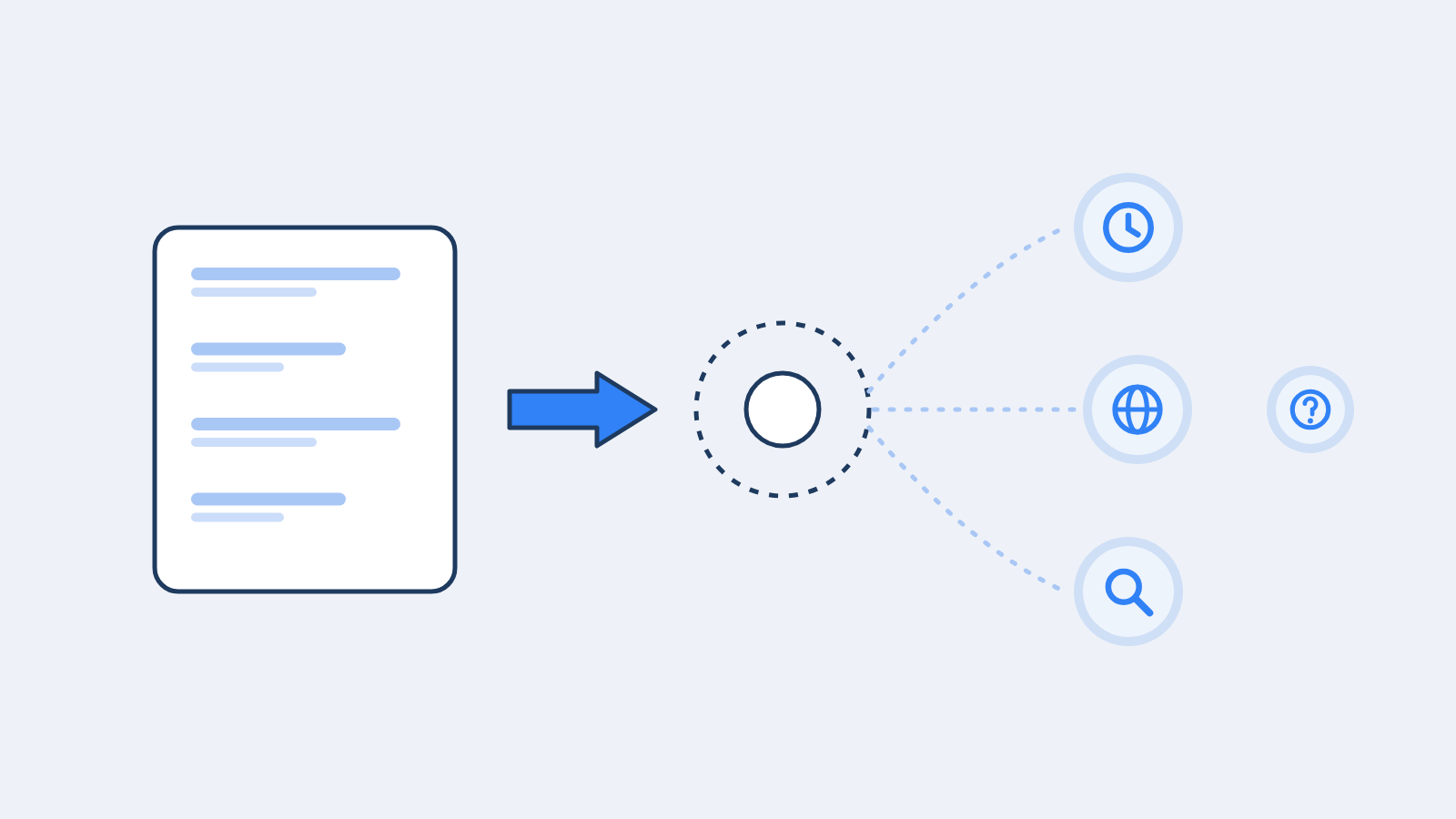
The prompt you track is not the query AI actually searched
AI visibility reports score each tracked prompt, but retrieval and citation happen on fan-out sub-queries. What year and English injection mean for measurement.
Keep reading on this topic
- Which content types AI cites, by search intentThe content type AI search cites flips with intent: articles lead informational prompts (45.5%), listicles lead commercial ones (40.9%).
- How are retrieval and citation different in AI search?Retrieval and citation are different stages in AI search. Does ChatGPT cite YouTube? Why our content is missing from AI answers, and what zero citations mean.
- The LLMO trap: training data vs. AI answer citationsSeeding your brand in LLM training data and getting cited in AI answers are different mechanisms. How they differ, what you can measure, and why advice splits.
This post is part of the Analysis category, which collects all 35 posts on the topic. See all posts in Analysis