
SEO and GEO metrics: 5 GEO KPIs and reading mixed signals
Why a drop in traffic doesn't automatically mean SEO failed
Tracking SEO and GEO metrics separately can mislead you in AI search. The 5 core GEO metrics, and how to read them when they disagree with SEO metrics.
If you measure SEO and GEO performance separately, it's easy to misread the big picture now that AI search is growing. You need to look at both sets of metrics together in one framework to get an accurate diagnosis. Before concluding that SEO failed because organic traffic dropped, check first whether your citations on AI platforms are rising.
Why you need integrated metrics
Integrated SEO and GEO metrics are an approach that measures the results of search engine optimization and generative engine optimization within one framework. If you look only at traditional SEO metrics (organic traffic, keyword rankings), you can misread performance at a time when AI search is growing.
For example, things like this can actually happen.
- Organic traffic dropped, but brand citations on AI platforms may have actually gone up.
- Keyword rankings hold, but actual click-through rate (CTR) can fall as answers show up first in AI Overviews.
- Conversion rate went up, but the traffic source may have quietly shifted from search clicks to AI recommendations.
Search behavior is shifting from "type a keyword, then click a link" to "ask a question, read the AI answer, then click a link (only when needed)," and research has confirmed that visibility inside AI engines varies widely depending on whether GEO optimization is applied [1]. Measurement has to expand to match this change.
5 core SEO metrics
| # | Metric | Description | Measurement tool |
|---|---|---|---|
| 1 | Organic traffic | Number of visitors arriving from search engines | Google Analytics, Search Console |
| 2 | Keyword rankings | SERP position for target keywords | Search Console, rank tracking tools |
| 3 | Click-through rate (CTR) | Clicks as a share of search impressions | Search Console |
| 4 | Bounce rate and engagement | Bounce rate or time on page after a visit | Google Analytics |
| 5 | Core Web Vitals | Loading, interactivity, visual stability | PageSpeed Insights, Search Console |
What to watch for when interpreting: A drop in organic traffic doesn't mean SEO failed. As AI Overviews increase zero-click searches, brand visibility itself can grow even as traffic falls [2]. If rankings hold but only CTR drops, it's likely a pattern of AI Overviews taking the clicks, so you need to look at it alongside GEO metrics to be accurate.
5 core GEO metrics
| # | Metric | Description | How to measure |
|---|---|---|---|
| 1 | AVI (AI Visibility Index) | Overall visibility score for your content on AI platforms | Prompt-based visibility dashboard |
| 2 | Citation rate | Share of times you're cited for specific prompts | Prompt tracking |
| 3 | Share of voice | Your brand's share within AI answers | Prompt tracking |
| 4 | Prompt coverage | Share of target prompts where you're cited | Prompt tracking |
| 5 | AI referral traffic | Traffic arriving at your site from AI platforms | Google Analytics (UTM, referrer) |
There's no fully settled industry standard for GEO metrics yet. Most are collected through prompt tracking: periodically asking AI a fixed set of questions and checking directly whether you're cited. The point that content with structured data is also easier for AI to parse applies to both SEO and GEO [3].
An integrated metrics framework
SEO and GEO mapping table
Placing SEO and GEO metrics that serve the same purpose side by side lets you see performance from an integrated view.
| Purpose | SEO metric | GEO metric | Integrated reading |
|---|---|---|---|
| Visibility | Impressions | Prompt coverage | Total visibility reach across search and AI |
| Clicks and traffic | Organic traffic | AI referral traffic | Total search traffic |
| Ranking and position | Keyword rankings | AVI | Position across search and AI |
| Share | SERP feature share | Share of voice (SOV) | Your share relative to competitors |
| Conversion | Conversion rate | AI-to-site conversion | Conversion results relative to traffic |
Measure each metric at a different frequency
Tracking SEO metrics weekly is generally fine, but GEO metrics are more volatile because of AI models' training and update cycles. Rather than daily ups and downs, reading trends over at least two weeks to a month gives a more stable interpretation.
Which metrics to prioritize by industry
Not every industry needs to weight the 5 GEO metrics equally.
- SaaS and B2B: Prioritize prompt coverage and citation rate. Buyers often ask AI "which tool should I use?" during the evaluation stage.
- E-commerce: Look at AI referral traffic and AI-to-site conversion together to see the real contribution to revenue.
- Media and publishing: Share of voice (SOV) acts as a leading indicator of brand awareness.
Common mistakes
- Judging everything by SEO metrics without GEO metrics: At a time when AI search is growing, this can lead to the mistake of hastily overhauling content just because traffic dropped.
- Checking GEO metrics daily: If you don't account for the volatility of AI responses, you'll mistake noise for signal.
- Applying only standard metrics and ignoring your industry: In a conversion-driven business, fixating on visibility metrics alone creates a gap with real results.
Example dashboard layout
When bringing SEO and GEO metrics together on one screen in practice, a three-part layout like the one below is common.
| Section | Metrics included | Check interval |
|---|---|---|
| Top summary | Integrated share of voice (SOV), change vs. previous month | Weekly |
| SEO block | Organic traffic, keyword rankings, CTR | Weekly |
| GEO block | AVI, citation rate, prompt coverage | Monthly |
Putting integrated share of voice in the top summary lets you see the overall direction at a glance without checking each detailed metric one by one. The SEO block and GEO block have different measurement intervals, so rather than forcing them into one table, placing them side by side is easier to manage in practice.
How to read metrics when they disagree
The most confusing situation is when SEO metrics and GEO metrics point in different directions.
- Rankings rise but AVI stalls: Search engine optimization is working, but it's a sign that you lack the evidence and structure AI would cite. Try reinforcing definition sentences and sources.
- AVI rises but organic traffic stalls: You're building awareness in AI channels but not yet standing out in the search results themselves. It's time to recheck technical SEO and keyword placement.
- Both fall: There's likely a fundamental quality problem with the content itself. Rechecking E-E-A-T elements comes first.
Rather than judging from a single metric, a habit of reading SEO and GEO metrics against each other like this keeps you from reaching the wrong conclusion.
Wrapping up
SEO metrics and GEO metrics don't replace each other. They complement each other. If organic traffic wobbles but AI citations are rising, that may be a channel shift, not a failure. Conversely, if rankings hold but there are no AI citations at all, that's a sign you need structural improvements. A habit of viewing both sets of metrics side by side on one dashboard is what makes accurate performance judgments possible in the AI search era.
If tracking your metrics one by one by hand is a hassle, another option is to check SEO and GEO metrics together in TRAIL Search (search.traillabs.ai).
You can find related reading in Why your site doesn't show up in AI search: a 10-step diagnostic checklist, KPIs for the AI search era: start measuring with citation rate, AVI, and share of voice instead of rankings, and Whose job is AEO? Beyond the SEO team to brand consensus.
Frequently asked questions
Can I measure GEO performance with Google Search Console alone?
No. Search Console only covers impressions and clicks within Google Search. Whether you're cited on AI platforms like ChatGPT and Perplexity can only be checked by tracking prompts separately.
Is a drop in organic traffic always a bad sign?
Not necessarily. It may be the effect of more searches ending without a click because AI Overviews show the answer directly. In that case, you need to look at AI citation metrics along with traffic to get an accurate diagnosis.
Do priority metrics differ by industry?
Yes. For conversion-driven businesses, AI-to-site conversion metrics matter, while in industries where brand awareness matters, you should give more weight to visibility metrics such as citation rate and share of voice (SOV).
References
Summary
- Looking only at SEO metrics can mislead you about performance at a time when AI search is growing.
- The 5 core SEO metrics are organic traffic, keyword rankings, CTR, bounce rate, and Core Web Vitals.
- The 5 core GEO metrics are AVI, citation rate, share of voice (SOV), prompt coverage, and AI referral traffic.
- Only an integrated framework that maps SEO and GEO metrics by purpose gives you an accurate picture of your overall search visibility.
Check this topic against your own brand
TRAIL Search measures how ChatGPT and Perplexity answer your customers' questions and finds and fixes where the brand is missing, turning this post into a diagnosis. Start with 10 questions, no card required.
More posts

Getting cited when Google AI Mode builds the answer
In November 2025 Google put Gemini 3 in AI Mode to build custom layouts and tools per query while keeping links to web sources. Here is what gets cited.

How is AI answer visibility defined and measured?
How is AI answer visibility defined and measured? Three metrics with formulas and paper figures: visibility (GEO), contribution (Shapley), and stability.
The prompt you track is not the query AI actually searched
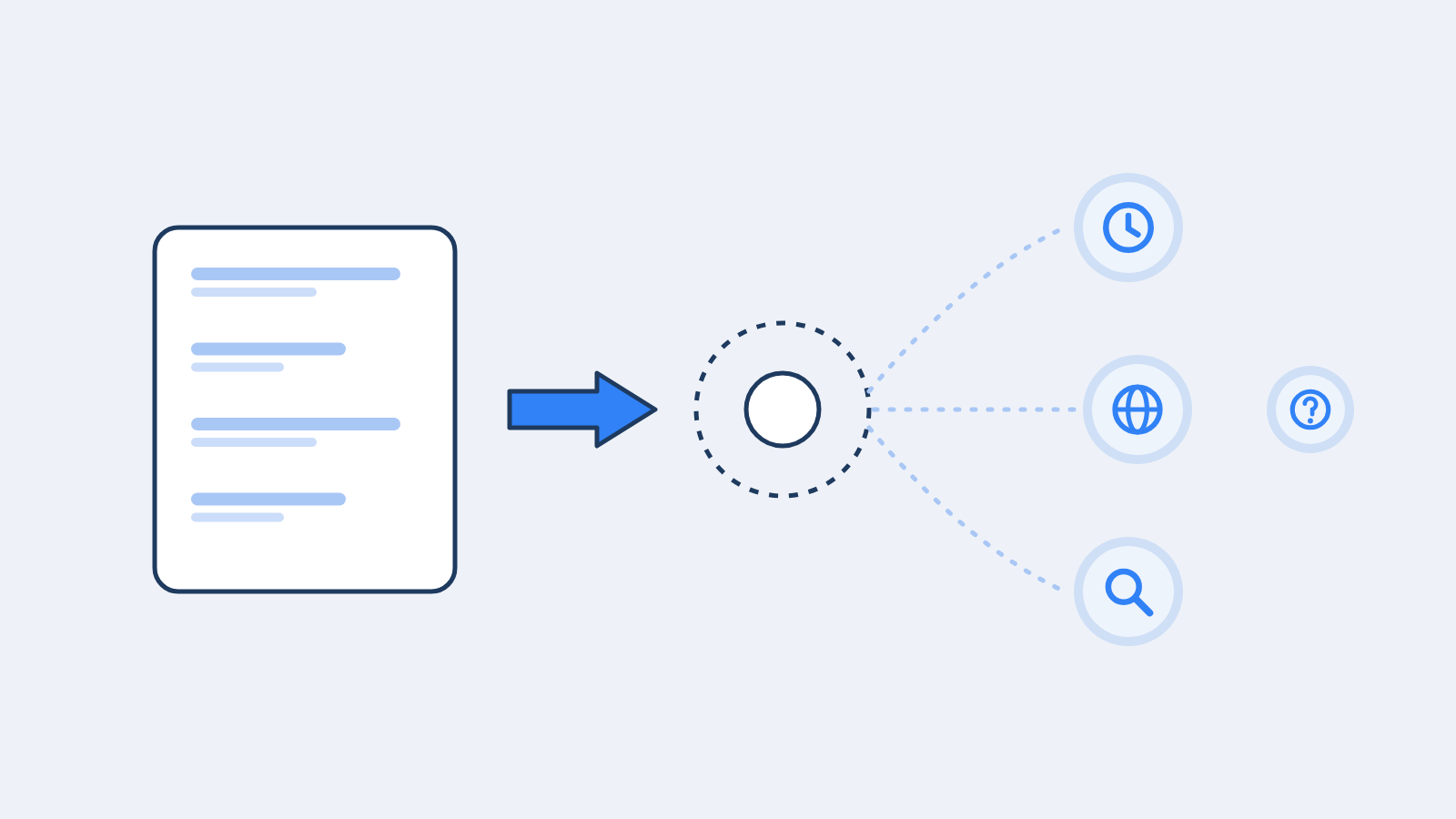
AI visibility reports score each tracked prompt, but retrieval and citation happen on fan-out sub-queries. What year and English injection mean for measurement.
Keep reading on this topic
- Which content types AI cites, by search intentThe content type AI search cites flips with intent: articles lead informational prompts (45.5%), listicles lead commercial ones (40.9%).
- How are retrieval and citation different in AI search?Retrieval and citation are different stages in AI search. Does ChatGPT cite YouTube? Why our content is missing from AI answers, and what zero citations mean.
- The LLMO trap: training data vs. AI answer citationsSeeding your brand in LLM training data and getting cited in AI answers are different mechanisms. How they differ, what you can measure, and why advice splits.
This post is part of the Analysis category, which collects all 35 posts on the topic. See all posts in Analysis