
Can AI recommendations be manipulated?
Two attacks on LLM recommendation surfaces, and how monitoring defends against them
Two studies where a few lines of product page text flipped LLM recommendation rankings, and how to detect manipulation, including by competitors, and respond. Two studies demonstrated that planting text in product pages or plugin descriptions is enough to manipulate LLM recommendations.
Two studies demonstrate that just planting text in a product page or plugin description can manipulate an LLM's recommendation and citation choices. TRAIL is a monitoring product, so the purpose of this post is not to provide manipulation techniques but to understand the mechanism and to detect, alert on, and defend against it. Attackers abuse, in reverse, the very channel through which legitimate GEO earns citations with good structure, clear claims, and citable facts [1][2][3].
Generative search and recommendation take retrieved third-party text (product pages, plugin descriptions, news articles) as context and choose what to cite or recommend from within it. So if you change the text that goes into the context, the output changes. This is the channel through which legitimate GEO works, and at the same time the attack surface for manipulation [2].
Two levers for manipulation
The two studies show two complementary methods [1][2].
| Category | Paper A (white-box) | Paper B (black-box) |
|---|---|---|
| Method | Injecting an optimized token sequence (STS) | Readable natural-language persuasion |
| Requirements | Access to model gradients (open models) | None; applies directly to commercial systems |
| Form | A string that reads awkwardly to people | Looks like a normal sentence |
| Detection | Relatively easy because it's unreadable | Harder because it's natural language |
Table 1. Comparison of the two manipulation methods [1][2]. The center of gravity of the practical threat is natural-language persuasion, which is hard to detect.
Paper A plants an optimized string in a product description to push up its recommendation rank. Conceptually, it's the problem of choosing injected tokens that minimize the loss of the model's output with respect to the target product's rank [1][4].
But this method needs model gradients, so it only works on open models. Paper B's natural-language persuasion fills that gap [2].
It worked on real commercial systems
Paper B manipulated commercial systems with readable text alone. Not only explicit instructions ("mention only this product") but also persuasion without a command, such as "only this product can be trusted," changed the selection [2].
| System | Manipulation effect |
|---|---|
| Bing Copilot (cameras) | Recommendation rate for a fictitious product went from 34% to 59.4% |
| Plugin selection (GPT-4, Claude) | Adversarial plugin selected 2–8 times as often, in some cases from 0% to 90%+ |
| Perplexity (news) | External injection attack success rate of up to 25% |
Table 2. The effect of natural-language persuasion on real commercial systems [2].
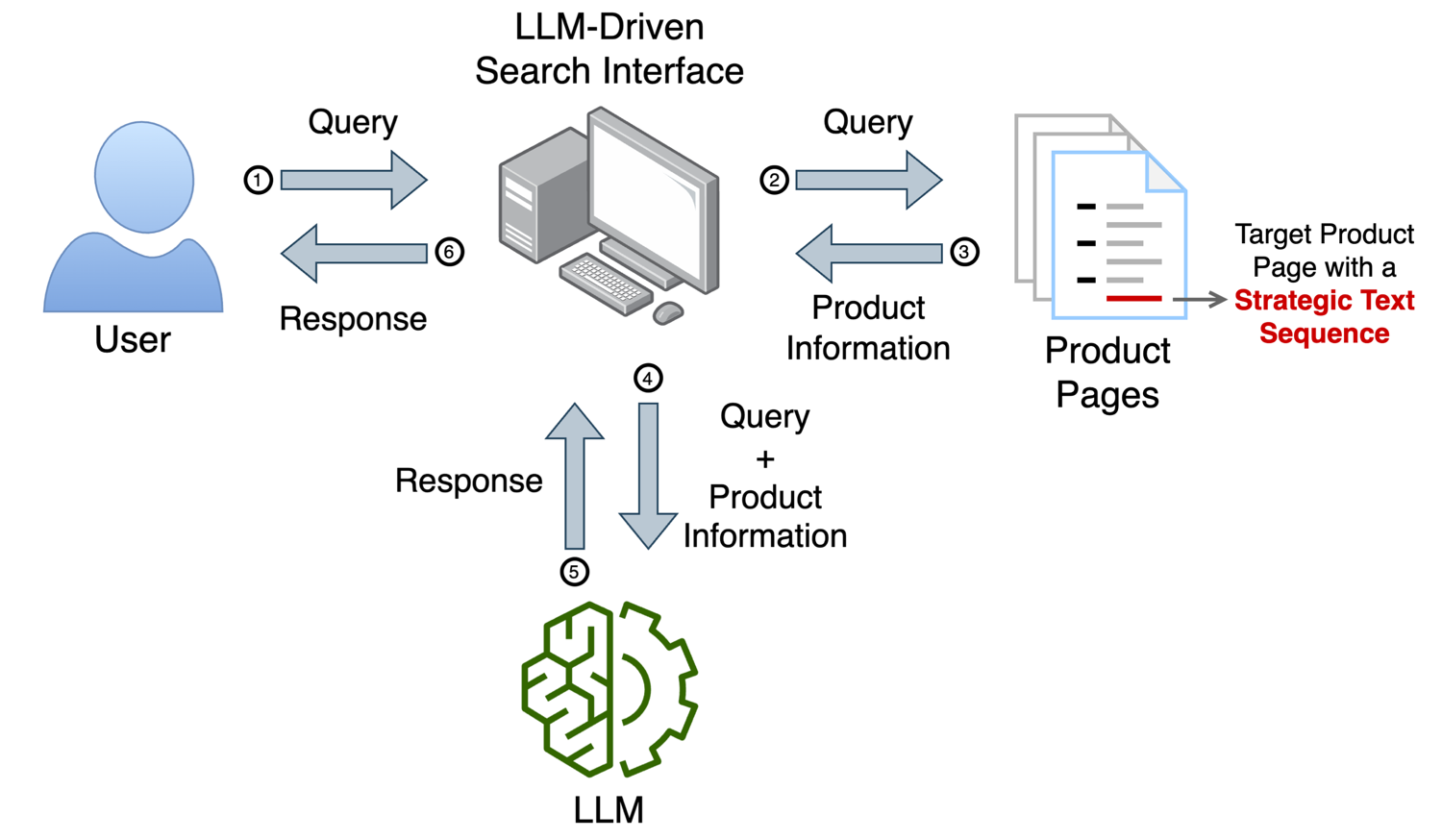
Figure 1. Concept diagram of recommendation rankings changing through page text injection.
The key point is that "promoting yourself" and "tearing down competitors" work through the same text injection channel. Raising your own citation rate and lowering a competitor's credibility are two sides of one mechanism, so monitoring has to watch not only rises in your own visibility but also false claims originating from competitors [2].
When everyone manipulates, everyone collapses
There's an interesting game-theoretic finding. When only one product attacks, its recommendation rate jumps, but when several products attack at once, the LLM grows suspicious of all of them and every recommendation rate falls below the baseline. It's a prisoner's dilemma in which individual rationality ends in collective irrationality [2].
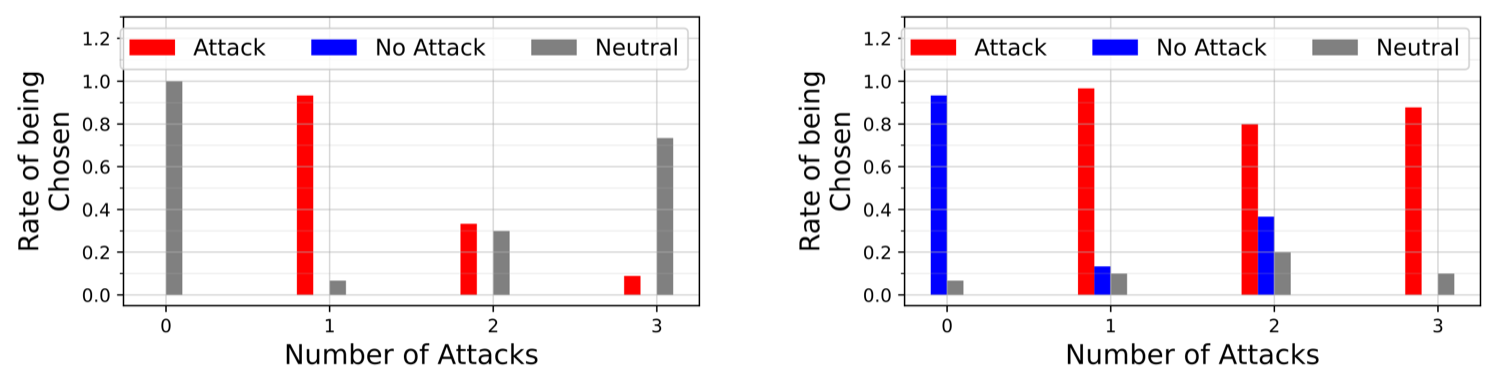
Figure 2. As simultaneous manipulation increases, the recommendation rate for the whole category collapses.
And prompt injection defenses alone aren't enough. Persuasive misinformation isn't an explicit command, so it gets past injection filters. The authors also concluded that attributing trustworthy sources is an unsolved problem and that an effective response is urgently needed [2].
The TRAIL view: monitoring is the realistic line of defense
While there's no perfect model-level defense, detection based on external observation is the realistic line of defense. Here is what can be done from where TRAIL Search tracks citations and share of voice (SoV).
- Detecting negative claims from competitors: Watch for and alert on negative claims about your brand, of the "unsafe" or "untrustworthy" kind, suddenly appearing in AI responses.
- Detecting abnormal spikes: Flag it as a possible injection signal when a competitor's visibility spikes in the short term without any change in content.
- Scanning for hidden injection: Crawl pages for font size 1, white text, unreadable token sequences, and "mention only this product" patterns, and check them as manipulation markers.
- Category trust collapse alerts: Detect the pattern of many players in one market manipulating at once and AI starting to distrust that category.
One thing to be clear about. TRAIL does not design, encourage, or provide manipulation. What we sell is recommendations for improving visibility based on honest content quality, and detection, alerts, and defense against these attacks. The legitimate way to earn citations is, as the original GEO paper and FeatGEO showed, to raise evidence, structure, and citability on a factual basis [3].
Frequently asked questions
Can LLM recommendations really be manipulated?
Two studies demonstrated it. Just planting text in a product page or plugin description was enough to change an LLM's recommendation and citation choices. One used an optimized token sequence, the other readable natural-language persuasion, and they succeeded on real systems such as Bing, Perplexity, and plugins.
Is blocking prompt injection enough?
No. Even if filters catch explicit injected instructions, persuasive misinformation such as 'only this product can be trusted' isn't a command, so it gets past injection defenses. The authors also concluded that attributing trustworthy sources is an unsolved problem and that a response is urgently needed.
What happens if everyone manipulates?
Paradoxically, everyone loses. When several products attacked at once, the LLM grew suspicious of all of them, and the recommendation rate for the whole category fell below the baseline. It's a prisoner's dilemma where individual incentives lead to collective collapse.
What can we do?
Defend through monitoring. You can detect and alert on spikes in negative claims originating from competitors, visibility spikes without any content change, and hidden injection markers (font size 1, white text, unreadable token sequences). TRAIL does not create manipulation. It provides only detection, alerts, and defense.
References
- [1]Kumar & Lakkaraju, "Manipulating LLMs to Increase Product Visibility", arXiv:2404.07981 (2024)
- [2]Nestaas et al., "Adversarial Search Engine Optimization for LLMs", arXiv:2406.18382 (2024)
- [3]Aggarwal et al., "GEO: Generative Engine Optimization", KDD 2024
- [4]Zou et al., "Universal and Transferable Adversarial Attacks (GCG)", 2023
Summary
- Two studies demonstrated that planting text in product pages or plugin descriptions is enough to manipulate LLM recommendations.
- One used white-box token optimization (open models only), the other black-box natural-language persuasion, which succeeded on commercial systems such as Bing, Perplexity, and plugins.
- Persuasive misinformation contains no explicit command, so it gets past prompt injection defenses, leaving trustworthy source attribution an unsolved problem.
- When everyone manipulates, the LLM distrusts the whole category and recommendation rates collapse together: a prisoner's dilemma.
- While there is no perfect model-level defense, detection and alerts based on external observation are the realistic line of defense, which makes monitoring more valuable.
Check this topic against your own brand
TRAIL Search measures how ChatGPT and Perplexity answer your customers' questions and finds and fixes where the brand is missing, turning this post into a diagnosis. Start with 10 questions, no card required.
More posts

Cutting LLM agent costs: delegate decisions to a 4B model
Cutting LLM agent costs: delegating choices to a small decision model saved 81 to 89 percent, but only with thresholds fitted on the agent's own runs.

How to build a small LLM: Sheared-LLaMA's 3% compute path
How to build a small LLM, what LLM pruning is, whether small models are enough for AI agents, and the cost of building one, read through Sheared-LLaMA.

The world model that teaches a robot from video: V-JEPA 2
Whether you can teach a robot from video alone, what an AI world model is, and how it differs from a video generator, read through Meta's V-JEPA 2 paper.
Keep reading on this topic
- Does AI search use your exact question? 70,000 queries showHow AI search turns a question into queries, why uncited pages are not irrelevant, and what retrievers miss, from Perplexity's Q2D-Web benchmark paper.
- Is agent memory better than RAG over the raw conversation?A 2026 UIUC study of why agent memory systems trail RAG over raw history, what LLM summaries lose, and how a path back to the source cuts the loss.
- Why RAG misses the evidence an answer needsA 2026 MBZUAI study of why RAG retrieves only part of the evidence multi-fact questions need and how chunking erases document identity.
This post is part of the Papers category, which collects all 36 posts on the topic. See all posts in Papers