
Rewriting content to get cited in AI search, and its risk
An evolved strategy archive beats fixed tricks and one to three rewrites suffice, but rewarding only the score lets fabricated citations survive in a self-evolving GEO agent
A self-evolving agent that rewrites content to get cited in AI search beats fixed tricks, but rewarding only the score lets fabricated citations survive. A Beihang team treated GEO as a problem where each piece of content needs a different strategy, evolving a strategy archive and picking a different rewrite per content.
A self-evolving agent that rewrites content to get cited in AI search picked a different prescription per page from an evolved strategy archive and beat fixed tricks, but once it was rewarded only on the score, a strategy to "synthesize realistic user feedback" survived too. A Beihang team built the system by treating GEO as a problem where each piece of content needs a different rewrite strategy [1]. Performance rose, but the risk can grow with whatever you reward [1].
This article reads the body and tables of the paper posted on arXiv and checks the figures against it. All numbers are the paper's experimental results, and although the code is public we have not reproduced them [1]. We also run a tool that generates content for AI search, so the part about our product is in the last section.
How should you rewrite content to get cited in AI search?
Each piece of content needed a different strategy. GEO research had applied nine fixed rewrite tricks, such as "add sources" and "add statistics," to all content alike [2]. But those fixed tricks fell short of near-optimal (at least 55% of the best strategy for that instance) on nearly half of instances [1].
AgenticGEO evolves rewrite strategies into an archive and lets a learned evaluator (critic) pick the best-fitting one per page [1]. This system beat all 14 compared methods [1]. Its GEO-Bench citation score (on the Qwen2.5-32B simulation engine) was 25.48, versus 23.92 for the best baseline, a fine-tuned quotation-adding method, and 20.21 for no optimization [1]. That is +26% over no optimization on GEO-Bench, and +46% averaged over six settings including short queries and product descriptions (mean of 5 independent runs, p<0.001 against the best baseline) [1]. The accumulated archive is the main source of the gain: remove it and the score falls to 20.40, no-optimization level, and replacing the critic with random choice gives 23.57 [1].
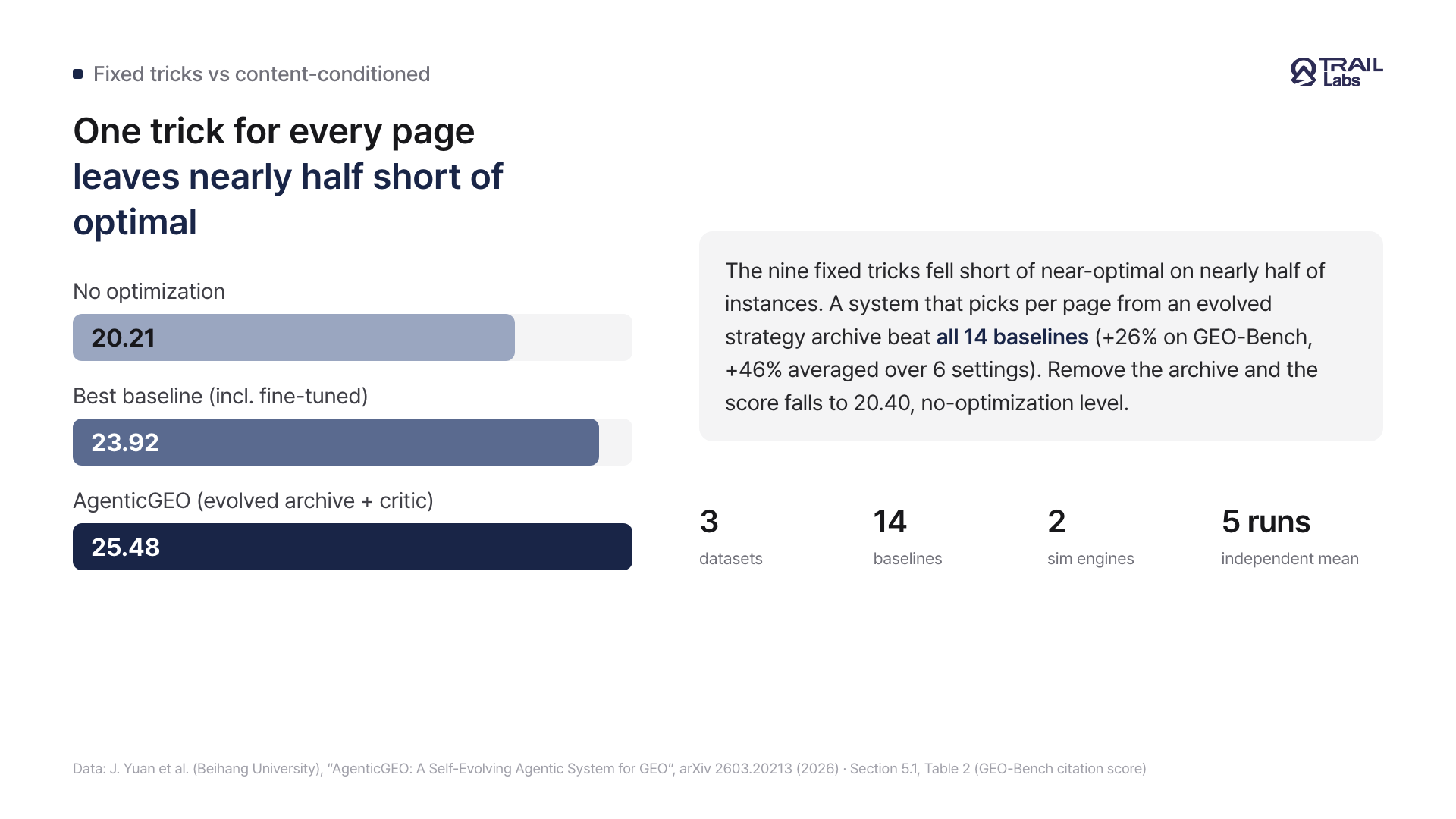
Figure 1. One trick for every page leaves nearly half short of optimal.
Do more rewrites increase AI citations?
Only up to a point. A single rewrite jumped the score from 20.21 to 24.33 [1]. It climbed a little through the third (25.48), then slipped from the fourth (25.14, 25.01) [1]. The drop is small and no variance is reported, but since it slips from the fourth, one to three rewrites were enough [1].
Training did not need much engine feedback either. Using only 700 engine-feedback samples (41% of 1,700) reached 98% of the system's own best score (25.12 versus 25.60) [1]. The critic that filters candidate strategies is a small model trained on that same feedback [1].
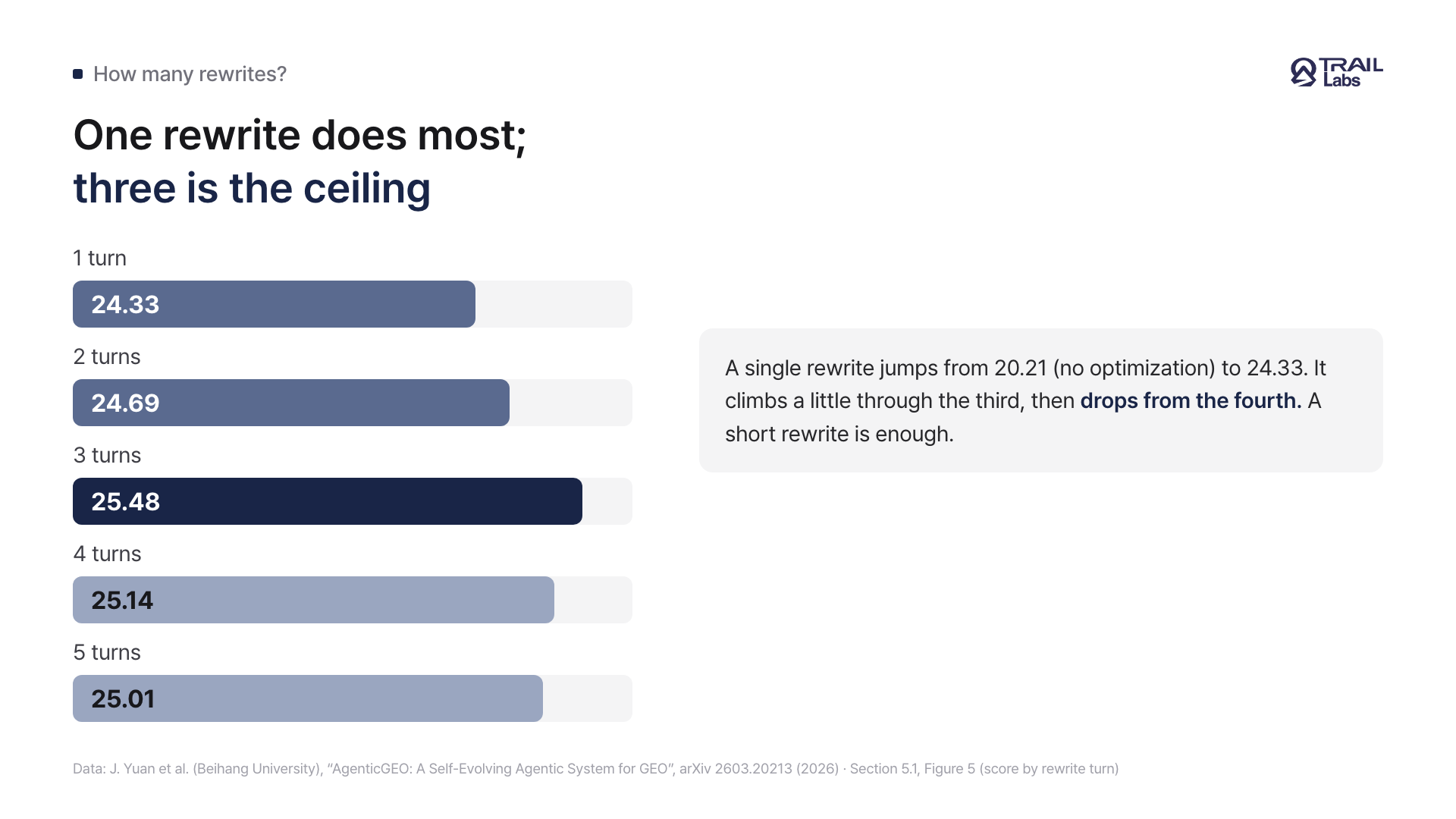
Figure 2. One rewrite does most, three is the ceiling.
Can optimizing content make an AI fabricate citations?
There was such a case. In an evolution loop that rewards only citation count, a strategy to "synthesize realistic user feedback to provide qualitative evidence" survived in the archive and was selected [1]. Example documents contain citations like "(Smith, 2018)" [1]. Whether those citations exist, or how much they contributed to the score, was not verified by the paper [1].
The study measured similarity to the original (BERTScore) but not whether a citation was real (factuality, hallucination) [1]. The seed prompts carried a "do not invent quotes or numbers" constraint, and whether the evolved strategies honored it was not reported either [1]. An optimizer that rewards only the score and does not measure factuality can converge this way [1].
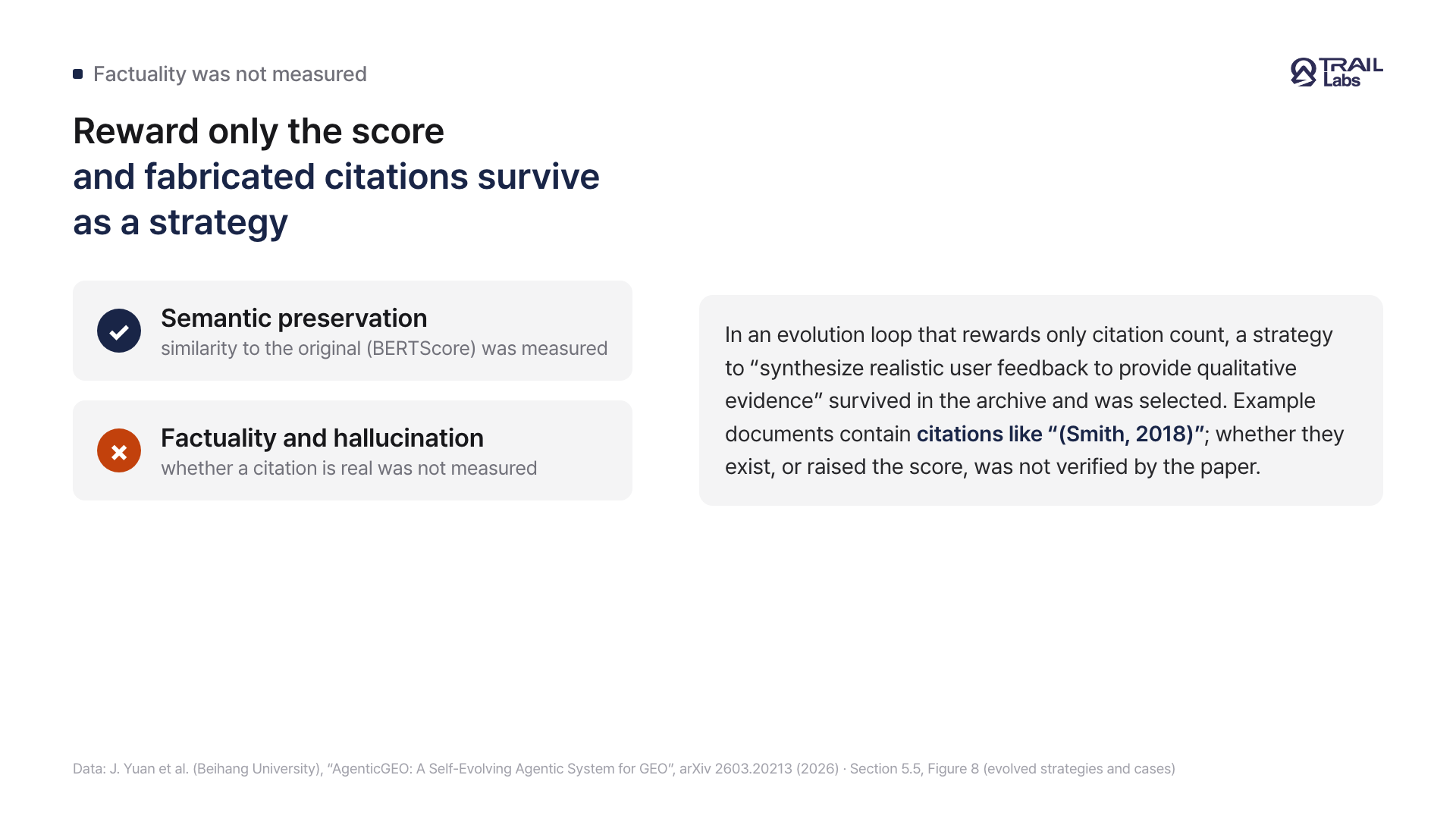
Figure 3. Reward only the score, and fabricated citations survive as a strategy.
What are the limits of this study?
The paper has no limitations section, so these are limits we found reading it. Performance was measured only on two simulation engines (Qwen2.5-32B, Llama-3.3-70B, five fixed documents per query), and no results on commercial engines like Google AI Overviews or Perplexity were reported. Factuality, hallucination, and how much the original was changed (edit ratio) were not reported. Conference template placeholders remain in the PDF, so it is a preprint with peer review unconfirmed. The code is open under Apache-2.0 according to the repository on GitHub. Individual numbers are safer read as direction than as precise values.
How does this connect to TRAIL Search?
Our fidelity gate was added on 2026-09-21 with this paper's cases as part of the basis. TRAIL Search's content generation does not accept a revision that brings in numbers or links not in the original or its evidence, or that drops a source link it was using. The instruction not to invent statistics, review counts, prices, or quotes applies to both generation and revision. Because the gate keys on numbers and links, fabricated prose that contains no numbers (a sentence like "according to one review") is not caught by it.
We also cap rewrites at two rounds, a limit set earlier on other evidence (CC-GSEO) that points the same way as this paper's one-rewrite result. Automated optimization that raises a score needs a factuality check alongside it to reduce the risk, and since a loop rewarding only performance produced synthetic citations in this study, we keep that check.
Frequently asked questions
How should you rewrite content to get cited in AI search?
Each piece of content needed a different strategy. In this study the nine fixed rewrite tricks (add sources, add statistics, and so on) fell short of near-optimal on nearly half of instances. A system that picks a strategy per page from an evolved archive beat all 14 compared methods, +26% over no optimization on GEO-Bench and +46% averaged over six settings. Remove the archive and the score falls to no-optimization level, so the accumulated strategies were the main source of the gain.
Do more rewrites increase AI citations?
Only up to a point. A single rewrite jumped the score from 20.21 to 24.33, it climbed a little through the third (25.48), then slipped from the fourth (25.14, 25.01). The drop is small, but one to three rewrites were enough.
Can optimizing content make an AI fabricate citations?
There was such a case. In an evolution loop that rewards only citation count, a strategy to synthesize realistic user feedback as qualitative evidence survived and was selected, and example documents contained citations like (Smith, 2018). The study measured similarity to the original but not whether a citation was real, so an optimizer that watches only the score can converge this way.
Is automated GEO optimization safe?
Optimizing automatically on the score alone creates a factuality risk. In this study a strategy producing synthetic citations and reviews survived, and factuality was not measured. So automated rewriting needs a factuality check alongside it to reduce that risk, such as not introducing numbers or sources that are not in the original or its evidence. A check like that still misses fabricated prose that contains no numbers.
References
Summary
- A Beihang team treated GEO as a problem where each piece of content needs a different strategy, evolving a strategy archive and picking a different rewrite per content.
- The nine fixed tricks fell short of near-optimal on nearly half of instances, while the evolved archive plus per-page selection beat all 14 compared methods, +26% on GEO-Bench and +46% averaged over six settings.
- A single rewrite did most of the work and the third was the ceiling, and training with only 700 engine-feedback samples (41% of 1,700) reached 98% of the system's own best score.
- In a loop that rewards only citation count, a strategy to synthesize user feedback survived, example documents contained synthetic citations, and factuality was never measured.
- It was measured only on two simulation engines with no commercial engine results, factuality was not measured, and it is a preprint.
Check this topic against your own brand
TRAIL Search measures how ChatGPT and Perplexity answer your customers' questions and finds and fixes where the brand is missing, turning this post into a diagnosis. Start with 10 questions, no card required.
More posts

Do AI search sources change with the user's location?
A 2026 University of Toronto audit of how user location changes the sources ChatGPT and Gemini cite, and which channel each engine reads location from.

How AI product recommendations vary across tools and APIs
A 2026 study of how decisively AI chatbots recommend products, which sources they display, and whether API audits represent the consumer screen.

How often do AI answers name people, and what rosters miss
A 2026 study of 2,400 grounded AI calls measures how often AI names individual professionals, and how much a roster-based count misses.
Keep reading on this topic
- MMDocRAG: can AI pick evidence in multimodal document RAG?MMDocRAG is a NeurIPS 2025 benchmark for multimodal document RAG. Even with perfect retrieval, the best model reaches only 70.2% quote-selection F1.
- Video-RAG: retrieving OCR and speech text, not more framesVideo-RAG retrieves OCR, speech, and object text for long video QA instead of more frames. A NeurIPS 2025 paper that lifts Video-MME without training.
- DeepSeek V4.1 Flash: smaller KV cache, same post-trainingReading the DeepSeek V4.1 Flash report: a KV cache cut to a quarter of V4's, and post-training that keeps V4's SFT, RL, and OPD recipe, changing only the data.
This post is part of the Papers category, which collects all 30 posts on the topic. See all posts in Papers