
How often do AI answers name people, and what rosters miss
On real estate, car, and insurance buyer questions, AI named an individual in about 1 of 4 answers. Counted against a roster, the same answers matched 0.5% of name mentions. Reading the arXiv preprint
A 2026 study of 2,400 grounded AI calls measures how often AI names individual professionals, and how much a roster-based count misses. Asking four grounded models 120 buyer questions five times each across four European markets, 25.8% of answers named an individual professional, a lower bound.
Ask AI search for "the best real estate agent in Warsaw" and about 1 answer in 4 names a specific person. Counted against a prebuilt 939-person roster, the same answers matched 128 of 27,293 name-shaped mentions, 0.47% [1]. The study is a single-author arXiv preprint from July 2026 by an author at Rankfor.AI (Tallinn, Estonia), a vendor of AI-visibility measurement. It has not been peer reviewed, and the author discloses the competing interest [1].
This article reads the arXiv paper v2, Tables 1 to 7 and Figures 1 to 5, as of October 2026, checking each number against the tables [1]. We did not run the data or code the author says is published. We have no relationship with the author.
How often does AI search name individual people when recommending?
AI-visibility research has mostly measured firms: which brands a model recommends and whether that tracks reputation. This study goes one level down, to categories where the buyer picks a person over a company: real estate agents, car dealership salespeople, and insurance brokers [1].
The design covers four markets (Poland, Ireland, the Netherlands, and the Baltics: Lithuania and Estonia) with 120 buyer-intent prompts, each sent five times to four grounded models (GPT-5.6 Sol, Gemini 3.6 Flash, Perplexity Sonar Pro, Grok 4.5). That is 2,400 calls, all collected on 24 July 2026 [1].
Of the 2,400 answers, 619 (25.8%) named an individual professional. The detector's precision is 96.9% but its recall is 61.7%, so every rate in the paper is a lower bound [1].
Category made the biggest difference: real estate 35.4% and car dealers 32.9% against insurance 9.1%. Models differed too: Grok 38.0%, Perplexity 34.0%, GPT-5.6 Sol 21.8%, and Gemini 9.3%, a gap of more than four times. In a model with all factors together, insurance cut the odds of naming to one twelfth of real estate, and the model moved the odds about elevenfold from bottom to top [1].
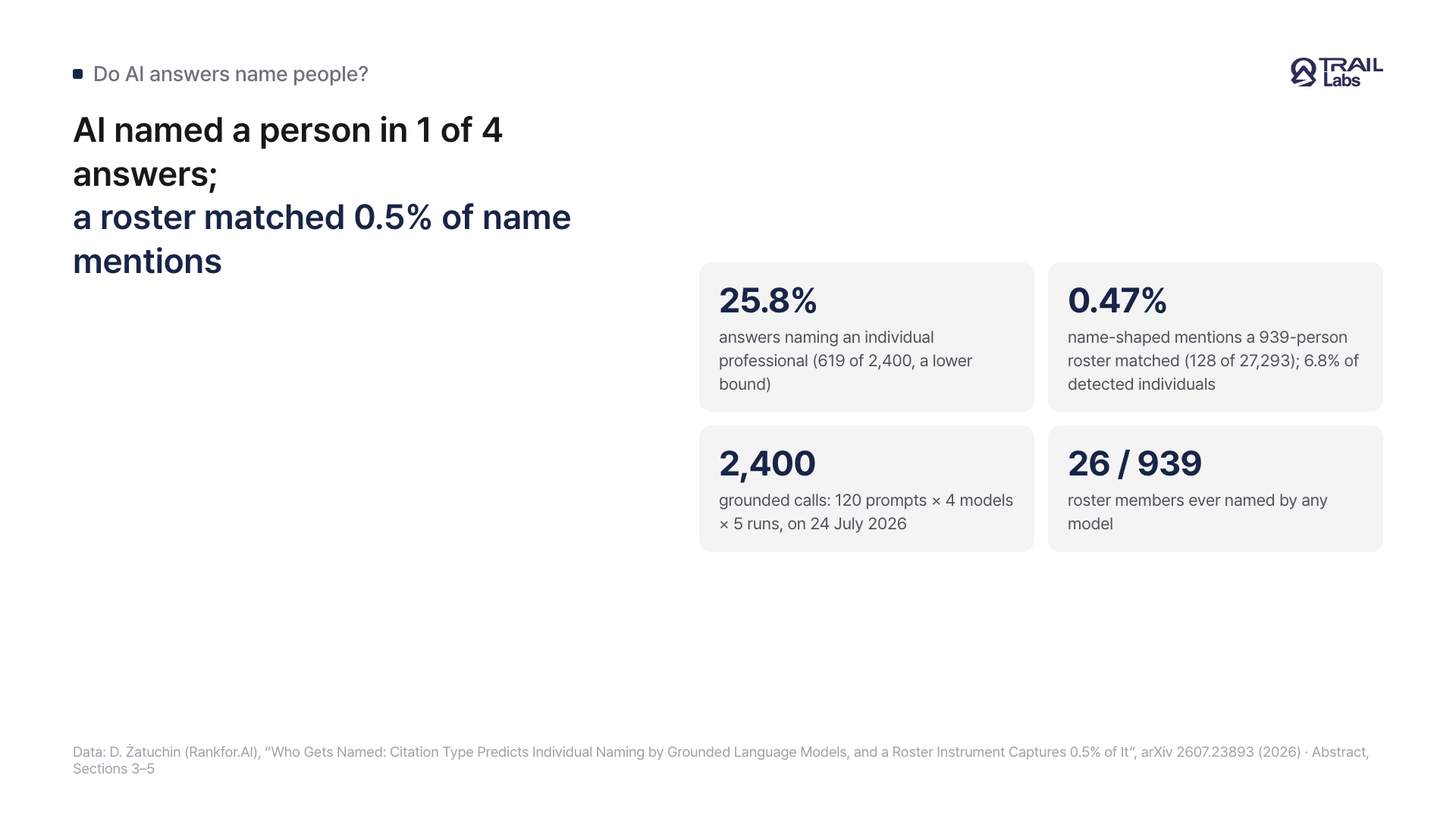
Figure 1. AI named a person in about 1 of 4 answers, and a 939-person roster matched 0.47% of name-shaped mentions [1].
What does counting AI mentions against a roster miss?
The easiest way to measure an individual's AI visibility is a roster: list real professionals and count their names in answers. The author built a 939-person roster from LinkedIn search and ran this method on the same 2,400 answers [1].
The roster matched 128 of 27,293 name-shaped mentions (0.47%). Against the 1,876 detections the roster-free detector resolved to individuals, it captured 6.8%. Of the 939 people, 26 were ever named [1].
The trouble is that the number looks plausible. By the roster, Poland scored 0 of 600, 0.0%. Counted without the roster, models named an individual in 31.3% of Polish answers. A roster-based figure measures the overlap between a list and the answers, which is not model behaviour [1].
The model comparison flipped as well. Roster-free, GPT-5.6 Sol at 21.8% and Gemini at 9.3% clearly differ; against the roster they read 3.3% and 3.2% and cannot be separated. Market order changed too: a roster overlaps more in smaller markets, which turns market size into an apparent market effect [1].
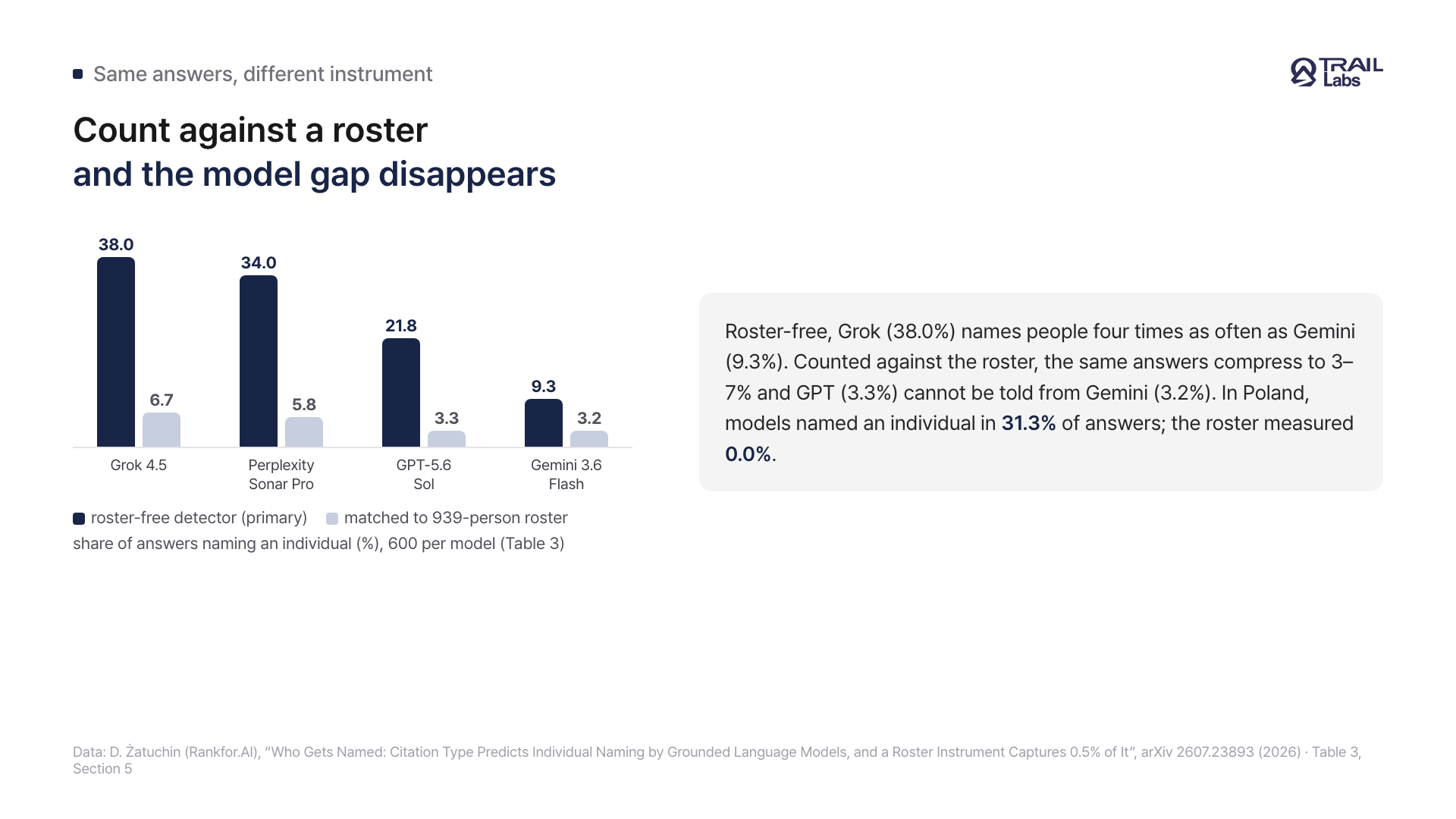
Figure 2. Roster-free, the model gap is fourfold; matched against the roster, every model is pressed low and the gap disappears [1].
| Model | Roster-free detector (primary) [1] | Roster matched [1] |
|---|---|---|
| Grok 4.5 | 38.0% | 6.7% |
| Perplexity Sonar Pro | 34.0% | 5.8% |
| GPT-5.6 Sol | 21.8% | 3.3% |
| Gemini 3.6 Flash | 9.3% | 3.2% |
Table 1. Values from the paper's Table 3, 600 answers per model [1].
Which cited sources make AI answers name a person?
First, citation count had no effect. Answers naming a person cited 7.90 sources on average, and answers naming no one cited 8.81 [1].
The difference was in the type of source. The author reclassified 2,182 cited domains into 20 types and compared citation shares between answers naming a person and answers naming only firms. Naming answers cited individuals' own sites 2.58 points more and category portals 4.27 points more, and social platforms 2.19 points less. Firm sites showed no difference, 44.1% against 45.5% [1].
This reverses the first analysis. The collection-time classifier put every domain outside a list of about forty into "employer-owned page". That default absorbed 87.2% of all citations, reddit.com included. Under it, the conclusion was that "a person gets named when their name is visible on the employer's site", and it disappeared after reclassification [1]. The author names the failure: an allowlist with a substantive else-default reports its own default category as a finding.
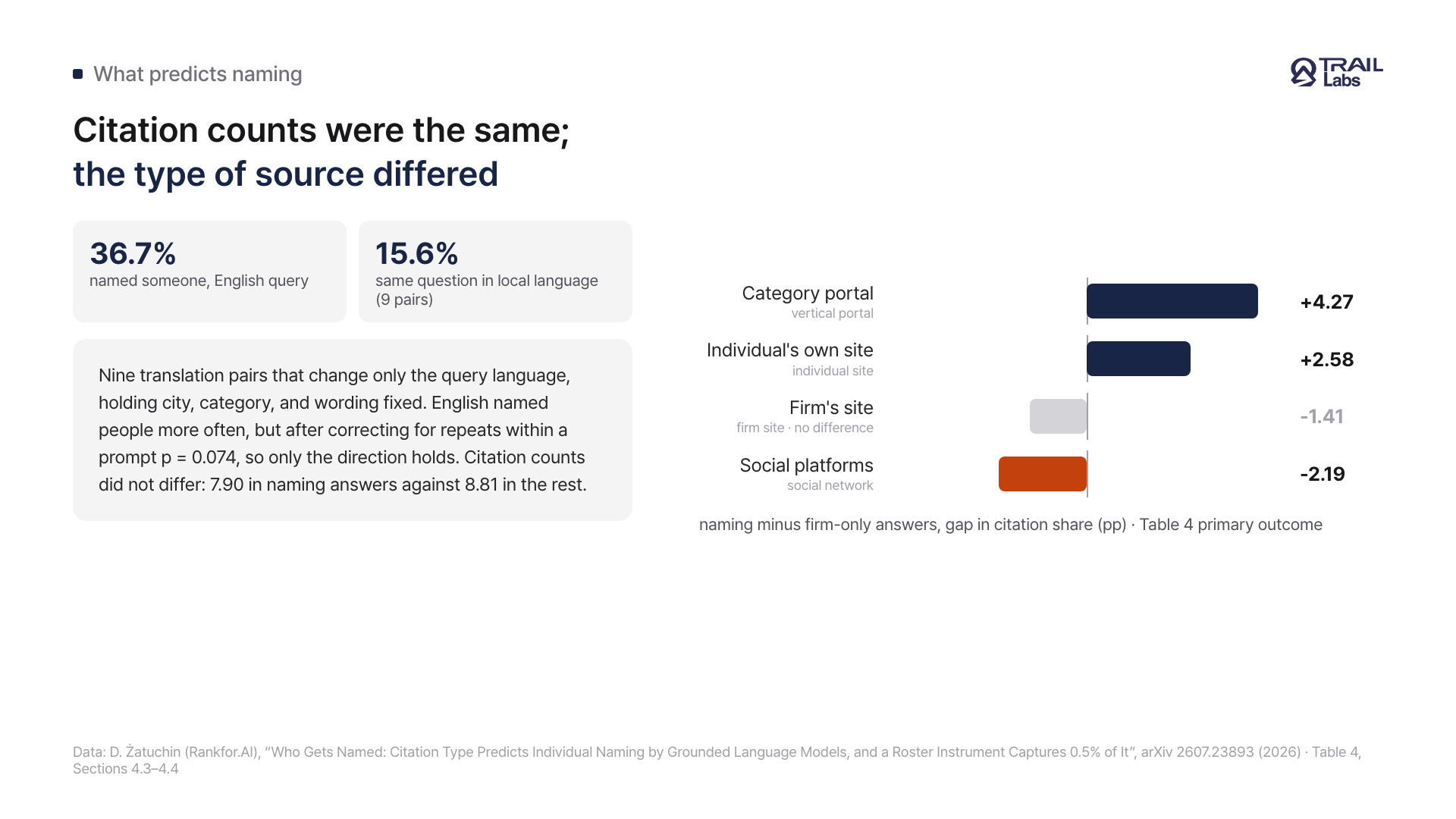
Figure 3. Citation counts were the same; the type of source differed. Firm-site share showed no difference [1].
Does the query language change AI recommendations?
The cleanest comparison is nine translation pairs that change only the language, holding city, category, and wording fixed. English named someone in 66 of 180 answers (36.7%), and the local-language translation in 28 of 180 (15.6%) [1].
The author says only the direction holds. Correcting for each prompt being answered 20 times gives p = 0.074. Cities differed as well: English was higher in Amsterdam and Vilnius, while in Warsaw English scored 29.0% against 36.7% for Polish, the other way around. It should not be read as a general rule that English queries name more people [1].
How was the study run, and what did it fix?
The fixes the author made during measurement are the most useful part of the paper [1].
- Calls without web search: the first 600 OpenAI calls used the Chat Completions endpoint, which did not support real web search for GPT-5.x. Those answers came from training knowledge alone, so all 600 were re-collected with the Responses API web_search tool [1].
- Answers without sources: even after re-collection, 177 of 2,400 answers (7.38%) carried no citation, 137 of them from OpenAI [1].
- Same-named American cities: ask for a car dealer in Warsaw and dealers in Warsaw, Indiana appear. 4.68% of citations for Warsaw prompts went to local businesses in the American namesake [1].
- Firms named after people: 13.3% of detected names were firm names shaped like personal names, 47.8% in Ireland. That one rule changed the market ranking [1].
Statistics correct for repeats within a prompt. With 2,400 answers but strong within-prompt correlation, the effective sample is about 407 [1].
What are the limits of this study?
The author's own limits: detector recall of 61.7% makes every rate a lower bound, and all calls ran within about two hours on 24 July 2026, so nothing is claimed about stability over time. The roster is a convenience sample of what LinkedIn search surfaced, and cross-model agreement is too thin to conclude [1].
Two more points from our reading. First, the author works for a company selling individual AI-visibility measurement, and the paper is pre-peer-review. The author discloses this and reports that the conclusion most favourable to sales, the firm-site mechanism, was not supported. Second, it covers only four European markets and three categories. Whether Korean queries or Korean AI search show the same pattern needs its own measurement [1].
For a related read, see our stage model of brand mentions in AI answers.
What this means for TRAIL
TRAIL Search also counts mentions in AI answers with a list. It finds the registered brand and competitor names (including aliases) in each answer and records rank and whether the source was cited. So this paper's point applies to us directly: a competitor the user did not register goes uncounted today, and we have not measured how often that happens.
One safeguard is already in place. Answers whose sources could not be retrieved are marked as not measurable, not counted as no mention. It guards against reading "what the measurement could not see" as "no mention", the trap in the paper's Polish case. The next step is to extract names outside the list and show how much of each answer the registered list covers. That is a plan and not yet built.
Does your AI-visibility tool count only names you registered in advance, or does it also surface the names that appear in answers? If you have compared the two numbers, we would like to hear how far apart they were.
Dmitrij Żatuchin, "Who Gets Named: Citation Type Predicts Individual Naming by Grounded Language Models, and a Roster Instrument Captures 0.5% of It", arXiv 2607.23893 (2026).
#AIVisibility #GEO #RosterMeasurement #PersonalBranding #AISearch #PaperReview #TRAILLabs
Frequently asked questions
How often does AI search name individual people when recommending?
Across 2,400 real estate, car dealership, and insurance buyer questions in four European markets, four grounded models named an individual professional in 25.8% of answers. The detector's recall is 61.7%, so the true rate may be higher. It varied sharply by category (insurance 9.1%, real estate 35.4%) and model (Gemini 9.3%, Grok 38.0%) [1].
What does counting AI mentions against a roster miss?
Any name not on the list. In this study a 939-person roster built from LinkedIn matched 128 of 27,293 name-shaped mentions (0.47%). In Poland, models named an individual in 31.3% of answers, while the roster measured 0.0% [1].
Which cited sources make AI answers name a person?
Citation counts did not differ; the type of source did. Answers naming a person cited the individual's own site 2.58 points more and category portals 4.27 points more, and social platforms 2.19 points less. Firm sites showed no difference (44.1% against 45.5%) [1].
Does the query language change AI recommendations?
On nine translation pairs that change only the language, English queries named someone in 36.7% of answers against 15.6% for the local language. After correcting for repeats within a prompt, p = 0.074, so only the direction holds, and some cities such as Warsaw showed no gap [1].
References
Summary
- Asking four grounded models 120 buyer questions five times each across four European markets, 25.8% of answers named an individual professional, a lower bound.
- Category and model moved naming most: insurance cut the odds to one twelfth of real estate, and models ranged from Gemini at 9.3% to Grok at 38.0%.
- A LinkedIn-built roster matched 0.47% of name-shaped mentions, and roster-based figures distorted both the model gap and the market order.
- Answers naming a person cited the same number of sources but more individual sites and category portals; firm-site share did not differ.
- Businesses in same-named American cities (such as Warsaw, Indiana) leaked into answers, and person-named firms were common enough that the counting rule changed the results.
Check this topic against your own brand
TRAIL Search measures how ChatGPT and Perplexity answer your customers' questions and finds and fixes where the brand is missing, turning this post into a diagnosis. Start with 10 questions, no card required.
More posts
Do AI search sources change with the user's location?
A 2026 University of Toronto audit of how user location changes the sources ChatGPT and Gemini cite, and which channel each engine reads location from.

How AI product recommendations vary across tools and APIs
A 2026 study of how decisively AI chatbots recommend products, which sources they display, and whether API audits represent the consumer screen.

MMDocRAG: can AI pick evidence in multimodal document RAG?
MMDocRAG is a NeurIPS 2025 benchmark for multimodal document RAG. Even with perfect retrieval, the best model reaches only 70.2% quote-selection F1.
Keep reading on this topic
- Video-RAG: retrieving OCR and speech text, not more framesVideo-RAG retrieves OCR, speech, and object text for long video QA instead of more frames. A NeurIPS 2025 paper that lifts Video-MME without training.
- DeepSeek V4.1 Flash: smaller KV cache, same post-trainingReading the DeepSeek V4.1 Flash report: a KV cache cut to a quarter of V4's, and post-training that keeps V4's SFT, RL, and OPD recipe, changing only the data.
- A reward ceiling for RL alignment, computed before trainingAn Apple study computes the reward ceiling of RL alignment before training. Best-of-N reaches it, PPO and GRPO stay below, and reward hacking gets an equation.
This post is part of the Papers category, which collects all 30 posts on the topic. See all posts in Papers