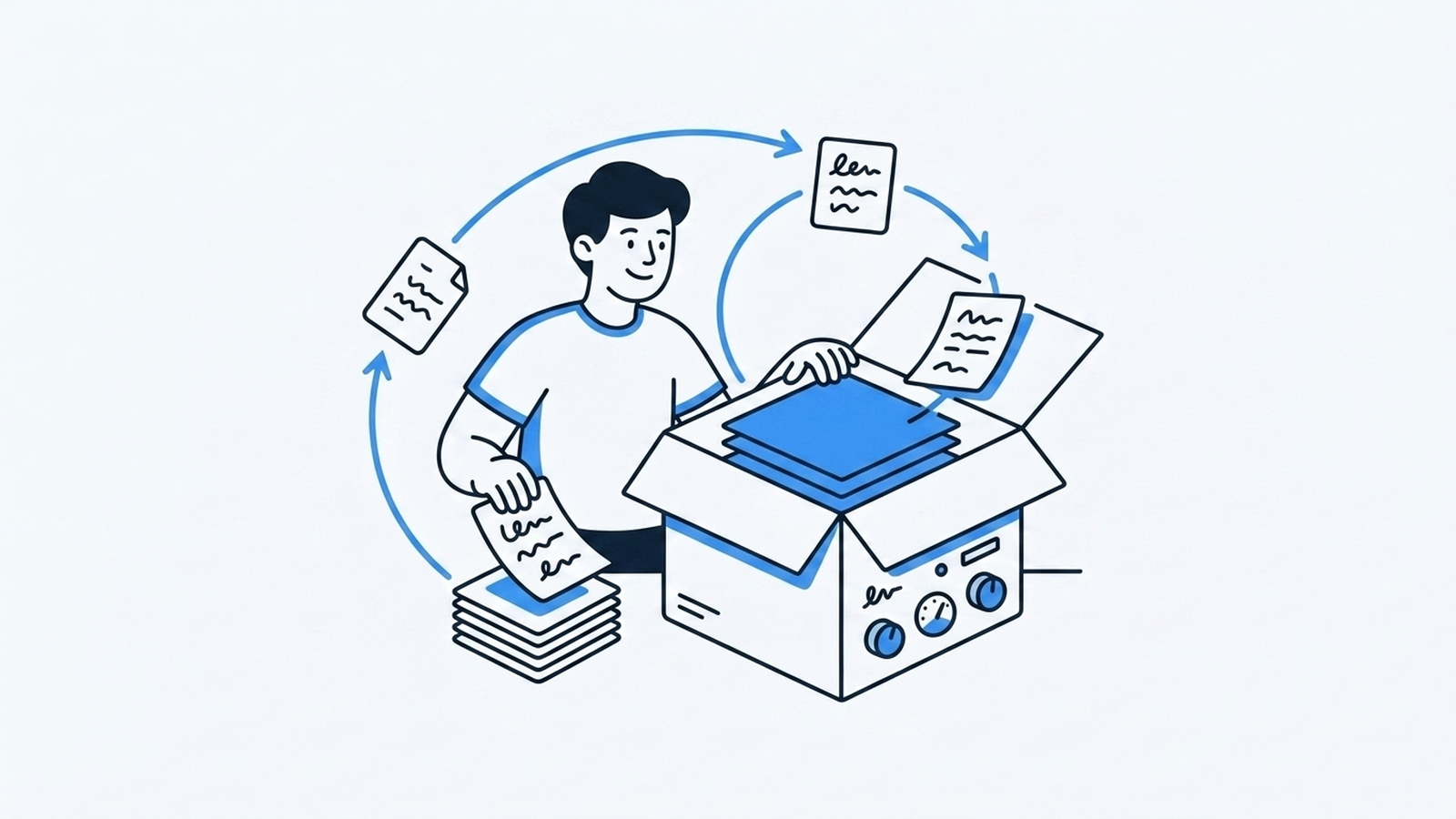
Open-Weight vs. API Models: Own a Domain Model with Hermes
If you've come from prompts all the way to harnesses, the last stage is owning the model itself. Nous Research's Hermes open models, its function-calling standard, and the data flywheel, with code.
Own the model instead of renting it: why open weights, open vs. API models, Nous Research Hermes 4.3, its function-calling standard, and the data flywheel.
The last stage of the evolution is owning the model instead of renting it. Up to now, we've rented models. We typed prompts into a chat window (Part 1), handed over code (Part 2), passed off the loop (Part 3), and designed a harness around it all (Part 4).
> Part 5 (final) of the "Evolution of LLM use" series. ① Prompting · ② Vibe coding · ③ Agents · ④ Harness engineering · ⑤ Open models.
Why own the model?
Renting a frontier model through an API is convenient, but it comes at a price. When pricing or policies change, you're dragged along; you have to send your data outside; and you can't change the model to fit your domain. Open-weight models flip all three. Here it is in a table.
| Option | Cost control | Data privacy | Domain customization |
|---|---|---|---|
| Frontier API | Dragged along by pricing and policy changes | Data is sent outside | Limited to prompts and RAG |
| Open-weight model (e.g., Hermes) | You control only infrastructure cost | Processed inside your own infrastructure | You can fine-tune directly |
A leading example is the Hermes family from Nous Research. Through its most recent version, Hermes 4.3 (December 2025, based on ByteDance's Seed-OSS-36B), Hermes has established itself as an open model strong at system-prompt adherence, steering, and function calling [1][3]. What's interesting is that Nous doesn't just release models; it also opens up an open agent framework (Hermes Agent) and a native desktop app (Hermes Desktop, released in 2026, MIT). You can own the model, the agent, and the harness as a whole.
Function calling has a standard too
Remember the structured output (tool_use) from Part 1? Open models have the same thing. The Hermes Function Calling standard [2] puts tool definitions (JSON schema) in <tools>, calls in <tool_call>, and results in <tool_response>.
<!-- Hermes function calling: tool definitions go inside <tools> as JSON schema -->
<tools>
[{"name": "emit_slides",
  "parameters": {"type": "object",
    "properties": {"slides": {"type": "array"}},
    "required": ["slides"]}}]
</tools>

<!-- The model calls tools in this format -->
<tool_call>
{"name": "emit_slides", "arguments": {"slides": [/* … */]}}
</tool_call>
Only the format differs; it's exactly the same idea as tool_use in Part 1: enforce output as an interface. So you can move a harness designed for frontier models to an open model almost as is.
The harness is a data factory
This is where the side effect from Part 4 comes to life. A well-designed harness leaves standardized data with every run: input → tool call → verified output. That's an instruction-tuning dataset as is.
Then the flywheel turns. The more you use the harness, the more domain data piles up → you use that data to fine-tune an open model (e.g., Hermes) for your domain → your existing workflows become the evaluation criteria (evals) as they are → the better-fitted model runs the harness again. The structured output our generation pipeline leaves through tool_use, and the held-out judge we use for verification, are the raw material for exactly this flywheel.
Honestly, this stage is still closer to a hypothesis. It assumes enough data, quality control, and sustained investment. But the direction is clear: from renting models toward owning the model, the harness, and the data as a whole.
Closing the series
We've gone through five stages: typing prompts into a chat window, building by vibe, handing the loop to agents, designing a harness around it, and finally owning even the model layer. The one line that runs through it all: LLM use is moving away from individual instinct and toward systems that teams design and own.
The way we build content automation sits exactly on this trajectory: treat prompts as interfaces, add verification to generation, raise the quality floor with a harness, and improve with the data it produces. Trail Studio is the result of applying that system to content.
Frequently asked questions
Are open-weight models always better than frontier models?
No. Open weights don't always catch up to the peak performance of the latest frontier models. Instead, they have the edge when you need direct control over cost, data privacy, and domain customization. The two options are less substitutes than tools for different jobs.
How much data do I need to adopt an open model like Hermes?
There's no set minimum, but the more "input → tool call → verified output" records your harness accumulates, the better the fine-tuning quality. That's why adopting an open model is a stage that follows naturally once you have a harness in place.
If the function-calling standard is different, do I have to rebuild my harness?
The format differs (JSON tool_use vs. XML tags), but the idea is the same: enforce output as an interface. So when you move verification and hook logic designed for frontier models to an open model, you can reuse most of it by changing little more than an adapter.
References
Summary
- Open-weight models let you directly control cost, data privacy, and domain customization.
- Nous Research's Hermes family is a set of open models strong at system-prompt adherence and function calling, and it opens up the model, agent, and harness as a whole.
- The Hermes Function Calling standard implements the same idea as tool_use (enforcing output as an interface) with <tools>/<tool_call>/<tool_response> tags.
- A well-designed harness leaves standardized data with every run, which drives a flywheel that uses that data to fit open models to your domain.
Why TRAIL Labs works this way
How a researcher-founder grounds measurement and recommendations, and how the three products relate to the company, is laid out on the about page, and how we work day to day is written up separately.
More posts
TRAIL Labs joins the Google for Startups Cloud Program
TRAIL Labs has joined the Google for Startups Cloud Program, gaining cloud credits and support to run our AI-search measurement and content engine at scale.
TRAIL Labs has joined the NVIDIA Inception program
TRAIL Labs has joined the NVIDIA Inception program, gaining compute, technical resources, and a network to grow our AI-search measurement and content engine.
Is AI search visibility enough? Why we changed our question
AI search visibility is countable, but more of it doesn't mean your accurate information reached the answer. What measurement and three papers taught us.
Keep reading on this topic
- Defending Against RAG Hallucinations: Types and LimitsRAG retrieves outside documents to ground answers, yet hallucinations still arise in retrieval and generation. Types, defenses, and limits of automated checks.
- Design principles for a GEO data AI agentDesign principles for a GEO data AI agent: text parsing vs. structured tool calls, blocking irreversible actions, and why skipping evals is risky.
- What Is Harness Engineering? Why the Same LLM DiffersThe harness around the model keeps agents safe and steady: how it differs from prompting, scoped tools, hooks, layered context, verification, MCP self-call.
This post is part of the TRAIL Labs category, which collects all 19 posts on the topic. See all posts in TRAIL Labs