ChatGPT optimization: get your brand mentioned in AI chats
Getting chosen in a chat window takes a different strategy than a search box
ChatGPT optimization is not search SEO. Cover training data, live search, and conversation context, track brand mentions, and avoid the common mistakes.
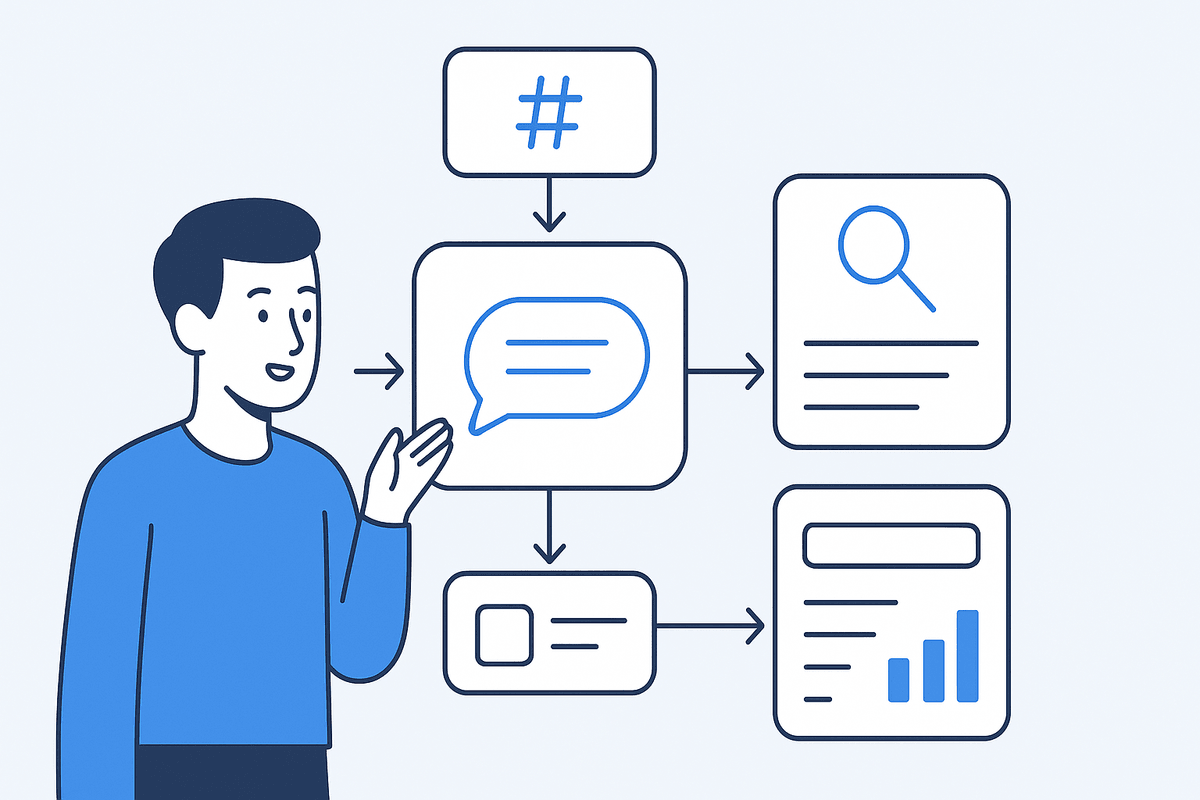
ChatGPT optimization is not an extension of search engine SEO. It is a separate job of understanding and responding to each of the two paths ChatGPT uses to build answers: pretrained knowledge and live search results. It is less a technique for raising rankings and more about building a trust structure that leads AI, when someone asks it a question, to judge that "it is safe to mention this brand."
Many marketers think of ChatGPT optimization as "Google SEO tweaked a little for ChatGPT." But ChatGPT handles information in a fundamentally different way from search engines. When a user asks a question, ChatGPT first looks for an answer within its pretrained knowledge, and when it needs current information or specific facts, it looks up the web through its live search feature to supplement the answer[1]. Each of these two paths has different requirements for a brand to be mentioned.
Path 1: getting mentioned from pretrained knowledge
ChatGPT's pretraining data consists of a vast body of web text collected up to a certain point. To be mentioned through this path, your brand needs to be covered consistently, over a long period, in the same context across many sources. It is an accumulated signal, not one created overnight. Contributed articles in industry media, natural mentions in communities, and repeated appearances in review and comparison content are the assets that build up on this path.
By the nature of this path, new brands and brands that recently changed their positioning are inevitably at a disadvantage. Until the training data is refreshed, they may remain as outdated information or no information at all. The second path is what fills that gap.
Path 2: getting supplemented by live search results
When ChatGPT's search feature is on, it looks up the web in real time to build answers for questions that pretrained knowledge alone cannot answer well, such as breaking news, prices, and recently launched products[1]. This path overlaps a lot with traditional search engine optimization. A crawlable setup, a clear information structure, and a recent update date matter. Brands that are new or that deal with fast-changing information should invest more heavily in this path.
| Path | What builds up | Brands with the advantage | What to do |
|---|---|---|---|
| Pretrained knowledge | Public mentions accumulated over a long period | Established brands that have been mentioned steadily | Keep securing visibility in industry media and communities |
| Live search | Current, crawlable, structured content | New brands, categories where current information matters | Strengthen structure, freshness, and clear direct answers |
Levers that work on both paths
Different paths do not mean entirely separate work. The elements below work positively on both paths.
- Question-based content structure: Using questions users would actually ask as subheadings and answering clearly right below them helps both when content is absorbed into training data and when it is extracted by live search[2].
- Clear definition sentences: Sentences that start in the form "A is B" are easy material for AI to summarize as a definition.
- Structured FAQs: Question-answer pairs combined with FAQPage schema are units that are easy to extract on both paths[3][4].
- Consistent brand descriptions: If you use different descriptions on each channel, AI gets confused on either path.
Practical checklist
- Write a target question list: Pull together 20 or more questions users would likely ask ChatGPT about your product or category.
- Check for direct-answer content for each question: Check whether there is a page or section that clearly answers each question.
- Check freshness signals: For content that changes often, such as prices, features, and launch information, show the update date clearly.
- Expand industry mentions: Increase opportunities for your brand to be mentioned naturally in contributed articles, community answers, and partner content.
- Monitor prompts regularly: Ask ChatGPT the same set of questions periodically and record whether you are mentioned and how the context changes.
A case that shows the difference between the two paths
Here is a hypothetical example. An established B2B software company has been mentioned steadily in industry media and communities for years, so when you ask ChatGPT for recommendations in its category, it is often mentioned from pretrained knowledge alone, without the search feature. A new service launched this year, on the other hand, is likely not yet reflected in the training data, so it can be mentioned only through live crawling when the user asks with search turned on.
This difference sets strategic priorities. An established company needs a balance: focus on maintaining and reinforcing the assets already built up on the pretraining path, and supplement current information (price changes, new features) through the live search path. For a new service, it is more efficient to concentrate resources on structure and freshness so it gets found as quickly and as clearly as possible on the live search path. Rather than investing equally in both paths, diagnosing your brand's current position first and allocating resources accordingly produces better results in practice.
Common mistakes
- Treating it as a one-time optimization: Fixing a page once and stopping cannot create the signal that accumulates on the pretraining path. Steady mentions need to build up.
- Focusing only on live search and neglecting freshness signals: Old pages without update dates or current information get pushed down on the live search path too.
- Judging results from a single query: ChatGPT's answers to the same question can vary with timing and context, so judge by the average of repeated queries.
- Not checking competitor mentions alongside yours: Looking only at how often you are mentioned gives you no basis for judging whether the absolute number is good or bad. You need to see how often competitors are mentioned for the same questions too.
Making monitoring a habit
ChatGPT optimization is not a set-and-forget task but a loop of continuous observation and adjustment. If you register a target prompt set in TRAIL Search (search.traillabs.ai), you can regularly check how often and in what context your brand is mentioned across several AI engines, including ChatGPT, and catch early the points where the gap with competitors widens.
In the end, ChatGPT optimization is "accumulating the trust that makes AI feel it is safe to mention you." Teams that manage both the long-term signal that builds up in training data and the short-term signal picked up by live search can get ahead in the new channel of the chat window.
For related reading, see What is GEO (generative engine optimization)? Which pages to start with, and in what order, SEO fundamentals in the AI search era: what changed in on-page, off-page, and technical, and llms.txt setup guide: how it differs from robots.txt, templates, priorities, and verifying impact.
Frequently asked questions
Are ChatGPT optimization and Google SEO completely different jobs?
They share a foundation. Both call for clear structure, credible sources, and current information. ChatGPT differs from search engines in that it builds answers by combining knowledge learned from training data with live search results. So you need to take care of both a steady presence and readiness for live crawling.
What if ChatGPT does not know my brand at all?
Even a new brand that is not in the training data can be answered about when ChatGPT's search feature is on, because it looks up the web in real time. In that case page structure and freshness become critical, so the newer your brand, the more attention you should pay to structure and freshness signals.
How do I track whether ChatGPT mentions us?
The basic method is to query the same set of target prompts periodically and record whether you are mentioned, in what context, and your share relative to competitors. A tool like TRAIL Search lets you automate this and track it over time.
References
Summary
- ChatGPT mentions brands by combining two paths, pretraining data and live search results. You need to handle the two separately.
- Steady, consistent accumulation of public information works more strongly on the training data path, while structured, current content works more strongly on the live search path.
- Question-based content, clear definition sentences, and FAQ schema are shared levers that raise the chance of citation on both paths.
- Judge results as a trend by repeatedly tracking the same prompt set, not from a single query.
Produce the content this post covers from your brand standard
TRAIL Studio registers the brand standard once and produces cardnews, detail pages, product photos, shorts and blog posts from it. Generated output is reviewed and edited by a person before it ships.
More posts
Best AI Search Optimization Tools 2026: 6 GEO Tools Ranked
We compared six tools that check whether ChatGPT and other AI answers mention your brand, on measurement, action, engines, Korea support, and price.

Why Does ChatGPT Cite Listicles? Format vs. Hierarchy
Listicles split items cleanly, so AI can extract just what it needs. How to write citable listicles, whether format alone is enough, and how to build hierarchy.

What is GEO? Which pages to start with, and in what order
GEO structures content so generative search like ChatGPT and AI Overviews cites it. Does it replace SEO, what order to run it in, and how to measure it.
Keep reading on this topic
- Topical authority: why pillar-cluster beats a single postTopical authority comes from content clusters, not single posts: the pillar-cluster model, how to design one, why it wins in AI search, and when it's enough.
- A 4-step framework for SEO and GEO: split teams or merge?SEO and GEO work best on one content quality foundation. Whether to split or merge teams, a 4-step framework, why unified plans fail, and one shared metric.
- SEO and GEO top spots: high rankings, missing in AI answersReaching the top now covers how AI answers mention you, not just rankings. What changed, how to manage both tops, and why competitor comparison matters.
This post is part of the Content category, which collects all 41 posts on the topic. See all posts in Content