Clinic and Academy Location Pages: What AI Search Cites
Not a 'directions' page, but a per-location trust page that also earns AI answer citations
What clinic, academy, and local service location pages need to get cited in AI search: vs. service area pages, multi-location upkeep, medical caveats.
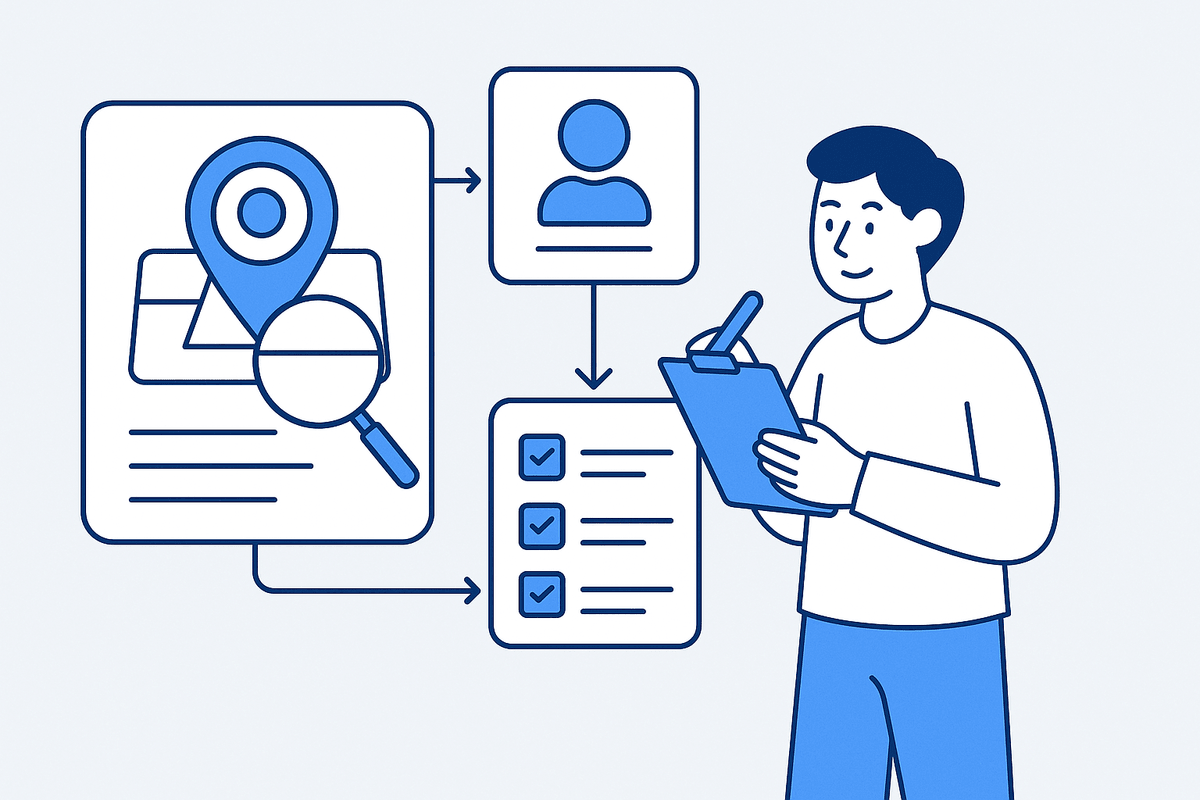
In the AI search era, a location page isn't a "how to find us" notice. It's a per-location trust page that handles search visibility, map information, AI answer citations, and conversion all at once. Backlinko tested 30 local queries of the "best [service] in [city]" type in Google AI Mode, ChatGPT, and Perplexity and classified 725 cited sources. Perplexity cited business websites directly a full 73% of the time, and location pages were among them[1].
You can't apply this number to every industry as-is. Google AI Mode leaned more on review platforms and communities, and ChatGPT referenced "best of" lists from local media more often. Still, the signal for local businesses is clear. If a location page is specific enough, it can be cited directly in AI answers, or it can become the primary source that external reviews and map data are checked against.
Location pages and service area pages are different pages
First, you need to separate the two.
Walk-in location pages are for branches customers actually visit. Clinics, dental offices, Korean medicine clinics, cafes, academies, fitness centers, and franchise stores are typical examples. The purpose of this page is to let people quickly decide "Should I go here?"
Service area pages are for businesses that travel to the customer or actively serve customers in a specific area. Industries like plumbing, electrical, cleaning, pest control, on-site repair, and industrial equipment inspection fall into this group. Even a business with a single address may design service area pages as well if it serves demand from nearby neighborhoods.
Building dozens of pages with the same sentences and only the place name swapped is risky, though. Google's official guidance also emphasizes basic SEO and people-first content over AI-specific tricks[2]. Each area needs information that actually differs: clinic hours, directions, parking, contact person, service scope, and available booking times.
It's also common to mix up the two types and design pages wrong. For example, an academy with only one branch might split that branch into several pages by subject, like "[Neighborhood] math academy" and "[Neighborhood] English academy." That's neither a location page nor a service area page; it's effectively the same information repeated. If you have one branch, splitting sections by subject within a single location page is clearer for both AI and users than splitting pages by subject.
Page structure varies by industry
| Industry | Must-have information | Concrete examples |
|---|---|---|
| Hospital/clinic | Departments, medical staff, equipment, booking, parking, evening hours | After-work booking slots, what to bring for a first visit, physical therapy room location |
| Dental | Implants, orthodontics, pediatric dentistry, CT on site, care with warranty language | Consultation process and exam items instead of treatment guarantees, expected range of visits |
| Academy | Target grades, curriculum, timetable, shuttle, level test | Coverage of nearby schools' exam scope, class placement criteria, consultation hours |
| Restaurant/cafe | Signature menu, reservations, waitlist, parking, outlets, pets | Price range, how the waitlist works, group seating conditions, number of laptop-friendly seats |
| Fitness | PT, Pilates, showers, hours, trial passes | Trainer experience, early-morning class times, women-only areas |
| Franchise | Address, hours, local promotions, owner notices | Delivery zones, peak-season hours, photos of each branch |
| Regional B2B | Industries served, SLA, on-site visit hours, quote process | Emergency dispatch range, equipment inspection items, tax invoice conditions |
| On-site services | Call-out fee, service areas, booking lead time, emergency response | Visit hours, work limitations, conditions for extra charges |
Five things every location page needs
First, NAP information. Name, address, and phone number must match across Google Business Profile, your website, maps, and external directories. It also matters to lay out the main number and direct department lines so people don't confuse them.
Second, real visit-planning information. "Teheran-ro, Gangnam-gu" alone isn't enough. You need information that affects the decision before a visit: subway exits, building entrance, parking entry, accessibility, waiting areas, and the after-hours entry route.
Third, a specific service scope. The more specific, the better: "dedicated B2B lead ads for manufacturers" beats "marketing agency." For clinics, showing the actual procedure, such as "intake questionnaire at the first visit, deciding whether tests are needed, the treatment booking flow," is both safer and more useful than "pain treatment."
Fourth, unique content per page. When franchise branches use the same copy, they struggle to get picked in both AI search and regular search. Fill in local information: commuter demand for a store near a station, exam-period hours for one near a university, corporate payment details for one in an industrial park.
Fifth, structured data. Review the schema that fits your situation, such as LocalBusiness, MedicalBusiness, or Restaurant[3]. Review snippets can violate policy, though, so be careful not to over-mark up reviews that you control yourself.
With multiple branches, set up a management system first
Franchises and multi-location businesses have to repeat these five items for every branch, so without a content management system, quality slips quickly. The safe structure is for headquarters to create a shared template and clearly split which items each branch fills in.
| Owner | Responsible for | Update frequency |
|---|---|---|
| Headquarters | Shared brand information, page template, structured data schema | When brand policy changes |
| Branch | Hours, local promotions, photos, contact person details | At least once a month |
| Marketing | NAP consistency, review responses, checking visibility in AI answers | Once a quarter |
With roles split this way, a baseline of quality holds even if headquarters doesn't check every branch's details one by one. The more branches you have, the more it matters for operating speed to define clearly "which items branch staff can update directly without headquarters approval."
Medical businesses should check risk first
Pages for medical businesses, such as hospitals, dental offices, Korean medicine clinics, and dermatology clinics, should look at advertising language risk before local optimization. Adding sensational language because you want to be cited in AI search costs you more in the long run.
Language to avoid includes phrases that guarantee or exaggerate treatment outcomes, like "one hundred percent cure," "no side effects," or "guaranteed improvement." Review content is also risky when it generalizes a patient's subjective experience.
The safe approach is to describe the process. Rather than repeating "the best dental office for implants," lay out the steps users actually wonder about, such as "first consultation, oral exam, explanation of the treatment plan, cost range." Medical advertising rules apply differently by field and by medium, so always check the rules for your field separately before publishing content.
This caution can actually work in your favor in AI search. AI answers are increasingly moving away from using unsupported claims as answer material on risky topics. Process-focused sentences without exaggeration follow advertising rules and, at the same time, make good sentences for AI to cite. Once you know the two goals don't conflict, the content team spends less time in a tug-of-war with marketing and legal over how strong the wording should be.
Location page QA checklist
| Check | Question to ask |
|---|---|
| NAP consistency | Do the business name, address, and phone number match GBP? |
| Hours | Are weekdays, weekends, holidays, and break times listed separately? |
| Local uniqueness | Is this not a duplicate page with only the place name swapped? |
| Accessibility | Can a real visitor find their way? |
| Service scope | Does it avoid overstating areas or services you don't offer? |
| Conversion elements | Are call, booking, and contact buttons easy to see on mobile? |
| Evidence | Are photos, menus, timetables, and contact person details current? |
| Structured data | Is LocalBusiness-family schema applied? |
| Fit for AI citation | Are there clear sentences worth citing in an answer? |
Sentence examples you can use right away
For a clinic, it works well to cover the process, hours, and access together: "At your first visit, we do an intake questionnaire and basic tests, and recommend further tests if needed. Weekday evening hours run until 8 p.m. on Wednesdays, and parking is available on basement level 2 of the building."
For a cafe, it helps to give visit-planning information: "Weekday mornings are busy with laptop users, and 8 window seats have outlets. Pets are allowed on the outdoor seating only."
For regional B2B, make the SLA and scope clear: "We provide network outage inspections and server replacement quotes for manufacturers in a specific industrial park. For emergency visits, we confirm whether we can arrive within three hours on weekdays."
These example sentences have one thing in common. Instead of ad copy, they first answer the conditions users actually wonder about before visiting or booking. AI can't use modifiers like "the best," "perfect," or "number one in the industry" as grounds for comparison, but sentences with times, scope, and conditions can become answer material as-is. Whenever you write a new page, it helps to review it by asking, "Would this sentence look fine if it were cited word for word in an AI answer?"
Organize the page in a structure AI reads well
Pages AI likes to use in answers have short sentences and clear units of information. Organize "Who is this a good fit for," "Which areas do we cover," "What should you prepare before booking," and "What changes the cost" into H2s, H3s, tables, and an FAQ. Linking naturally to internal pages from within the page also matters.
When you measure results, don't look only at search rankings; also look at visibility in AI answers, map actions, booking conversions, and phone clicks. Using TRAIL Search to check whether your location pages are actually cited in AI answers, and which local questions they're missing from, is another option. Local GEO work isn't about building a pretty new page. It's closer to organizing the evidence for each location so AI and customers trust the same information.
For related reading, see What is GEO (Generative Engine Optimization)? Which pages to start with, and in what order, SEO and GEO strategy for top visibility: when you rank high in search but don't appear in AI answers, and SEO fundamentals for the AI search era: what changed in on-page, off-page, and technical SEO.
Frequently asked questions
What's the difference between a location page and a service area page?
A location page is for a branch customers actually visit. Walk-in businesses like clinics, dental offices, cafes, and academies are typical examples. A service area page is for when the business travels to the customer or serves customers in a specific area. Industries like on-site cleaning, plumbing, and regional B2B fall into this group.
Can a franchise with many branches copy the same text across pages?
That's risky. Pages that reuse the same text with only the place name swapped struggle to get picked in both AI search and regular search. You need to include unique information that actually differs by branch, such as business hours, promotions, and directions.
What should medical businesses be especially careful about?
Avoid language that guarantees or exaggerates treatment outcomes. Using sensational copy because you want to be cited in AI search costs you more in the long run. The safe approach is to describe the process, such as consultation, tests, and how the treatment plan is explained, rather than making claims like "100% cure." Medical advertising rules differ by field, so always check them separately.
References
Summary
- Location pages now do five jobs at once: organic search, the Google Business Profile connection, AI answer citations, ad landing, and lead conversion.
- Separate location pages from service area pages, and fill in the information that actually varies by industry, so both AI and people can trust the page.
- The five essentials are consistent NAP, real visit-planning information, a specific service scope, unique content per page, and structured data.
- Medical businesses should check the risk of exaggerated claims before local optimization.
Produce the content this post covers from your brand standard
TRAIL Studio registers the brand standard once and produces cardnews, detail pages, product photos, shorts and blog posts from it. Generated output is reviewed and edited by a person before it ships.
More posts
Best AI Search Optimization Tools 2026: 6 GEO Tools Ranked
We compared six tools that check whether ChatGPT and other AI answers mention your brand, on measurement, action, engines, Korea support, and price.
Why Does ChatGPT Cite Listicles? Format vs. Hierarchy
Listicles split items cleanly, so AI can extract just what it needs. How to write citable listicles, whether format alone is enough, and how to build hierarchy.
What is GEO? Which pages to start with, and in what order
GEO structures content so generative search like ChatGPT and AI Overviews cites it. Does it replace SEO, what order to run it in, and how to measure it.
Keep reading on this topic
- Topical authority: why pillar-cluster beats a single postTopical authority comes from content clusters, not single posts: the pillar-cluster model, how to design one, why it wins in AI search, and when it's enough.
- A 4-step framework for SEO and GEO: split teams or merge?SEO and GEO work best on one content quality foundation. Whether to split or merge teams, a 4-step framework, why unified plans fail, and one shared metric.
- SEO and GEO top spots: high rankings, missing in AI answersReaching the top now covers how AI answers mention you, not just rankings. What changed, how to manage both tops, and why competitor comparison matters.
This post is part of the Content category, which collects all 41 posts on the topic. See all posts in Content