What Are AEO and GEO? Preparing Content for AI Search
How to prepare content when AI picks the answer
AEO is the shape of writing AI likes to cite; GEO is making content AI trusts. Here's how they differ, whether you need them on top of SEO, and how to prepare.
AEO (Answer Engine Optimization) is about giving your writing a shape AI likes to cite, and GEO (Generative Engine Optimization) is about making content AI trusts and chooses. Have you noticed that when you have a question, you sometimes skip the search box and just ask ChatGPT or Perplexity? Even on Google, an AI-written answer now appears at the top of the results. Search is changing, so the way we prepare content has to change with it.
Search has changed: from ten links to one answer
Search used to be simple. You typed a query, ten blue links appeared, and you picked one to click and read. Finding information ultimately meant a person clicking a link.
Not anymore. Google's AI Overviews (the AI summary shown above search results) read several pages and combine them into a single answer [1]. Ask ChatGPT or Perplexity and you get the answer as a conversation. This pattern of getting the answer without clicking any link is called zero-click (a search that ends without a click).

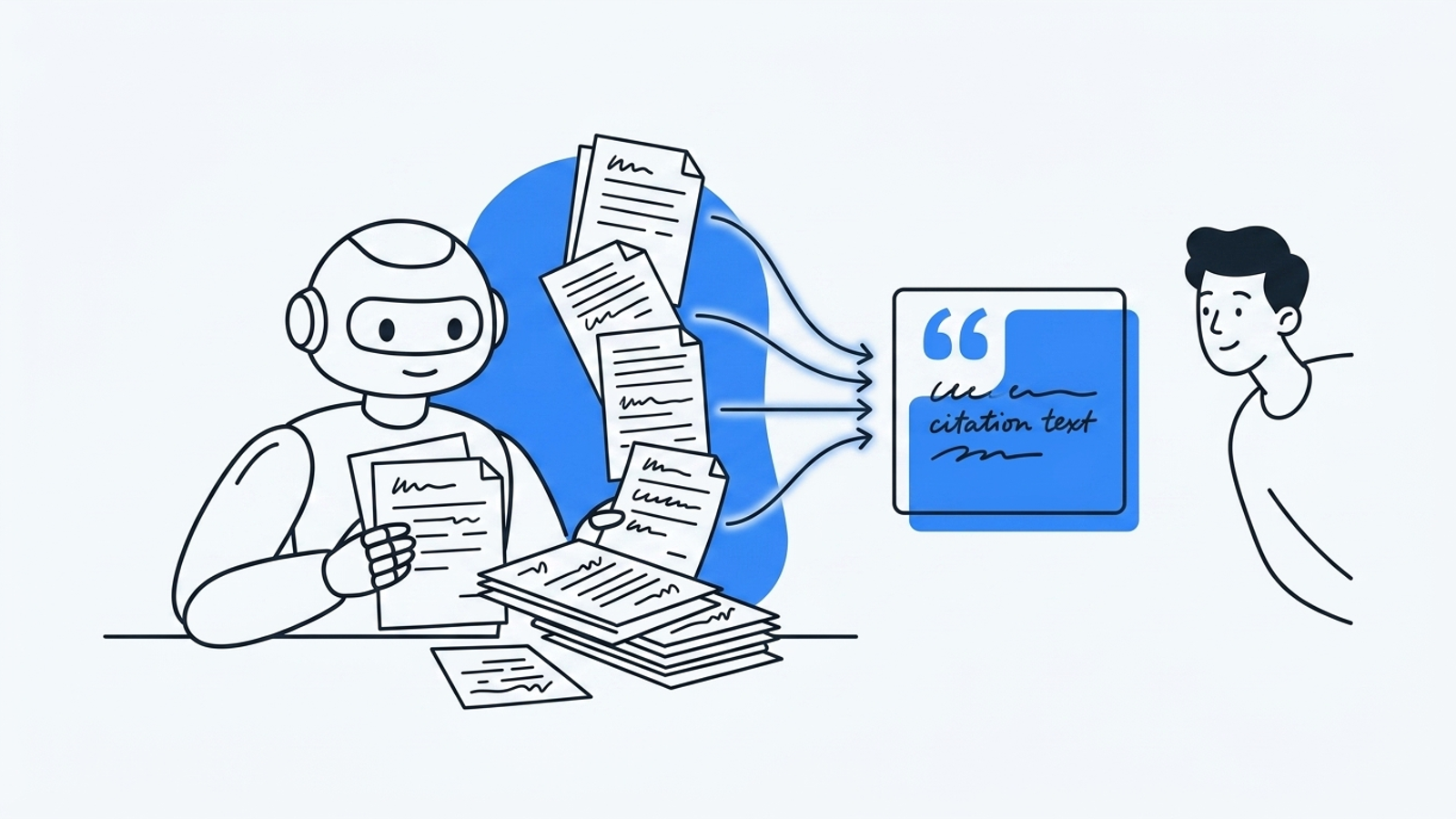
That creates something important. The first reader of your content is now often AI, not a person. AI reads your page and decides whether to cite it in its answer. So learning to write "content AI likes to pick" has become a new assignment. That assignment is AEO and GEO.
AEO: content AI likes to cite in its answers
AEO (Answer Engine Optimization) is writing in a shape that's easy for AI to cite when it builds an answer. AI doesn't take your whole page. It lifts one piece that fits the answer exactly. AEO makes that piece easy to lift.
Content that gets cited tends to share a few traits.

- Question headings: Use the questions people actually ask ("What is AEO?") as subheadings. AI looks for questions and answers in pairs.
- Conclusion first: Put the answer in the first sentence right under the heading. If you beat around the bush, AI can't lift a clean answer.
- Clear definition sentences: Define things in one sentence of the form "AEO is ..." so AI can quote it as is.
- Structure: Prefer short paragraphs, lists, and steps over long blocks of text. Content that's easy to break into pieces gets cited more.
Did you notice? This post is written that way too. The subheadings are questions, and the first sentence under each is the answer.
GEO: content generative AI chooses as a reference
GEO (Generative Engine Optimization) goes a step further [2]. If AEO is about a "shape that's easy to cite," GEO is about becoming content that generative AI trusts enough to reference. A good shape alone won't get you picked. AI, too, tries to choose reliable sources.
Trusted content carries signals like these.
- Clearly sourced data: Instead of "lots of people do this," use numbers and facts with sources. Content with clear evidence gets chosen.
- A unique perspective: If you only repeat the generic advice found everywhere, AI has no reason to pick your page. Your own experience, cases, and interpretation set you apart.
- Trust signals: Who wrote it (expertise), when it was written (freshness), and whether you publish consistently add up to trust.
In short, AEO is writing so "AI can easily lift it," and GEO is making content so "AI trusts and picks it." Shape and trust: two axes.
SEO isn't dead
At this point you might wonder, "So is traditional SEO over?" It isn't. SEO isn't dead. More layers have simply been built on top of it.

| Layer | What it optimizes | Key signals |
|---|---|---|
| SEO | The foundation for being found in search | Fast pages, accurate titles, readable structure |
| AEO | A shape AI likes to cite | Question headings, conclusion first, definition sentences |
| GEO | Content AI trusts and picks | Sourced data, unique perspective, trust signals |
The three don't compete. The foundation is the same; only the layers on top differ. Good SEO becomes the base for AEO and GEO, and you're most visible when all three work together.
So what should we prepare?
Enough theory. Here's a checklist you can act on right away.

- Write in a structure that answers questions: Make subheadings questions and the first sentence under each the answer.
- State definitions, numbers, and examples: Include "X is ..." definition sentences, sourced numbers, and concrete examples.
- Publish in both Korean and English: AI moves across both languages to find answers. In fact, that's why this blog publishes in ko and en at the same time. Having the same post in two languages widens your reach.
- Publish consistently: It doesn't end with one post. A consistent publishing history becomes a GEO trust signal.
Tracking all of this by hand every time is tedious. TRAIL Studio is a tool that helps you quickly produce structured content with question headings, definition sentences, and both Korean and English versions. It makes getting ready for the AEO and GEO era a little lighter.
> You can try Trail Studio right now. Content generation runs on credits.
For related reading, see What is GEO (Generative Engine Optimization)? Which pages to start with, and in what order, SEO fundamentals in the AI search era: what changed in on-page, off-page, and technical SEO, and What you don't need to do for GEO: checking llms.txt, AI-search schema, and AI-only writing styles.
You can continue with Backlink strategy that stays inside Google's spam policy.
Frequently asked questions
Which should I focus on first, AEO or GEO?
Shape (AEO) and trust (GEO) go together. But without SEO basics, AI won't even find your content, so the natural order is: check that you show up in search first, then refine AEO structure like question headings and definition sentences, then build GEO trust with sources and a unique perspective.
Does AI cite Korean-language content too?
Yes. But AI looks for answers across languages, so publishing in both Korean and English widens your reach. That's also why this blog publishes in ko and en at the same time.
If I'm already good at SEO, can I skip AEO and GEO?
No. SEO is only the foundation that lets AI find your content; whether it gets cited is a separate question. Even with a high ranking, a page with unclear structure or no sources can be left out of AI answers.
References
Summary
- As search shifts from ten links to one AI-generated answer, the first reader of your content is often AI.
- AEO is about giving content a shape AI likes to cite: question headings, conclusion first, definition sentences, and clear structure.
- GEO is about making content AI trusts and picks: sourced data, a unique perspective, and trust signals.
- SEO, AEO, and GEO don't compete; they form three layers stacked on one foundation.
Produce the content this post covers from your brand standard
TRAIL Studio registers the brand standard once and produces cardnews, detail pages, product photos, shorts and blog posts from it. Generated output is reviewed and edited by a person before it ships.
More posts

Best AI Search Optimization Tools 2026: 6 GEO Tools Ranked
We compared six tools that check whether ChatGPT and other AI answers mention your brand, on measurement, action, engines, Korea support, and price.

Why Does ChatGPT Cite Listicles? Format vs. Hierarchy
Listicles split items cleanly, so AI can extract just what it needs. How to write citable listicles, whether format alone is enough, and how to build hierarchy.

What is GEO? Which pages to start with, and in what order
GEO structures content so generative search like ChatGPT and AI Overviews cites it. Does it replace SEO, what order to run it in, and how to measure it.
Keep reading on this topic
- Topical authority: why pillar-cluster beats a single postTopical authority comes from content clusters, not single posts: the pillar-cluster model, how to design one, why it wins in AI search, and when it's enough.
- A 4-step framework for SEO and GEO: split teams or merge?SEO and GEO work best on one content quality foundation. Whether to split or merge teams, a 4-step framework, why unified plans fail, and one shared metric.
- SEO and GEO top spots: high rankings, missing in AI answersReaching the top now covers how AI answers mention you, not just rankings. What changed, how to manage both tops, and why competitor comparison matters.
This post is part of the Content category, which collects all 41 posts on the topic. See all posts in Content