Why a Page Is Not Cited in AI Search, and How to Repair It
An AgentGEO study that sorts citation failures into 4 categories and raises citation rates by editing about 5% of a page
Why is a page not cited in AI search? 43% of on-topic pages were never cited, and 62% of failures were an intent mismatch. Editing about 5% of a page helped.
Pages that are not cited in AI search fail for different reasons, so no single rule fixes them all, and 43% of on-topic pages were never cited to begin with. A team from Virginia Tech and Zhejiang University sorted citation failures into 4 categories and 13 types and found that 62.2% of failures happened because the content arrived but did not match the intent or information the question asked for [1]. By diagnosing each page's cause and fixing only that part, editing about 5% of a page raised the citation rate from 56.6% to 79.5% [1].
We read the paper on arXiv (v1), including its tables, and checked the numbers. All figures are from the paper's experiments, and we did not reproduce them [1]. Because commercial AI search is closed, the study evaluated on controlled simulation engines built with GPT and Claude, and leaves validation on real Perplexity or Google AI Overviews as future work [1]. We also build AI search diagnosis tools, so anything that connects to our products sits in the last section.
Why is a page not cited in AI search?
The reasons differ, so you have to sort the kind of failure first. Earlier GEO work applied generic rules such as "add statistics" or "use an authoritative tone" uniformly to every page [2]. But citation failures are spread across the pipeline, so without knowing which stage failed and why, you end up fixing the wrong thing [1].
This study sorts failures into four categories [1]. Technical access (10.1%) is being blocked at the fetching or parsing stage. Semantic alignment (62.2%) is when the content arrives but does not match the question's intent or required entities. Content quality (27.1%) is thin information or no structure, and systemic exclusion (0.6%) is being crowded out by competition or cut off by the context window.
Semantic alignment dominates. Six in ten failed even though the content was not bad, because the specific information the question asked for was missing [1]. That is why a fix should start from what is missing, not from polishing the style.
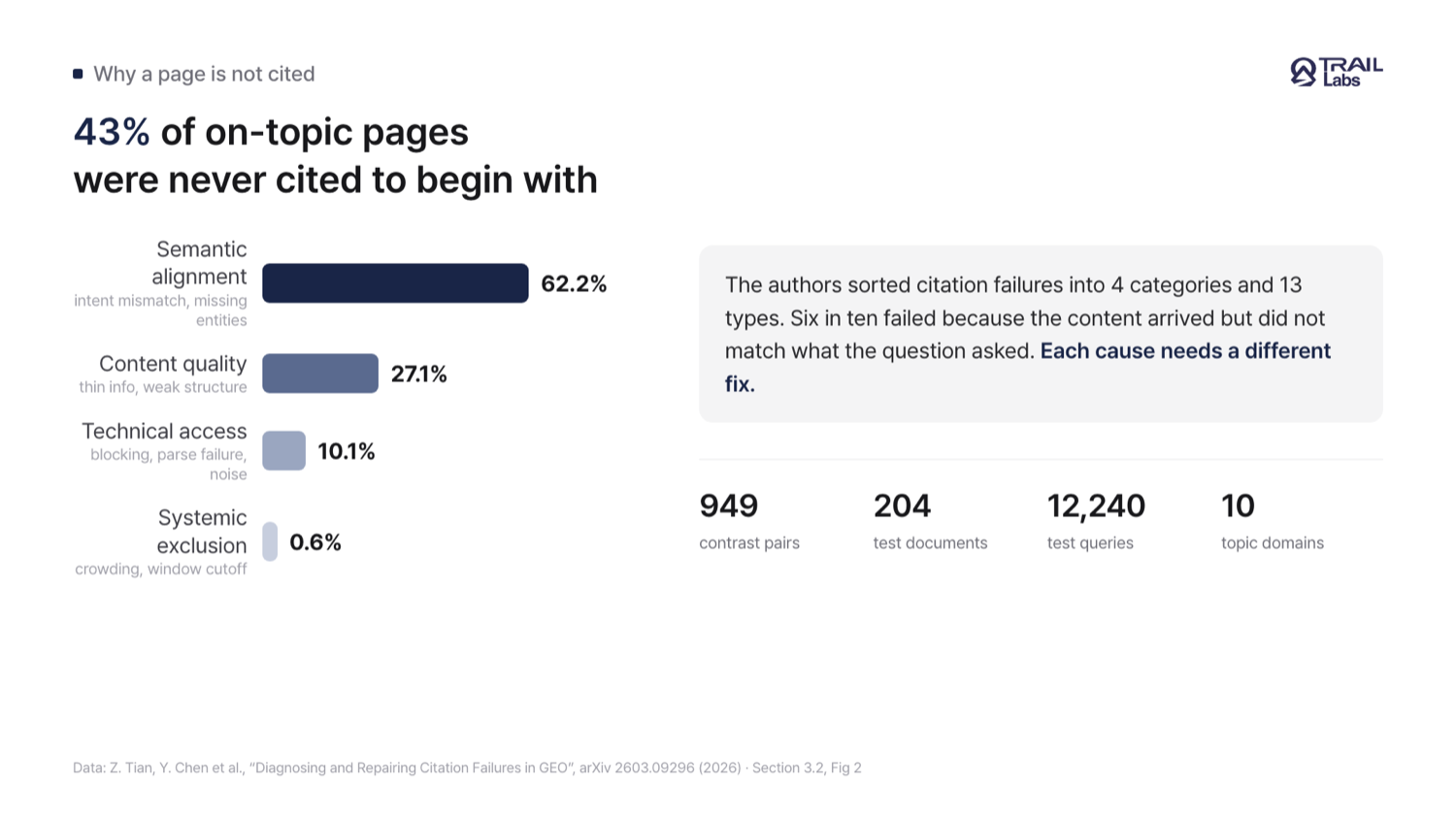
Figure 1. The four categories of citation failure and their shares.
How did the study diagnose and repair citation failures?
It compares a cited competitor page against your uncited page for the same query [1]. The authors built 949 such contrast pairs across 10 domains in GEO-Bench, and since the query and candidate set are the same, they isolated only the margin factor: why one page was picked [1].
Diagnosis to repair is a loop [1]. When the target page is not cited, it is compared with the top cited competitor to diagnose the cause, then a dedicated tool is chosen from nine and applied, and the result is re-checked. The tools fall into four groups: adding information by inserting missing entities sentence by sentence, strengthening structure with headings and lists, repositioning content by moving key conclusions to the top, and refining persuasion by adjusting tone [1].
The key is the scope of the edit. Instead of rewriting the whole page, it splits the page into chunks by HTML tag and fixes only the flagged part [1]. This preserves the original and avoids the way language models lose the middle of a long text [3]. The loop also forbids reusing the same tool on the same failure, caps each tool at three uses, and drops a tool from a path after two consecutive failures [1].
Validation is document-centric. To check whether optimization tuned to training queries collapses on others, the authors used a benchmark of 204 documents with 60 queries each (20 train, 40 test) and confirmed the content was more citable on held-out queries too [1].
Do I have to rewrite a whole page to get cited by AI?
No. Fixing only the failing parts beat full rewrites on both citation rate and fidelity. Editing about 5% of a page raised the citation rate from 56.58% to 79.52%, higher than the generic auto-rewrite baseline that changes 25% of the content [1].
| Method | Citation rate | Word fidelity (Jaccard) |
|---|---|---|
| Original (before edit) | 56.58% | – |
| Best single heuristic | 71.11% | 30.26 |
| Generic auto-rewrite | 68.80% | 17.97 |
| Diagnosis-based local edit | 79.52% | 82.40 |
Table 1. Citation rate and fidelity by method [1].
The difference shows in fidelity. The diagnosis-based local edit scored 82.40 on word fidelity, more than four times the 17.97 of generic auto-rewrites [1]. Full rewrites raise citation but replace almost all of the original. The authors state they changed 5% of a page versus the 25% of the baseline [1].
The effect held in other settings. On complex HTML documents that are hard to parse, local edits reached a 67.19% citation rate, 21 points higher than generic rewrites (45.96%) [1]. On an unseen-persona (OOD) setting, generic rewrites lost 43% of the average length while local augmentation preserved it [1].
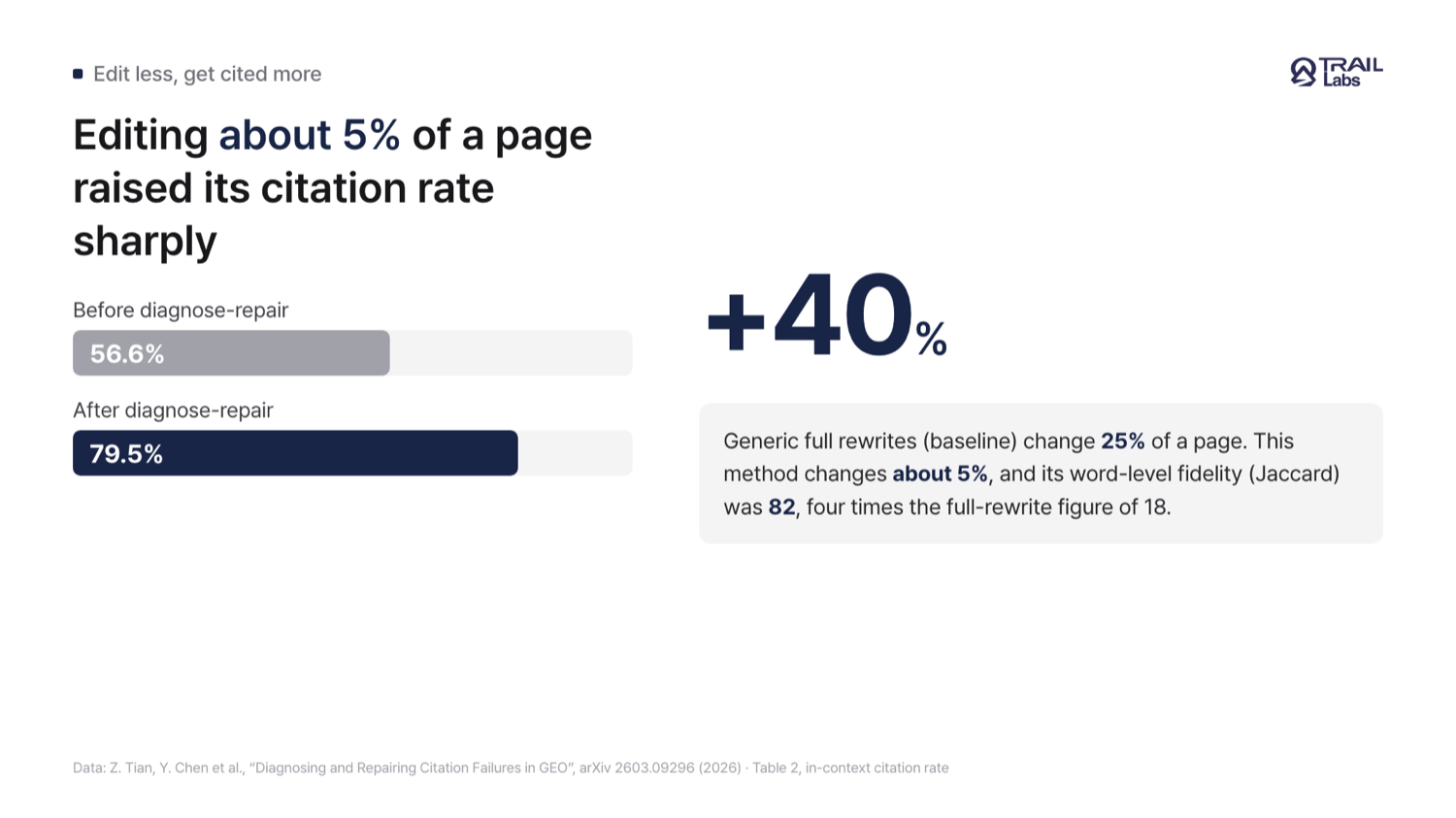
Figure 2. The result of editing less and getting cited more.
What should I fix to raise my AI search citation rate?
Start with semantic alignment, which accounts for 62.2% of failures. Even good content is not cited if it lacks the intent or entities the question asks for, so a fix starts from what is missing [1]. The authors' diagnosis sorts failures into 15 cause labels and maps each to a dedicated tool: entity insertion for missing information, a top summary for a buried answer, and rewriting the first sentence to answer the intent for a mismatch [1].
Pages already cited well are better left alone. On topics with a high baseline citation rate, generic rules actually lowered it, and even the diagnosis-based method gained little or went negative [1]. Decide whether a page is a candidate for optimization before prescribing anything.
Not fabricating anything is a design principle. The study even told the persuasion-refinement tool, in its prompt, not to fabricate data, citations or claims [1]. Raising citations must not mean inventing statistics or sources. This points the same way as yesterday's post that Q&A formatting alone does not raise citation. The information inside the page, not the format, earns the citation.
Are there pages that stay uncited even after you improve the content?
Yes. The authors point to two cases. One is content that is already cited well. Health pages, cited 81% of the time, gained little or went negative after editing, because of a ceiling effect and because some edits removed domain-specific detail that lowered citability [1].
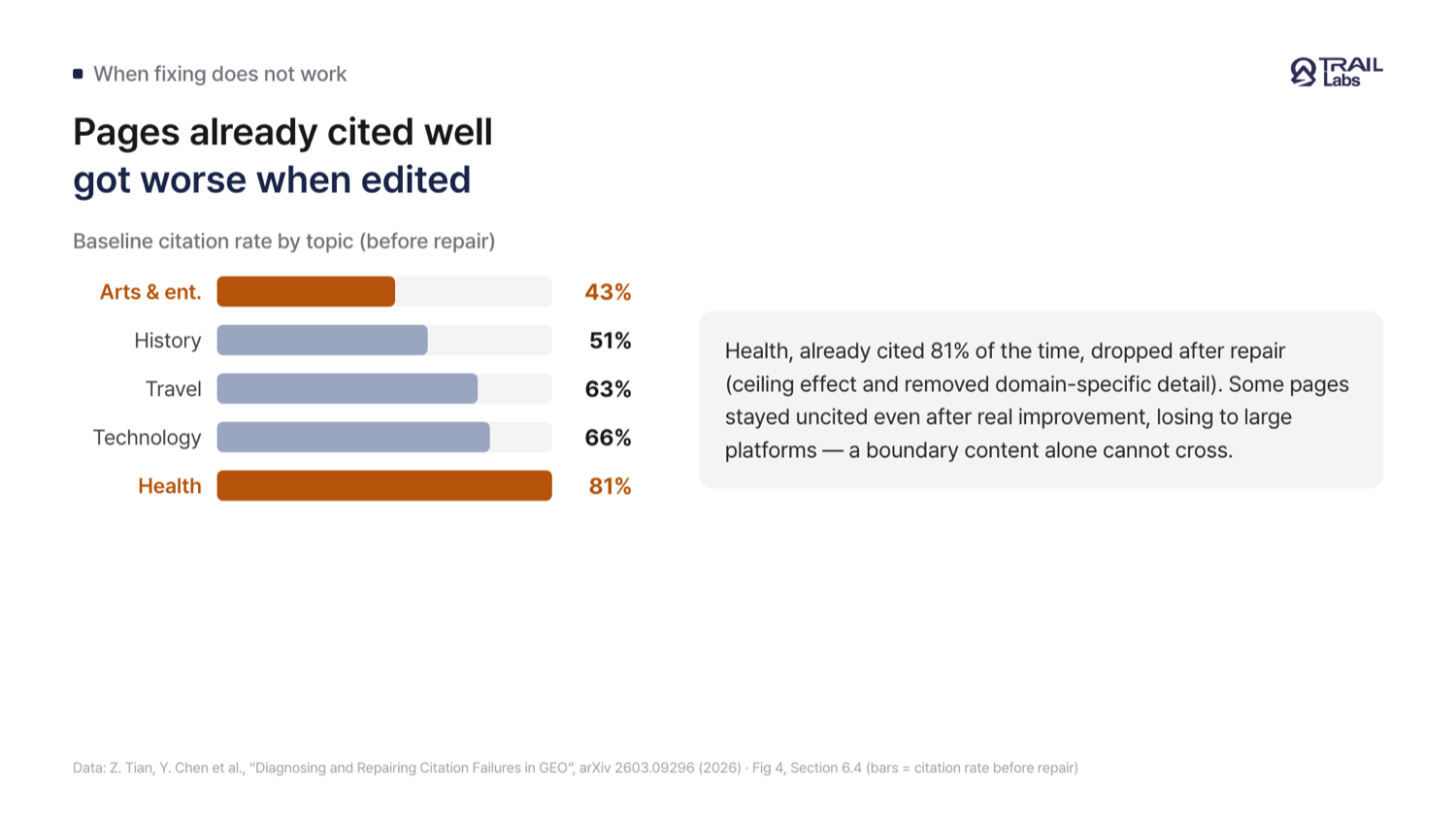
Figure 3. Baseline citation rate by topic and the limits of repair.
The other is a structural disadvantage. Fixing 50 pages raised the training-query citation rate from 57.0% to 83.7%, but 163 queries stayed uncited after optimization, even though clarity and relevance genuinely improved [1]. For "best online machine learning courses," adding a detailed curriculum to a university course page did not help, because the engine still preferred large platforms like Coursera and edX [1]. The authors treat this as a domain-level bias outside the content, a fundamental boundary of content-based optimization [1].
The authors also connect this to fairness. If some content is structurally disadvantaged regardless of effort, the citation mechanism can amplify some voices over others, and creator-side optimization alone cannot guarantee fair visibility [1].
Limitations
The biggest limit is that commercial engines were not validated. Evaluation ran only on controlled simulation engines built with GPT and Claude, and validation on black-box systems like real Perplexity, ChatGPT search, or Google AI Overviews remains future work [1].
The cost of the repeated diagnose-and-repair loop is also not laid out. The number of calls or the time to run diagnosis and repair per query and batch them is not reported [1]. The authors note scalability as future work.
The result numbers should also be read with the caveat that the value of generic rules can shift with the experimental setup. In this study's setup the best single heuristic already beat the unedited original [1]. Read the numbers as direction, not constants.
At TRAIL
TRAIL Search runs a related comparison: from tracking data, it pulls cases where a competitor page was cited for a query but your asset was not. The paper built 949 such contrast pairs; we read the comparison from engine measurement records.
Semantic alignment, the 62% of failures, is also a diagnosis item. Search's page scoring measures separately whether the prompt's search intent matches the article type (intent fit) and whether the target question's wording appears on the page (retrieval overlap). It does not yet pin down which specific entity is missing, as this paper does.
The direction of local editing stays as a task for our content generation side. Our draft review gathers failing items and rewrites them in one pass, but this paper's evidence that fixing only the failing parts preserves the original gives us a reason to narrow that to section-level edits. Reading it alongside our post on what gets cited lines up "why it failed" and "what works" from both sides.
Frequently asked questions
Why is a page not cited in AI search?
There is no single reason. This study sorts citation failures into four categories: technical access (10.1%), semantic alignment (62.2%), content quality (27.1%) and systemic exclusion (0.6%). The largest is semantic alignment, where the content arrives but does not match the intent or entities the question asks for. 43% of on-topic pages were never cited to begin with.
Do I have to rewrite a whole page to get cited by AI?
Not in this study. Editing about 5% of a page locally beat full rewrites that change 25% of the content, and its word-level fidelity (Jaccard) was 82, more than four times the 18 of full rewrites. Finding and fixing only the failing parts preserved the original while getting cited more.
What should I fix first to raise my AI search citation rate?
Start by diagnosing where and why it failed. Since 62% of failures come from semantic alignment (intent mismatch, missing entities), look at whether the information the question asks for is missing before polishing the style. Separate access, intent fit and core information, and fix only the part that failed.
Are there pages that stay uncited even after I improve the content?
Yes. In this study, health pages that were already cited 81% of the time got worse after editing, and some pages stayed uncited even after genuine improvement because large platforms outranked them. The authors treat this as a boundary that content alone cannot cross.
References
- [1]Zhihua Tian, Yuhan Chen, Yao Tang, Jian Liu, Ruoxi Jia, "Diagnosing and Repairing Citation Failures in Generative Engine Optimization", arXiv 2026
- [2]Pranjal Aggarwal et al., "GEO: Generative Engine Optimization", KDD 2024
- [3]Nelson F. Liu et al., "Lost in the Middle: How Language Models Use Long Contexts", TACL 2024
Summary
- This study sorts citation failures into 4 categories and 13 types and proposes AgentGEO, an agent that diagnoses each page's cause and repairs it with a dedicated tool.
- 43% of on-topic pages were never cited, and 62.2% of failures were semantic alignment, meaning intent mismatch or missing entities.
- Editing about 5% of a page locally raised the citation rate from 56.6% to 79.5%, with four times the word-level fidelity of full rewrites that change 25%.
- Health pages that were already cited well got worse after editing, and some pages stayed uncited because large platforms outranked them.
- The authors evaluated on controlled simulation engines only and note they did not validate on commercial engines.
Check this topic against your own brand
TRAIL Search measures how ChatGPT and Perplexity answer your customers' questions and finds and fixes where the brand is missing, turning this post into a diagnosis. Start with 10 questions, no card required.
More posts
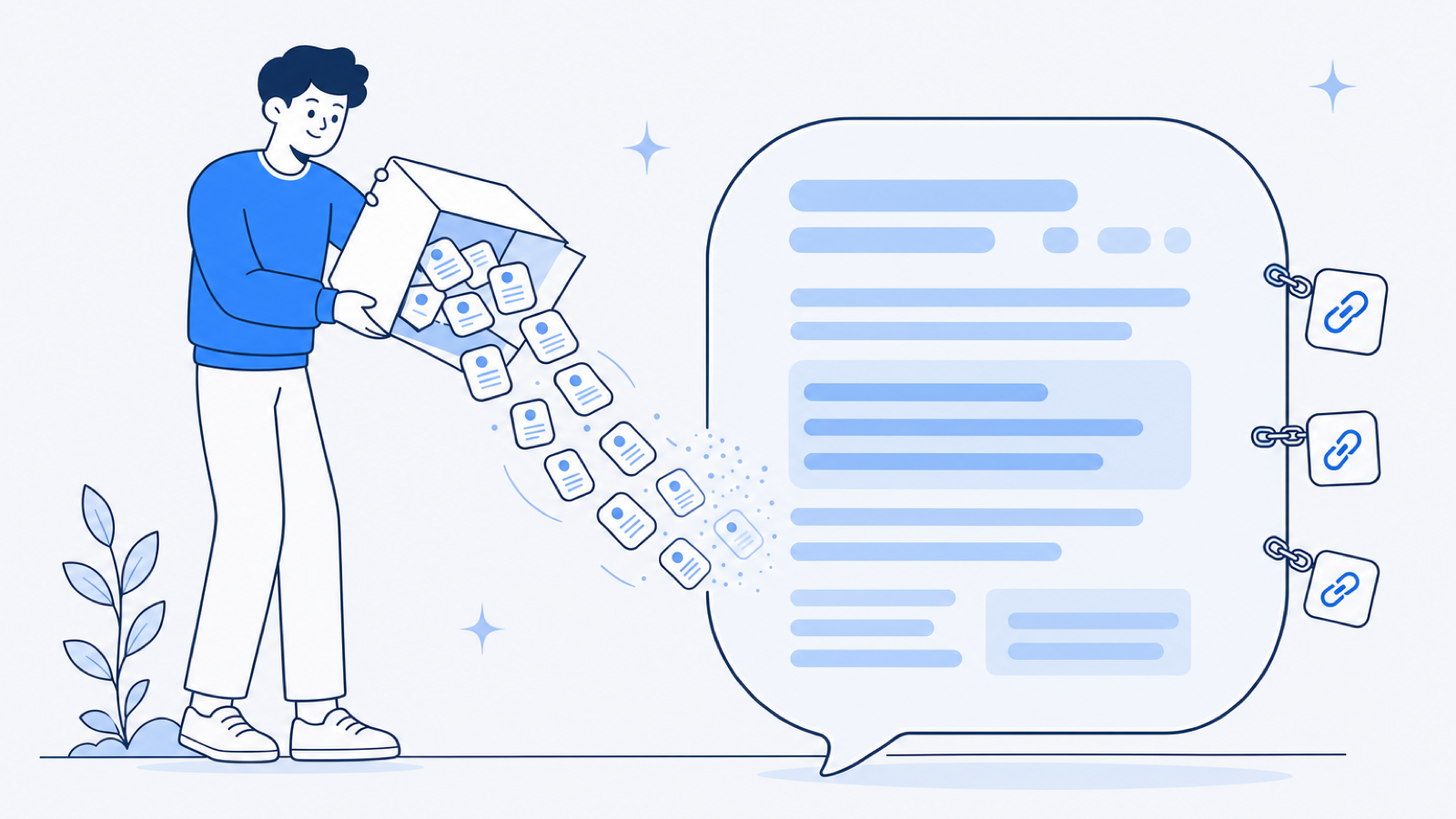
How Much of a Cited Page Ends Up in an AI Answer?
How much of a cited page ends up in an AI answer? ChatGPT cited the fewest pages but used them most deeply, and Q&A formatting alone did not raise absorption.
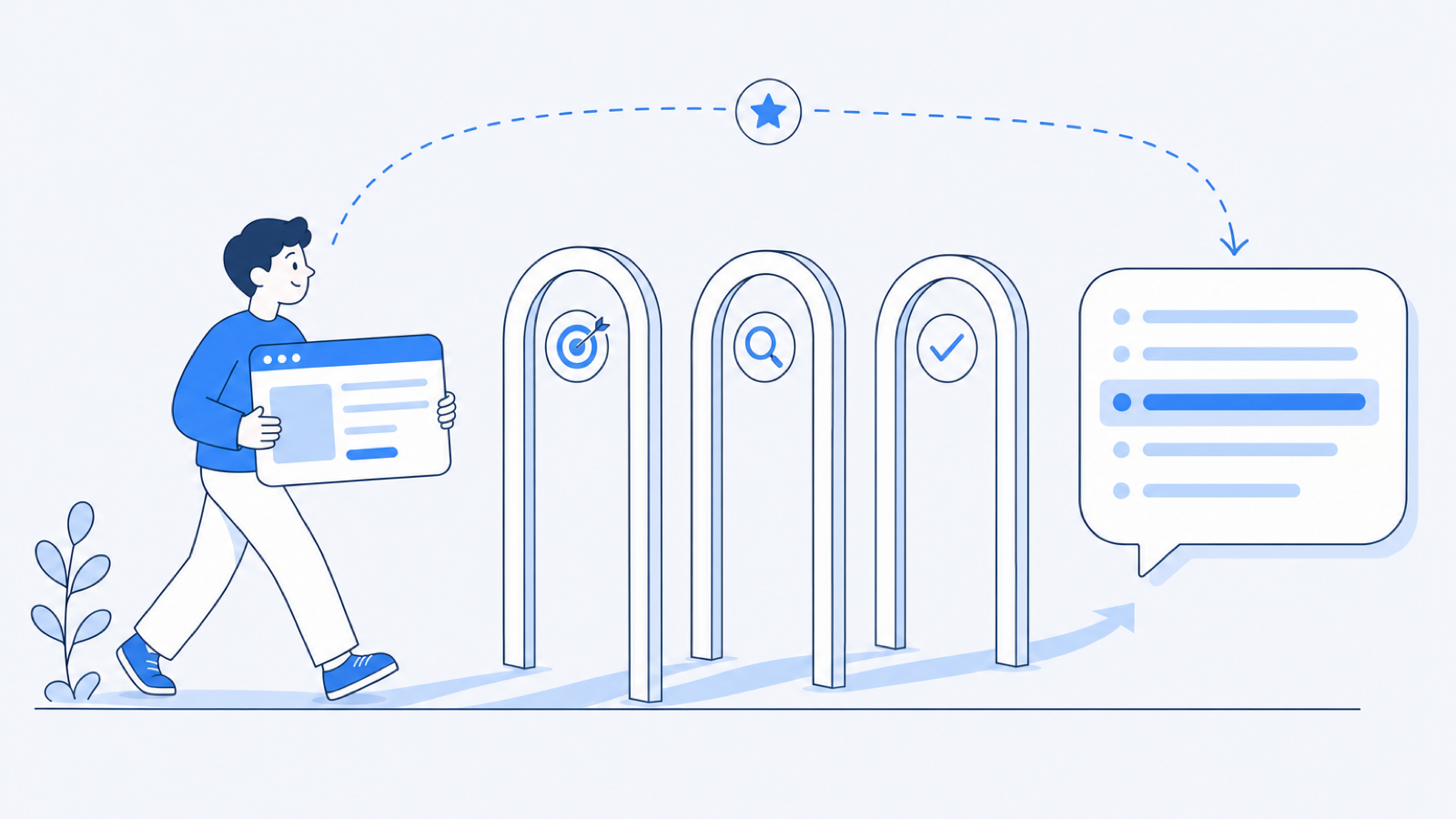
AI Answer Brand Mentions Track Exposure More Than Page Fit
When do AI answers mention a brand? In 34,960 GPT and Gemini runs, answers with neither its own domain nor a branded query named it 2.8–3.8% of the time.
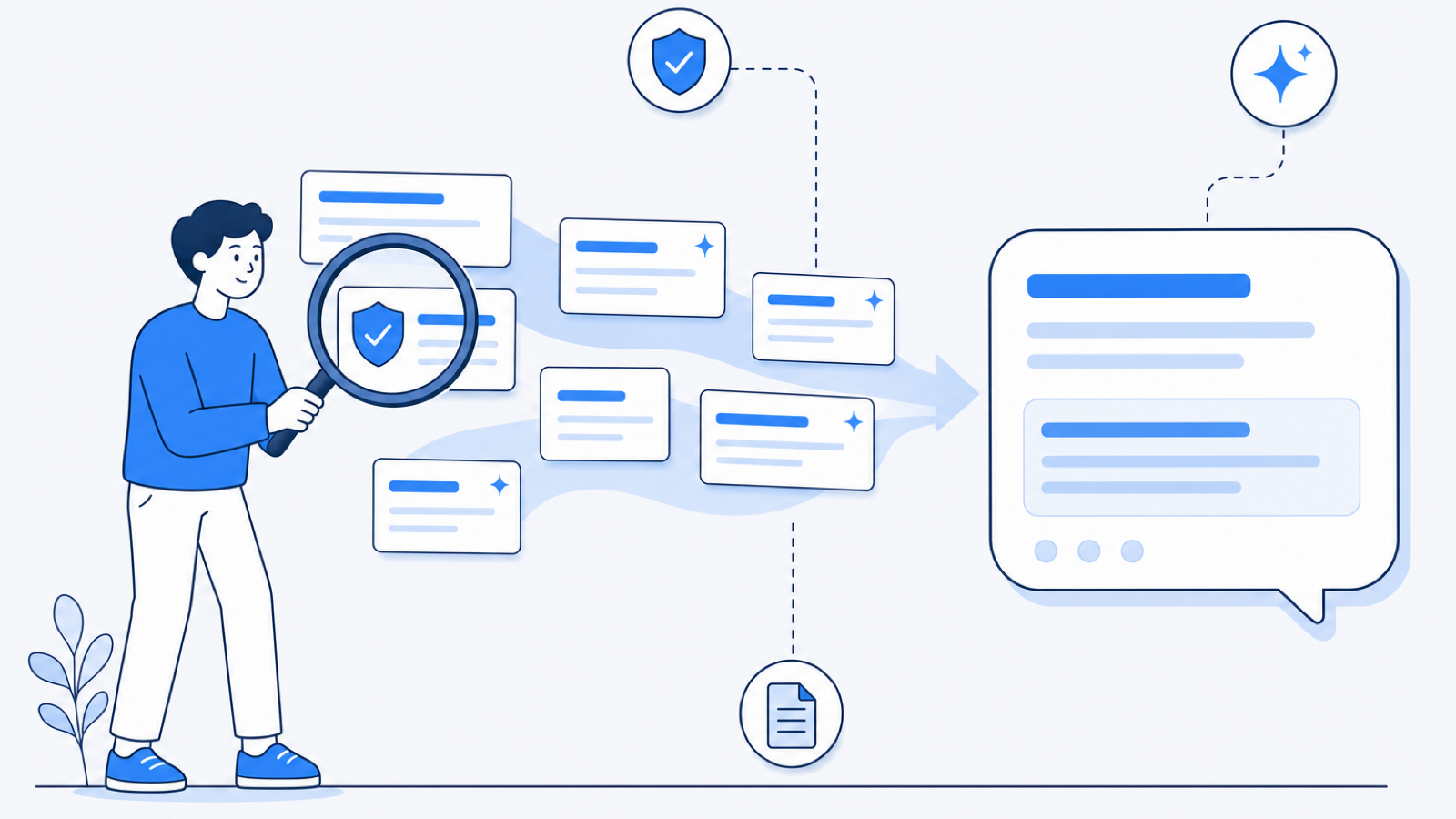
Does AI Search Cite AI-Written Content? About 16% of Sources
Does AI search cite AI-written content? About 16% of sources four AI answer engines cited were AI-generated. How engines differ and what Google's policy says.
Keep reading on this topic
- Where Does AI Get Brand Information? 85.7% Is Third-PartyWhere does AI get brand information? Of 167,551 citations for 128 European brands, 85.7% were third-party sites. The top source shifts by language.
- Why Your Business Doesn't Show Up in AI RecommendationsWhy your business doesn't show up in AI recommendations: 85.6% of 4,776 Bali venues were never recommended. Documentation set entry; star rating set rank.
- Adding a diversity reward to query fan-out: Google's R4TR4T trains query fan-out on groundedness, diversity, and alignment rewards, then distills it into a small diffusion model. Is that diversity right for search?
This post is part of the Papers category, which collects all 19 posts on the topic. See all posts in Papers