How Much of a Cited Page Ends Up in an AI Answer?
A study that separates citation selection from citation absorption across 21,143 ChatGPT, Google and Perplexity citations
How much of a cited page ends up in an AI answer? ChatGPT cited the fewest pages but used them most deeply, and Q&A formatting alone did not raise absorption. This study splits AI search outcomes into citation selection (does a link appear) and citation absorption (did the page actually shape the answer).
A page being cited by AI search does not mean it shaped the answer, and how much it shapes the answer moved in opposite directions across platforms. In a study that sent 602 prompts to ChatGPT, Google AI Overviews/Gemini and Perplexity, ChatGPT cited the fewest pages per prompt, 6.88 on average, yet had the highest mean absorption score for how much those pages fed into the answer, 0.2713 [1]. Perplexity cited 16.35 pages on average with an absorption score of 0.0646 [1].
We read the paper on arXiv (v2) and checked the numbers against its tables. All three authors are independent researchers, and the analyzed data sits in a public repository, geo-citation-lab, that they built themselves [1][2]. The authors analyzed their own data, and the paper includes no conflict-of-interest statement. It deliberately reports no p-values or confidence intervals and limits its own claims to descriptive statistics [1]. We did not reproduce it. We also build AI search diagnosis tools, and we use this paper's absorption formula in an experimental metric in our product.
How much of a cited page ends up in an AI answer?
Getting onto the citation list and shaping the answer's sentences are separate steps, so the second needs its own measurement. The authors call the first step citation selection and the second citation absorption, and they state plainly that citation count measures breadth and cannot measure absorption [1]. The same link can be a background reference or can supply a definition or number for the answer outright.
Absorption is not judged by people; it is computed as a weighted sum of five text signals [1]. How many times the source is referenced again in the answer, how early it appears, how much of the answer's paragraphs it covers, TF-IDF cosine similarity, and two- and three-word phrase overlap.
$$
Here ref is the number of re-references in the answer, pos is the relative position of the first appearance, cov is answer paragraph coverage, tfidf is the TF-IDF cosine between page and answer, and bi and tri are two- and three-word overlap ratios. The result is a score between 0 and 1; higher means the page did more to build the answer [1].
How did the study measure citation absorption?
The authors ran 602 designed prompts on three platforms, collected 21,143 valid citations, and scored absorption for the 18,151 pages whose text could be fetched out of 23,745 citation-level feature rows [1]. The fetch success rate was 76.44%, and the absorption analysis used only those pages [1]. The prompts split into 432 main-experiment prompts varying task type, industry and timeliness, 60 style variants, 60 Chinese-English pairs, and 50 hard scenarios such as high-stakes, ambiguous and multi-constraint questions [1].
Each page carried 72 features [1]. Structure such as word count, headings and lists; evidence types such as definitions, numbers, comparisons, how-to steps, code and Q&A; semantic similarity to the answer; question relevance and quality rated by a language model; and domain type. The authors set a rule never to use the five signals that build the absorption score as explanatory variables, avoiding explaining the outcome with itself [1].
Whether a platform searched no longer made a difference. Search triggered on 98.64% to 100% of prompts across the three platforms [1]. The differences came from what each picked, how many, and how much it used them.
| Platform | Mean citations per prompt | Fetched citations | Mean absorption score | Median absorption |
|---|---|---|---|---|
| ChatGPT | 6.88 | 3,323 | 0.2713 | 0.2611 |
| Google AI Overviews/Gemini | 12.06 | 6,385 | 0.0584 | 0.0515 |
| Perplexity | 16.35 | 8,443 | 0.0646 | 0.0333 |
Table 1. Citation breadth and absorption depth by platform [1].
Does ChatGPT or Perplexity use its sources more deeply?
In this study, ChatGPT cited least and used its sources most deeply. Its mean absorption score of 0.2713 was more than four times Perplexity's 0.0646, and Perplexity's median absorption fell to 0.0333 [1]. The authors describe ChatGPT as citation-sparse and absorption-heavy and Perplexity as citation-rich and coverage-oriented [1].
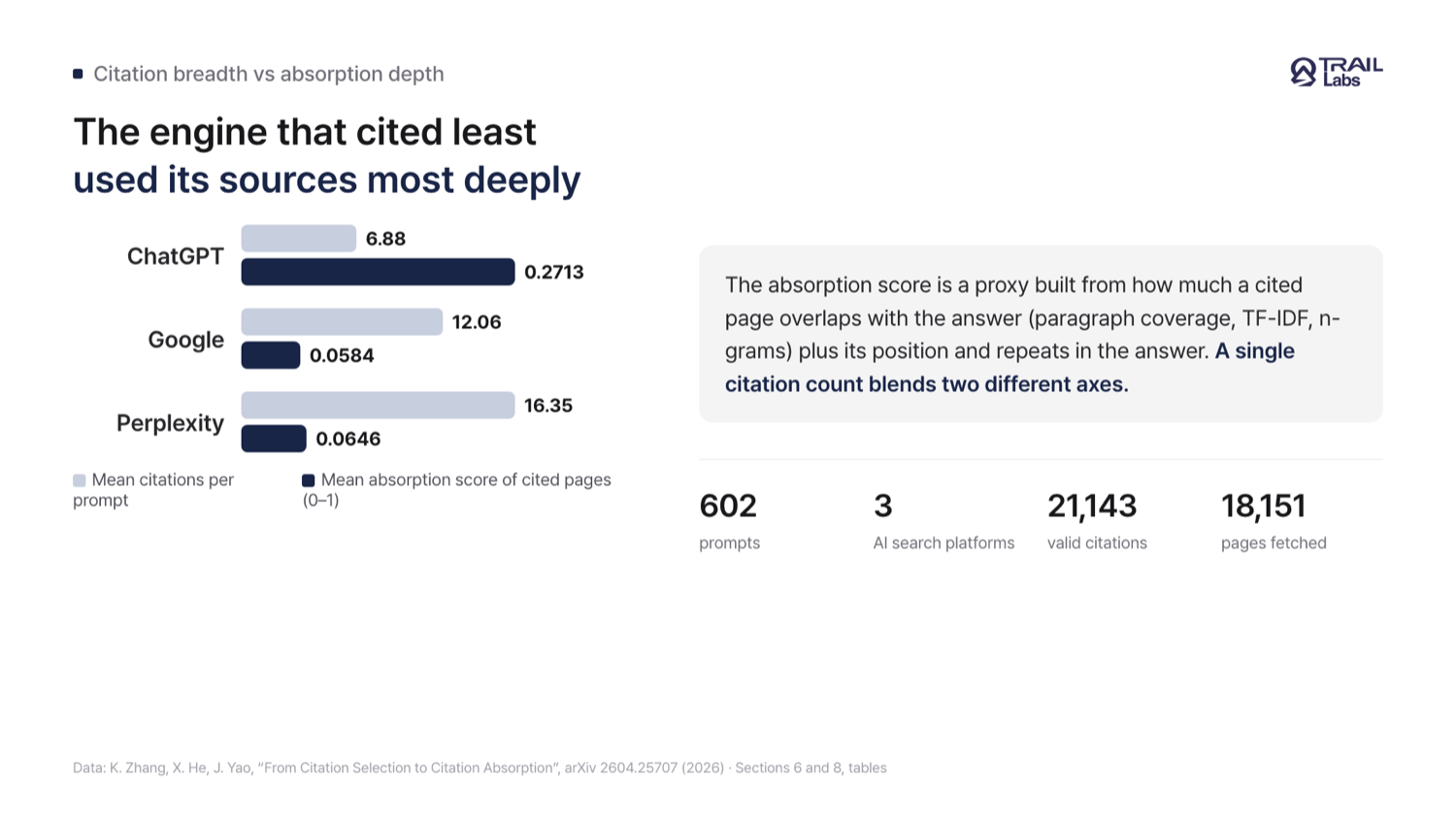
Figure 1. Citation breadth and absorption depth by platform.
Which axis matters depends on the goal. The authors write that a single visibility metric collapses these two objectives and loses important information [1]. If links and traffic are the goal, citation breadth matters more; if shaping what the answer says is the goal, absorption matters more. The authors also note these are not permanent platform laws, since differences in citation display and answer length may be mixed in [1].
Does FAQ formatting help a page get cited in AI search?
In this study, Q&A formatting alone did not raise absorption. Pages in Q&A format had a mean absorption score of 0.0947, 5.74% lower than the 0.1005 of pages without it [1]. Pages with code scored 76.88% higher, numbers and statistics 61.55%, definitions 57.33%, comparisons 55.28% and how-to steps 41.20% [1].
| Element on the page | With | Without | Difference |
|---|---|---|---|
| Code | 0.1747 | 0.0988 | +76.88% |
| Numbers, statistics | 0.1171 | 0.0725 | +61.55% |
| Definition markers | 0.1252 | 0.0795 | +57.33% |
| Comparison content | 0.1389 | 0.0894 | +55.28% |
| How-to | 0.1296 | 0.0918 | +41.20% |
| Q&A format | 0.0947 | 0.1005 | −5.74% |
Table 2. Mean absorption score by evidence type [1].
The authors warn against reading this as "FAQs are harmful" [1]. Q&A tends to produce short, isolated answers that may lack the evidence density a complex prompt needs, and thin support FAQs get classified alongside detailed explainers. The authors read this as value coming from the evidence inside the page, not from question marks in the headings. This points the same way as our post on moving to in-body Q&A evidence structure after FAQ rich results ended.
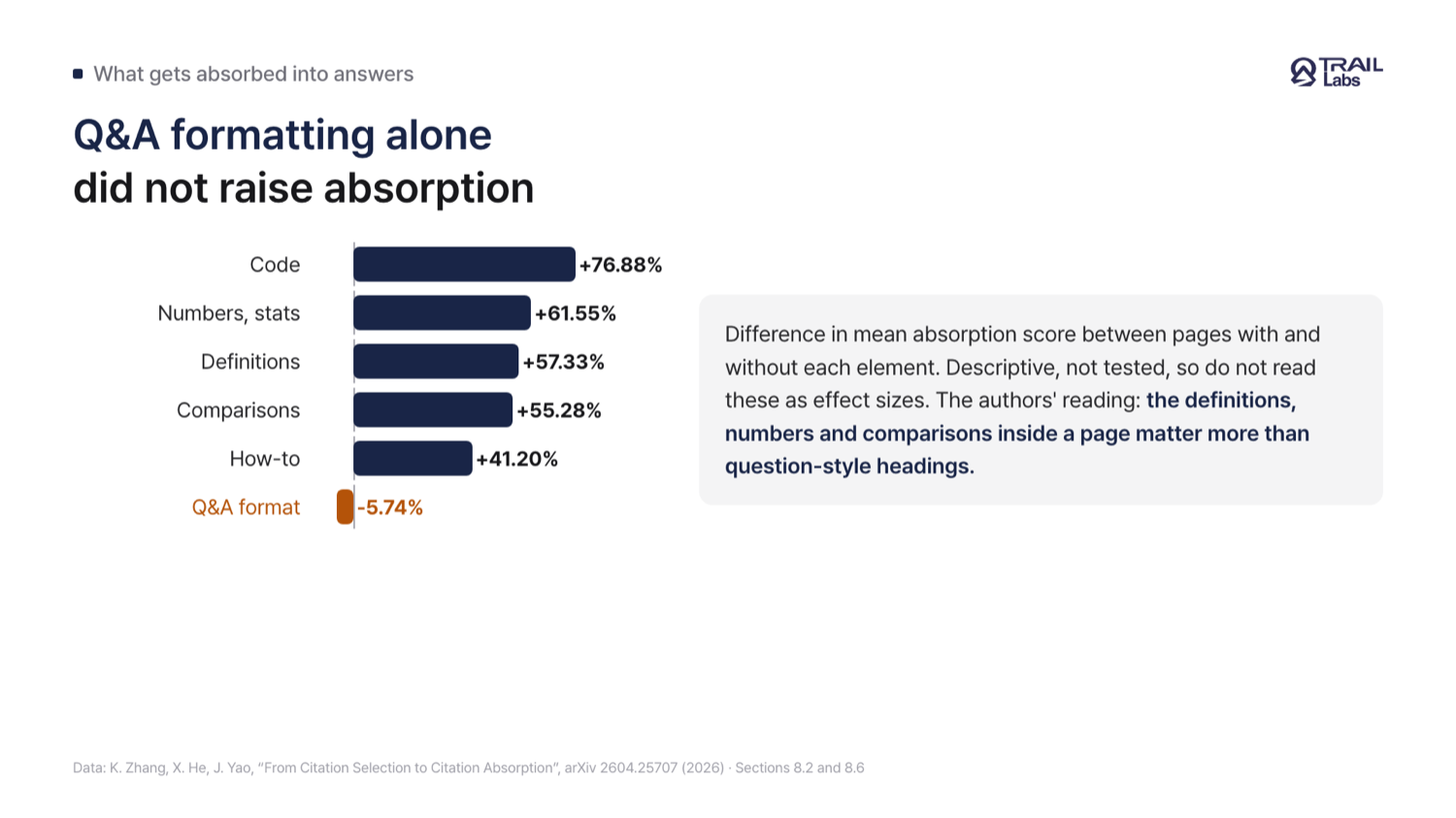
Figure 2. Absorption score difference by evidence type.
How should I write content that AI answers actually use?
Pages that held definitions, numbers and comparisons fitting the question, in a clear structure, were absorbed more. This is an observed difference, not a tested prescription. Top-quartile absorbed pages had 11.44x the words, 12.50x the headings and 8.94x the list density of bottom-quartile pages, and 2.31x the semantic similarity to the answer [1]. Among single features, question relevance rated by a language model, at r=0.4322, moved most closely with absorption [1].
That does not mean length alone is enough. The authors report that absorption mostly rises across word-count bands but plateaus between 301 and 1,000 words, and that length matters only in combination with structure, fit and evidence density [1]. They also warn that structure may be a proxy for editorial quality.
The role a citation played mattered too. Citations that supplied a definition averaged 0.1531 absorption and comparisons 0.1524, while reference-only citations averaged 0.0529 [1]. Citations used as fact sources averaged 0.1241 and background-only ones 0.0775 [1]. By domain type, encyclopedias were highest at 0.2144, and news media, at 0.0726, were cited often but absorbed least [1].
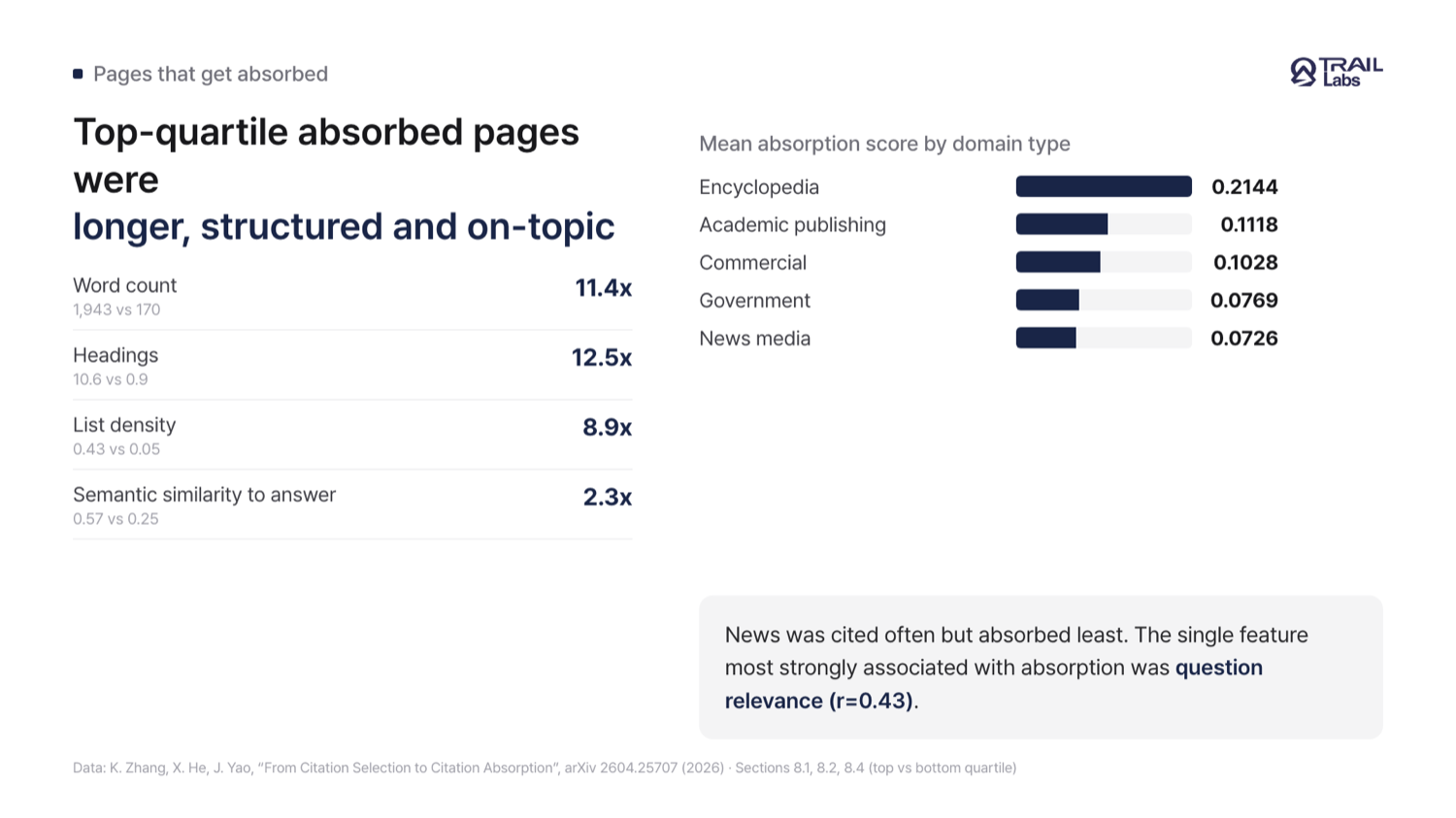
Figure 3. What well-absorbed pages look like, and absorption by domain type.
Does prompt style or language change what gets cited?
Platforms reacted differently depending on how the same content was asked for. When a prompt asked for sources, Google cited 15.90 pages on average and Perplexity 17.15, their widest, while ChatGPT cited most, 7.95, when given an expert role [1]. The phrasing each platform responded to ran in opposite directions.
Language did not push one way either. ChatGPT cited 7.77 pages for Chinese prompts and 7.03 for English ones, while Google cited 7.53 for Chinese and 11.57 for English [1]. The assumption that asking in English always widens citations did not hold in this data.
Complex prompts widened the gap. On multi-constraint prompts, ChatGPT cited only 3.4 pages on average, Google 12.6 and Perplexity 17.7 [1]. The authors read complexity as triggering internal synthesis on one platform and search expansion on another, but note they have not established this causally. Korean prompts were not in the experiment, so which way Korean moves needs its own measurement.
Limitations
The biggest limit is that the absorption score is a proxy. It does not look at the model's internal attention or actual retrieval traces; it is a weighted sum of text overlap and position between answer and page [1]. Robustness checks with different weights are left as future work.
There is no statistical testing either. P-values, confidence intervals and multiple-comparison corrections are all absent, and the authors call this a deliberate choice [1]. Read every difference here as a difference in means, not an effect size.
The sample and timing are narrow. The 602 prompts are a designed sample (587 usable on ChatGPT after missing outputs), the language contrast covers only Chinese and English, and it is a single snapshot with no recorded model versions or collection dates [1]. The 23.56% of citations whose text could not be fetched fall outside the analysis.
At TRAIL
TRAIL Search's insights view has an "Answer absorption (experimental)" card built on this paper. It fetches the text of pages an engine's answer cites, calculates how much each page actually built the answer, and shows our brand's absorption rate.
The calculation is a variant of the paper's formula without re-reference count and first-appearance position. Some engines have no in-answer reference markers, so we reweighted only the three remaining components: paragraph coverage, TF-IDF and phrase overlap. For Korean we strip particles and compare word stems, and we treat the top quartile within the same measurement round as absorbed (a fixed cutoff when a round has too few measurements). Distributions are still being calibrated, so it is an experimental metric that is not included in the score.
The next question is whether the platform differences this paper found hold for Korean answers. Yesterday's brand mention stage model looked at exposure and selection [3]. Absorption is the step after.
Frequently asked questions
How much does an AI search answer actually use the pages it cites?
It varies a lot by platform. In this 602-prompt study, the mean absorption score (0–1) of cited pages was 0.2713 on ChatGPT, 0.0584 on Google and 0.0646 on Perplexity. Getting a link and having your content actually shape the answer are different outcomes.
Does ChatGPT or Perplexity use its sources more deeply?
In this study, ChatGPT. It cited only 6.88 pages per prompt on average but used them most deeply, while Perplexity cited 16.35 and absorbed little from each. These are descriptive statistics from one snapshot of a designed prompt set.
Does FAQ formatting help a page get cited in AI search?
In this study, pages in Q&A format had a mean absorption score 5.74% lower than pages without it. Pages containing code, numbers, definitions or comparisons scored 41–77% higher. The authors read this as the definitions, numbers and comparisons inside a page mattering more than question-style headings.
How should I write content that AI answers actually use?
Top-quartile absorbed pages had 11.4x the words, 12.5x the headings and 2.3x the semantic similarity to the answer of bottom-quartile pages. The single feature most associated with absorption was question relevance (r=0.43). Pages with definitions, numbers and comparisons fitting the question, in a clear structure, were absorbed more; this is an observation, not a tested prescription.
References
- [1]Zhang Kai, He Xinyue & Yao Jingang, "From Citation Selection to Citation Absorption: A Measurement Framework for Generative Engine Optimization Across AI Search Platforms", arXiv 2026
- [2]geo-citation-lab, GEO experiment data and report repository (GitHub)
- [3]Benjamin Tannenbaum, "From Prompt to Recommendation: A Fitted Stage Model of Brand Visibility in AI Search", arXiv 2026
Summary
- This study splits AI search outcomes into citation selection (does a link appear) and citation absorption (did the page actually shape the answer).
- Mean citations per prompt were 6.88 on ChatGPT, 12.06 on Google and 16.35 on Perplexity, while mean absorption scores ran the other way: 0.2713, 0.0584 and 0.0646.
- Pages with code, numbers, definitions or comparisons scored 41–77% higher on absorption, and Q&A formatting alone scored 5.74% lower.
- Top-quartile absorbed pages were longer and more structured, and question relevance (r=0.43) was the single feature most associated with absorption.
- These are untested descriptive statistics and the absorption score is a text-overlap proxy, so read them as direction.
Check this topic against your own brand
TRAIL Search measures how ChatGPT and Perplexity answer your customers' questions and finds and fixes where the brand is missing, turning this post into a diagnosis. Start with 10 questions, no card required.
More posts

AI Answer Brand Mentions Track Exposure More Than Page Fit
When do AI answers mention a brand? In 34,960 GPT and Gemini runs, answers with neither its own domain nor a branded query named it 2.8–3.8% of the time.
Does AI Search Cite AI-Written Content? About 16% of Sources
Does AI search cite AI-written content? About 16% of sources four AI answer engines cited were AI-generated. How engines differ and what Google's policy says.
Where Does AI Get Brand Information? 85.7% Is Third-Party
Where does AI get brand information? Of 167,551 citations for 128 European brands, 85.7% were third-party sites. The top source shifts by language.
Keep reading on this topic
- Why Your Business Doesn't Show Up in AI RecommendationsWhy your business doesn't show up in AI recommendations: 85.6% of 4,776 Bali venues were never recommended. Documentation set entry; star rating set rank.
- Adding a diversity reward to query fan-out: Google's R4TR4T trains query fan-out on groundedness, diversity, and alignment rewards, then distills it into a small diffusion model. Is that diversity right for search?
- Which of two pages do AI answers cite? The 4 gatekeepersWhat does content need to get cited over a competitor in generative search? A 252K-run study finds four gatekeepers, and ChatGPT and Gemini differ.
This post is part of the Papers category, which collects all 18 posts on the topic. See all posts in Papers