What is different about Gemini 4 Argon? Verification
The output limit grew to 1M tokens, and Google itself says the results go through auditing, testing, and review before they ship
What is different about Gemini 4 Argon compared with earlier models? We check the 1M-token output limit and use cases plus the criteria for verifying AI output. Google announced Gemini 4 Argon on September 30, 2026, leading with real internal work rather than benchmarks.
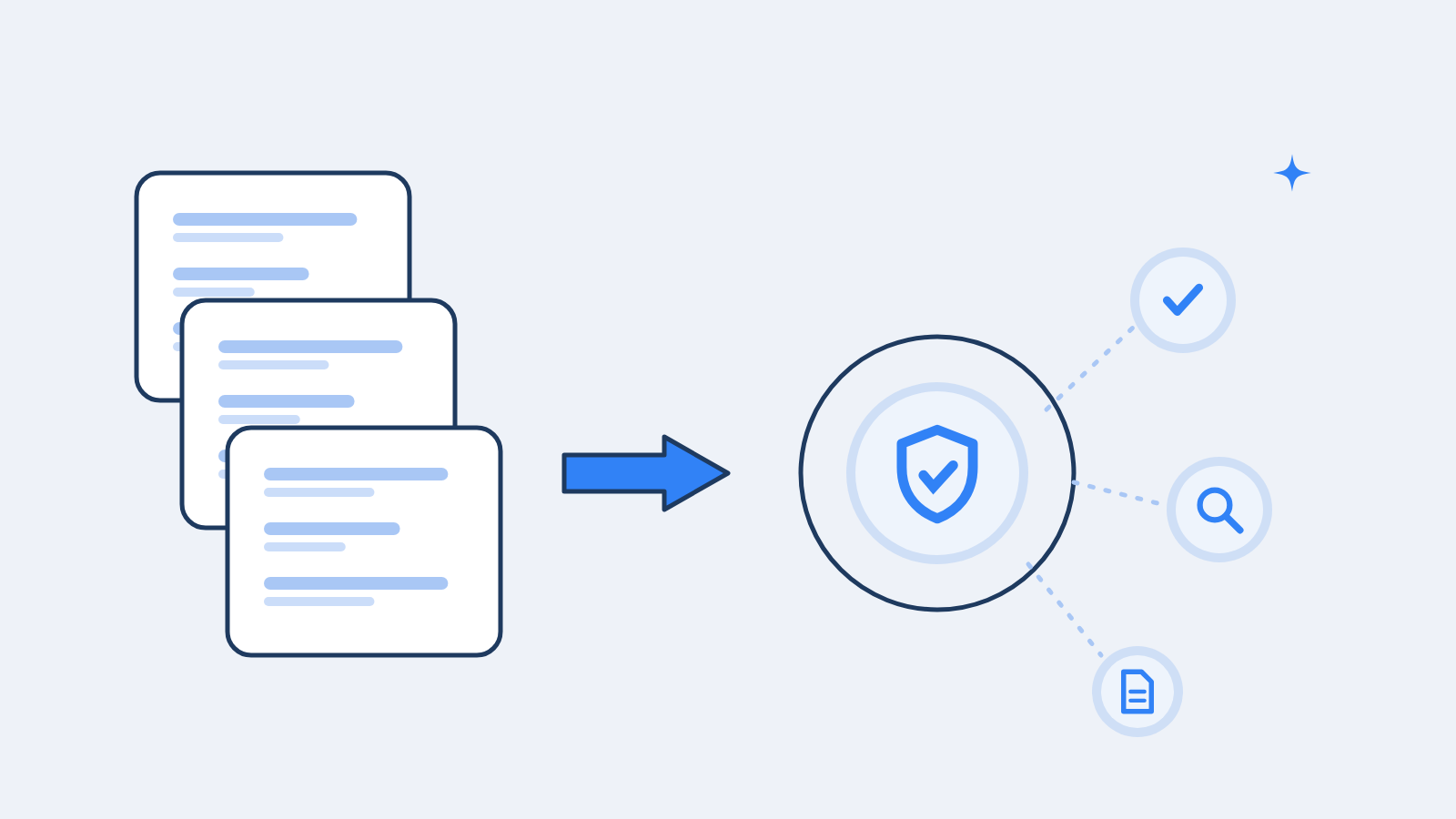
The most important signal in Google's Gemini 4 Argon announcement is verification, not benchmark scores. As the output a model can produce in one go grows to 1M tokens and models are deployed as agents on real work, the bottleneck is shifting from how fast output gets made to how fast anyone can confirm it is right. Google itself wrote that the large-scale code Argon rewrites reaches production only after automated and manual auditing, emulation testing, and review [1].
First, the scope of our evidence. As of October 2026 we compared public sources: Google's official announcement, the Google DeepMind model page, and a Reuters article on the launch's background [1][2][3]. Argon is still in limited release, so we have not used it ourselves, and every case and benchmark figure below is as reported by Google. We work on measuring AI search visibility, so we note the bias of reading this announcement through the lens of measurement and verification.
What Google announced with Gemini 4 Argon
Argon is the frontier model Google released as the top model of its Gemini 4 generation. In the September 30 announcement, Koray Kavukcuoglu of Google DeepMind introduced Argon as delivering frontier performance in complex workflows across real-world software engineering, enterprise knowledge work such as legal and finance, and cybersecurity defense [1]. Three changes stand out.
| Item | What was announced | Source |
|---|---|---|
| Output limit | Expanded from the previous 64K tokens to 1M tokens | Google blog [1] |
| Pricing | $2 per million input tokens, $10 per million output tokens, cached input 95% off the input price | Google blog [1] |
| Rollout | First to trusted cyber defenders through the Fairwind Program, then expanding starting with paid API customers and Google AI Ultra subscribers | Google blog [1], DeepMind [2] |
Table 1. Key changes in the Gemini 4 Argon announcement. All as published by Google [1][2].
According to Reuters, the launch came after months of delays, and Google dropped its plans for Gemini 3.5 Pro, which had been slated for June [3]. The first release was limited to select cybersecurity partners, and no public release timeline was given. Google also took part in the U.S. administration's voluntary process for pre-release model access [3].
How Google verified Argon's output: the criteria
For each result, Google stated the criterion it was verified against. The way the announcement was made is itself a signal. Rather than a score table, Google led with cases where it put Argon to work as an agent on hard problems inside the company [1].
| Area | Result Google reported | Verification criterion stated in the announcement |
|---|---|---|
| Quantum computing | Found, in minutes, a solution that cut the spacetime resources (qubits times gates) of bottlenecked subroutines 40% below the published baseline | Compared against the published baseline |
| Code migration | Migrating C/C++ to Rust, from core libraries of tens of thousands of lines such as re2 and libgav1 up to the 800K+ line Fuchsia Zircon kernel | Automated and manual auditing, emulation testing, and review before rollout |
| Video decoder | A memory-safe decoder that runs 2.7x faster than the existing Rust port | Identical video output to the original |
| Data center memory | Analyzed fleet-wide profiling telemetry and applied memory optimizations autonomously, reclaiming over 300 TiB, with total savings estimated at 500 TiB to 1 PiB | Memory reclaimed after rollout |
Table 2. Argon's internal use cases as announced by Google, with the verification criterion for each [1].
The right-hand column is the point of this post. Each of the four cases states what the result was checked against. The quantum case was compared with a published baseline, and the video decoder was judged by whether it produces the same video as the original. The rewrite of an 800K-line kernel has to pass a separate stage of auditing, testing, and review before it ships [1]. A model producing a result quickly and someone ruling that the result can go into production are different steps, and the announcement shows both.
The DeepMind model page sums up the cybersecurity role in three parts: autonomously finding vulnerabilities, running penetration tests without source code access, and automatically generating code fixes for the issues it finds [2]. All three produce output that touches an attack surface or production code directly, which makes it hard to use output no one has checked. There are benchmarks too. The DeepMind model page lists 68% on CWE-bench v1, 85.8% on real-world vulnerability discovery, and 70.9% on the Wiz penetration testing benchmark [2]. The same page says Argon automatically generates "validated, high-quality code fixes," but it does not define whether "validated" means automated testing or human review. Reuters reported that Argon beats competitors on several benchmarks but trails on some coding metrics [3].
Who can use how much is also an axis of competition
The rollout points the same way. Google said it will release Argon without cyber guardrails to trusted defenders and its own internal teams [1]. The version with full capabilities goes first to vetted users, and wider access expands step by step. Google also wrote that these safeguards were tested for robustness by internal and external red teams using manual and automated attack methods [1].
We read this as "who is able to verify this output" becoming a release criterion alongside model performance. For a model that finds and patches vulnerabilities autonomously, it makes sense to give it first to organizations with the capacity to review the results. Access design has become part of the verification system. Google said the next stage of expansion starts with paid API customers and Google AI Ultra subscribers [1]. That reads as widening access starting with users whose capacity and accountability for reviewing results are clearest. Competition between new models no longer ends with one score table; it now includes who has the verification system to handle the output.
What happens to verification costs when AI output gets longer
When model output gets longer and generation gets cheaper, the volume and cost of verification rise with it. Look at the output limit and the price together and the structure shows. At the announced prices, the output cost of a single 1M-token response is $10 [1]. Repeated long context gets the cache discount and costs only 5% of the input price. It is a pricing structure that makes it easy to generate long output in one go and to run the same context many times.
Reuters noted that with this launch Google shifted the weight of its messaging from showing off capabilities to cost advantages [3]. When generation gets cheaper, you run more of it. An analysis you ran once yesterday you run ten times today, and when output volume grows tenfold, the amount you need to check grows tenfold too. Even if you get a 1M-token report in one go, if you cannot tell which sentences in it are grounded and which are plausible hallucinations, that output does not become an asset; it stays a risk. The more volume there is, the more places an unverified sentence has to hide.
So in this shift, the layer that gains value is the one that verifies what AI produces, more than a smarter generator. That means tracing evidence, measuring reproducibility, and filtering out hallucinations. Google attaching auditing, testing, and review to its large code rewrites reflects the same judgment [1].
What an AI agent reads needs verifying too: indirect prompt injection
Verification is not only needed for what a model produces. What an agent reads needs verifying too. Google said that through automated red teaming and adversarial training, Argon shows the strongest robustness on Gray Swan's Indirect Prompt Injection (IPI) benchmark [1]. Indirect prompt injection is an attack in which instructions hidden in a web page or document an agent reads mid-task change the model's behavior.
When an agent builds results by scanning telemetry, reading codebases, and searching the web, one contaminated input can shake the entire 1M tokens built on top of it. Google emphasizing injection robustness while giving the model first to security defenders signals that it treats the trustworthiness of an agent's inputs as seriously as the quality of its outputs. The longer the output, the more you need to be able to trace "what did it read to reach this conclusion."
Answer engines also pick content they can check
The pressure to verify is already on the side that selects content in AI search. In a controlled experiment that put two candidate pages in front of 6 LLMs and asked 252,000 times, the What Gets Cited study reported that the odds of a page with supporting evidence beating one without ranged from 2.09 to over 10,000 depending on the model (paper's experimental setting) [5]. Confident tone and supporting evidence were secondary factors that decided the outcome after gatekeepers such as topic match and a stated price were passed. We cover the details in Which of two pages will AI cite? The 4 gatekeepers.
As generation costs fall, the volume of content published on the web rises too. In that situation, answer engines are likely to pick content they can check, with a source attached to each claim. Verifiability is becoming a competitive edge both for those who make content and for those who select it.
Is measuring AI search visibility once enough?
Measuring AI search visibility once is easy to get wrong. The verification problem looks even sharper when measurement is your job. Ask AI search the same question again on the same day and the cited sources change quite a bit. In the Don't Measure Once study, the Jaccard similarity of cited sources between results repeated within 24 hours averaged 0.32–0.43 by industry, the same range as the 0.34–0.42 seen when comparing across days (paper's experimental setting) [4]. That means most of the variation comes from the model's randomness rather than real change over time. The researchers concluded that visibility should be treated as a distribution instead of a value at a single point in time.
So declaring "it went up" from a single measurement is easy to get wrong. In the same paper, the standard error was 0.246 with 2 runs and fell below 0.10 at 7 or more runs (paper's experimental setting) [4]. We covered how values differ by measurement path in Should AI visibility be measured through the API or the UI?, and how to run repeated measurement as a weekly and monthly routine in Measuring AI search: GSC, GA4, prompt tracking routines. When you receive an AI visibility report, first check whether each number comes with how many runs it is based on and which path it was measured through. A change without those two is an unverified change. What separates an impressive demo from a result you can trust is, in the end, "who verified that number, and how."
When can you trust what an AI agent produces: a checklist
Verification starts with a few habits more than a grand system. Carrying the verification criteria from the Argon announcement over to everyday work looks like this.
| Verification method | Matching case in the Argon announcement | Applied to everyday work |
|---|---|---|
| Baseline comparison | Quantum solution compared with a published baseline [1] | Put AI-produced figures and conclusions side by side with existing material or earlier results |
| Identical output check | Checking that the decoder produces the same video as the original [1] | Test whether a rewritten document or code produces the same result as the original |
| Separate stages | Rewrites go through auditing, testing, and review before rollout [1] | Split generation and approval across different people and stages |
| Repeated measurement | Not covered | Run the same task several times and record how much the results move |
| Evidence tracing | Not covered | Attach a source to each claim and flag sentences without one |
Table 3. Verification criteria visible in the Argon announcement and how they apply to everyday work. Repeated measurement and evidence tracing do not appear directly in the announcement.
- Don't use the result of a single run as a conclusion. Run it several times with the same prompt and the same data, and first look at how much the results move.
- Separate the person who generates from the person who approves. Google also hands code Argon wrote to a separate review stage.
- Attach a criterion to the word "verified." Verification stated without a criterion, like "validated" on the DeepMind page, tells you nothing about what was checked.
- Distinguish what you could not measure from zero. If you read a cell left empty because a verification step failed as "no result," the conclusion flips. We cover this distinction in 0% vs unmeasured in an AI visibility report: how to tell.
- Put verification time on the schedule first. Generation may be done in minutes, but checking is not. Google wrote that the quantum solution took minutes to find, yet the kernel rewrite ships only after passing auditing, emulation testing, and review [1]. If your schedule lists only generation time and leaves verification time blank, faster generation simply piles up as an inventory of unverified output.
Limitations
This post relies on Google's announcement materials and press coverage. Argon is in limited release, so we have not used it, and figures such as the 40% quantum result, 300 TiB of memory, and the 2.7x decoder are all results Google reported on its own systems [1]. The benchmark figures are likewise values Google published, and at the time of writing we could not find results from outside organizations reproducing them under the same conditions [2].
The reading that "the bottleneck is moving from generation to verification" is a judgment we drew from the announcement. Google did not disclose the cost of verification or the size of its verification workforce, and it did not say how much output volume actually grew. The launch delay and the dropped Gemini 3.5 Pro plans that Reuters reported are separate context from this judgment, so we treated them only as background [3]. The AI search measurement variation figures are results from paper experiments on other engines and markets unrelated to Argon [4].
Frequently asked questions
What is different about Gemini 4 Argon?
According to Google's announcement, the output token limit grew from 64K to 1M, and the launch led with real internal work rather than benchmarks. The headline cases are a 40% reduction in quantum algorithm resources, migrating C/C++ code to Rust, and reclaiming over 300 TiB of data center memory. The first release was also limited, going first to trusted cybersecurity defenders.
Why do you say the bottleneck has moved to verification?
Because when output volume rises and unit costs fall, the amount of output that needs checking rises at the same rate. Google's own announcement says large-scale code rewrites go through automated and manual auditing, emulation testing, and review before they reach production. The speed of checking, not the speed of making, sets the speed of shipping.
How should you verify AI output?
The basics are tracing the evidence for each claim, running the same task several times to measure how much the results move, and checking whether the output matches an existing result. Google's Rust migration case used identical video output to the original as its criterion. The starting point is not treating the result of a single run as a conclusion.
How does this relate to measuring AI search visibility?
It is the same principle. If you ask AI search the same question again on the same day, the cited sources change quite a bit, so judging up or down from a single measurement is easy to get wrong. Look at the distribution from repeated measurements, and read only verified changes as results.
References
- [1]Koray Kavukcuoglu, "Gemini 4 Argon: our next era of frontier intelligence", Google blog (2026-09-30)
- [2]Google DeepMind, "Gemini 4 Argon with cybersecurity defense capabilities" model page
- [3]Reuters article republished as "Google announces Gemini 4 flagship AI model after months of delays", Khaleej Times (2026-10-01)
- [4]Schulte, Bleeker & Kaufmann, "Don't Measure Once: Measuring Visibility in AI Search (GEO)", arXiv:2604.07585 (2026)
- [5]Vishwakarma, Kumar & Jamidar, "What Gets Cited: Competitive GEO in AI Answer Engines", SIGIR 2026
Summary
- Google announced Gemini 4 Argon on September 30, 2026, leading with real internal work rather than benchmarks.
- The output limit grew from 64K tokens to 1M tokens, and pricing is $2 per million input tokens, $10 per million output tokens, with 95% off cached input.
- The cases, including a 40% cut in quantum resources, a Rust migration of a kernel with 800K+ lines, and over 300 TiB of memory reclaimed, are all as reported by Google.
- Google itself says large rewrites go through auditing, emulation testing, and review before shipping. As output grows, verification sets the pace of deployment.
- AI search measurement works the same way. Cited sources for the same question change from run to run, so judge by the distribution from repeated measurements, not a single number.
Check this topic against your own brand
TRAIL Search measures how ChatGPT and Perplexity answer your customers' questions and finds and fixes where the brand is missing, turning this post into a diagnosis. Start with 10 questions, no card required.
More posts

Why Reddit search grew again: AI cites community signals
AI answers favor real community reviews, comparisons, and complaints over official feature lists. How brands can use community signals, by industry.
GPTBot vs OAI-SearchBot: Is AI Crawling a Search Signal?
AI bot crawling may signal a new search channel, but crawl counts aren't visibility. GPTBot vs. OAI-SearchBot, scale vs. Googlebot, and how to track it.
Naver AI Briefing Didn't End SEO: Korean GEO vs Google GEO
SEO basics still matter in the Naver AI Briefing era. What Naver Mate is, Naver's content quality bar, and how to get cited as a source in AI Briefing.
Keep reading on this topic
- Naver AI Tab's Next KPIs: Sourcing and the Path to ActionAfter Naver AI Tab, GEO must measure the path from AI answers to bookings, purchases, and inquiries, not just citation rate. Sourcing vs. actionability.
- Why Searches Got Longer After AI BriefingAfter AI Briefing, people search with longer questions. How long tail changes, how to plan content and question clusters, and what AI Mode data means for Korea.
- Naver AI Briefing Citation Count: Ranking Factor or KPI?Naver's AI Briefing citation count shows how often your content is cited as a source. Is it a ranking factor, what earns citations, and how to report it?
This post is part of the Trend category, which collects all 12 posts on the topic. See all posts in Trend