A marketing strategy for the post-third-party-cookie era
What Is First-Party Data?
The era of blasting ads at everyone and waiting for traffic is fading. As privacy regulations tighten and tracking becomes harder, the center of gravity in marketing is shifting — from "acquiring new customers" to "understanding the ones you already have." First-party data is at the heart of that shift.
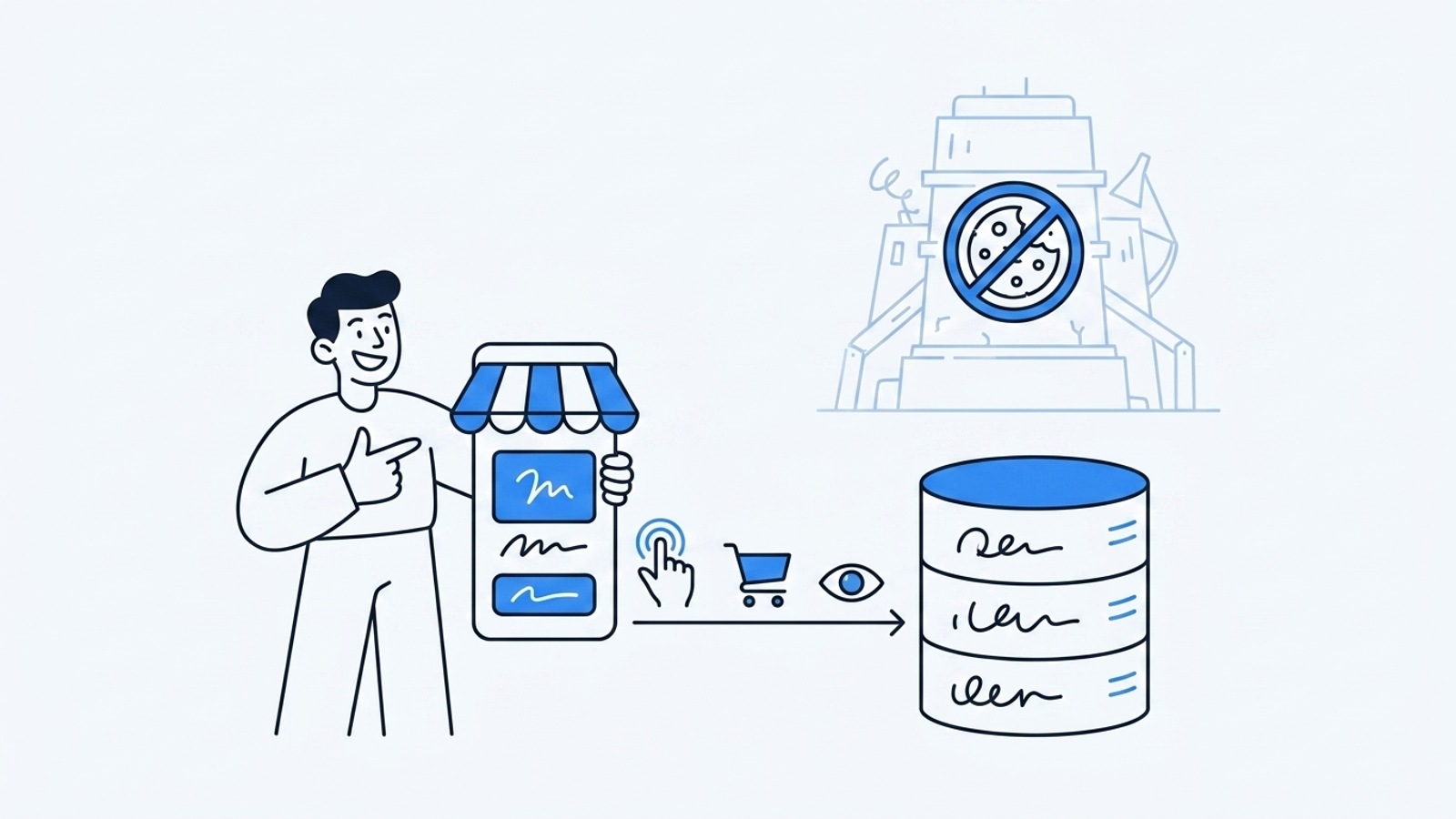
Let's start by unpacking the difference between the two types of data.
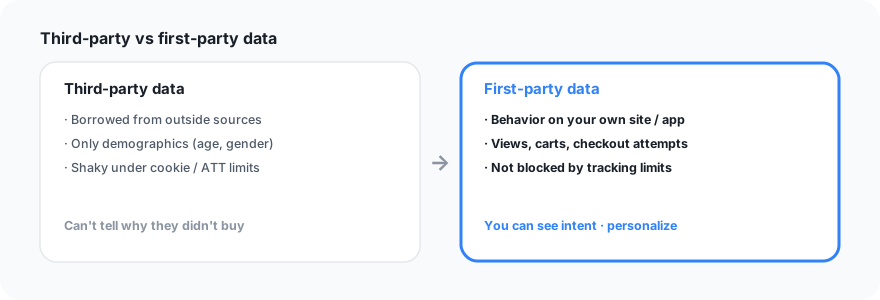
Third-Party Data Has Hit a Wall
Third-party data isn't something you collect yourself — it's information rented from external media platforms or data vendors. With Safari and Firefox blocking third-party cookie tracking, Chrome changing its own policies, and Apple's ATT (App Tracking Transparency) framework piling on, the reliability of this data is crumbling.
The more fundamental problem is that it only tells you demographics — gender, age, interests — but can never answer the question: "Why didn't this customer buy?" The global average cart abandonment rate for e-commerce sits at around 70%, and third-party data can't tell you why.
First-Party Data Reveals Customer Intent
First-party data is the trail of actions customers leave directly on your site or app. What they viewed, clicked, added to their cart, and where they stopped mid-checkout — all of it is a direct window into their intent.
For example, if a customer spent a long time on your checkout page and then left, there's a good chance they were put off by shipping costs or a lack of payment options. And because these are events on your own domain or within your own app, they're immune to browser tracking restrictions. Used well, first-party data can lift revenue through personalization by an average of 10–15%.
What Should Marketers Do?
It's time to reorient your strategy — from maximizing new traffic to deepening relationships with existing customers. Acquiring a new customer costs at least 5 times more than retaining an existing one, and in some cases up to 25 times more.
- React to exit signals immediately — Respond to behaviors like cart abandonment right before checkout or repeated product views with timely, relevant messages.
- Go channel-agnostic — Deliver personalized messages across KakaoTalk brand messages, web push, app push, in-app messages, and email.
- Execution beats volume — What matters isn't how much data you have, but whether you can read the customer intent hidden inside it in real time and turn that insight into action.
The Bottom Line
Marketing today is won not by how many people you bring in, but by how well you understand the ones who show up. With ad costs rising and targeting accuracy falling, the answer lies in building deeper relationships with customers using the one asset that's truly yours: first-party data.
Start reading your customers' behavior and responding in a way that's true to your brand — try Trail Studio.
More posts

10 Psychology Principles That Make Copy Persuade
A single sentence can decide the sale. Ten buying-psychology principles for copywriting, each with an example and the words to use.
Same AI, Different Results — Why?
Give people the same model and one ships a usable draft in ten minutes while another spends an hour fixing it. The gap isn't skill — it's context design. Here's how teams raise the floor on AI.

Efficiency Isn't a Grand Project
If you've ever stalled trying to build the perfect automation system first — here's an approach to content-ops efficiency that starts by re-examining the small, repeated tasks.