If you've ever stalled trying to build the perfect automation system first — here's an approach to content-ops efficiency that starts by re-examining the small, repeated tasks.
Efficiency Isn't a Grand Project
When someone says "let's make how we work more efficient," a grand automation system is the first thing that comes to mind — and that's exactly where people stall. It feels like you'd have to install new tools, redesign every process, and convince everyone. So it slips to "later, when things calm down."
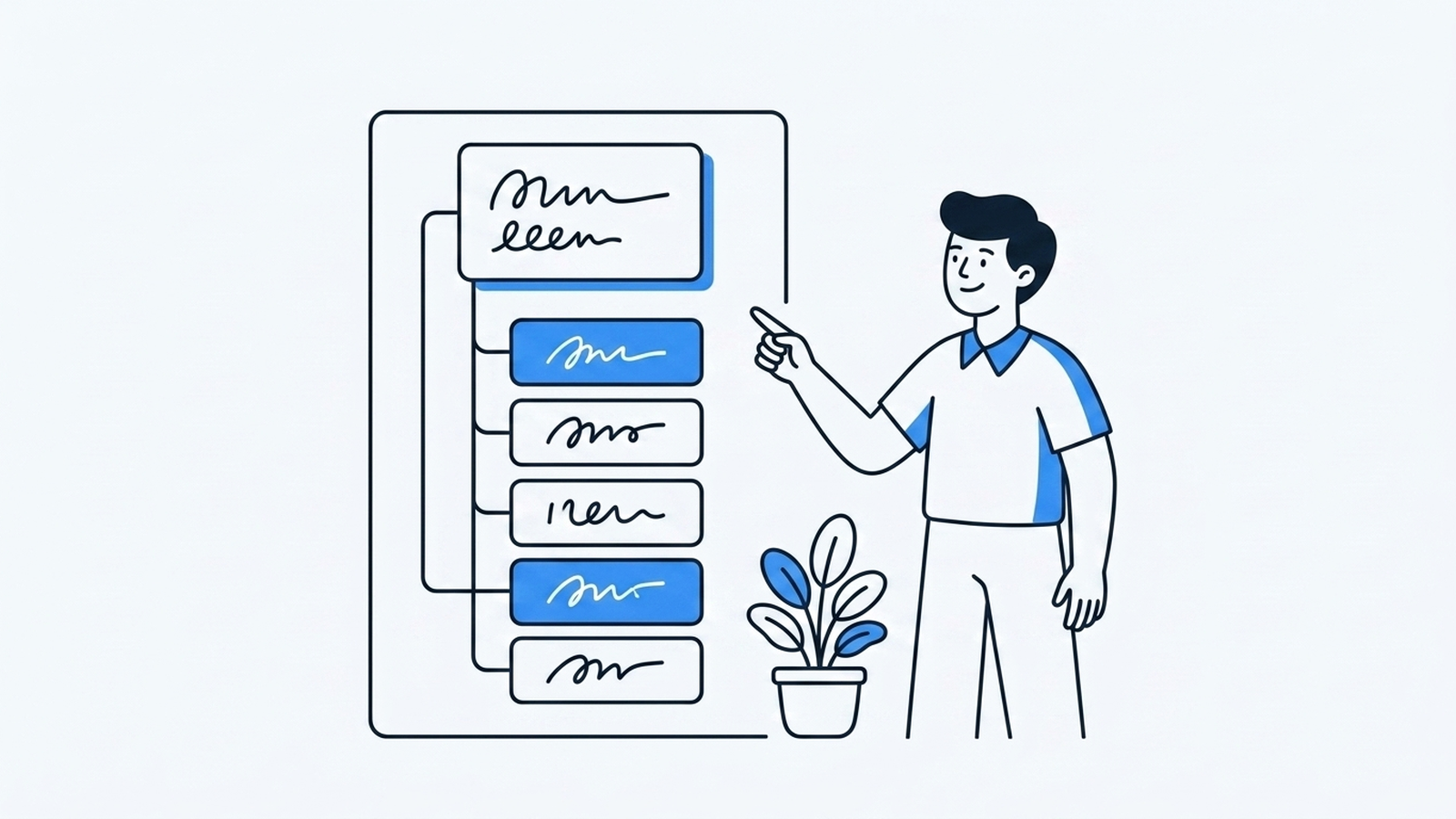
There's a way to come at it backwards. Instead of a grand goal, you start by re-examining the small tasks you repeat every day. That lens fits content operations especially well. Shipping a blog post, a card-news set, a detail page, and a video every week is really just small, repeated tasks stacked on top of each other.
1. Break the work into "actions"
The first step is seeing the current state clearly. But lumping it as "make a blog post" hides where the waste is. You only see it once you break it into individual actions — who does what, where, and why.
- Before — "Make this week's content"
- After — "Find a topic → research → draft → polish to brand voice → pick images → reshape length and copy per channel → publish"
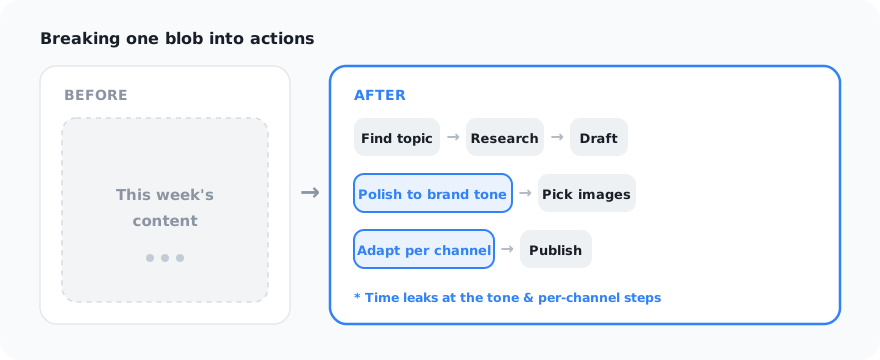
Once it's broken down, the parts that eat your time become obvious. Usually the drain isn't the making — it's matching the tone and reshaping it for each channel.
2. Ask each step, "Why are we doing this?"
For each action, ask a question. "Why is this step necessary?" "Does a person really have to do this every time?" Small tasks are easy to wave off, but a small action repeated across many channels turns into big waste fast.
Take re-summoning "our brand sounds like this, and we don't use those phrases" in your head every time you write. Once, it's trivial. Repeat it across five channels every week and it's a meaningful chunk of a month — and since a person leans on memory each time, the tone drifts a little, too.
3. Prioritize by reach, not by "what annoys me"
Once the fixable parts surface, you have to decide what to tackle first. The easy trap is "whatever annoys me most." A better set of criteria: ① does it affect many people, ② does it affect other work downstream, ③ how much time does it take.
In content ops, the spot where all three meet is brand-voice consistency. Voice doesn't touch one blog post — it touches every output, and once it slips you have to redo it channel by channel. Start with what repeats most often and spreads the widest.
4. Not the perfect system — the smallest repeat first
The fix isn't automating everything at once. Start from the smallest possible piece. What matters is a small experiment over perfect preparation, plus the confidence that you can always roll back to the old way. When it's reversible, you can try it lightly.
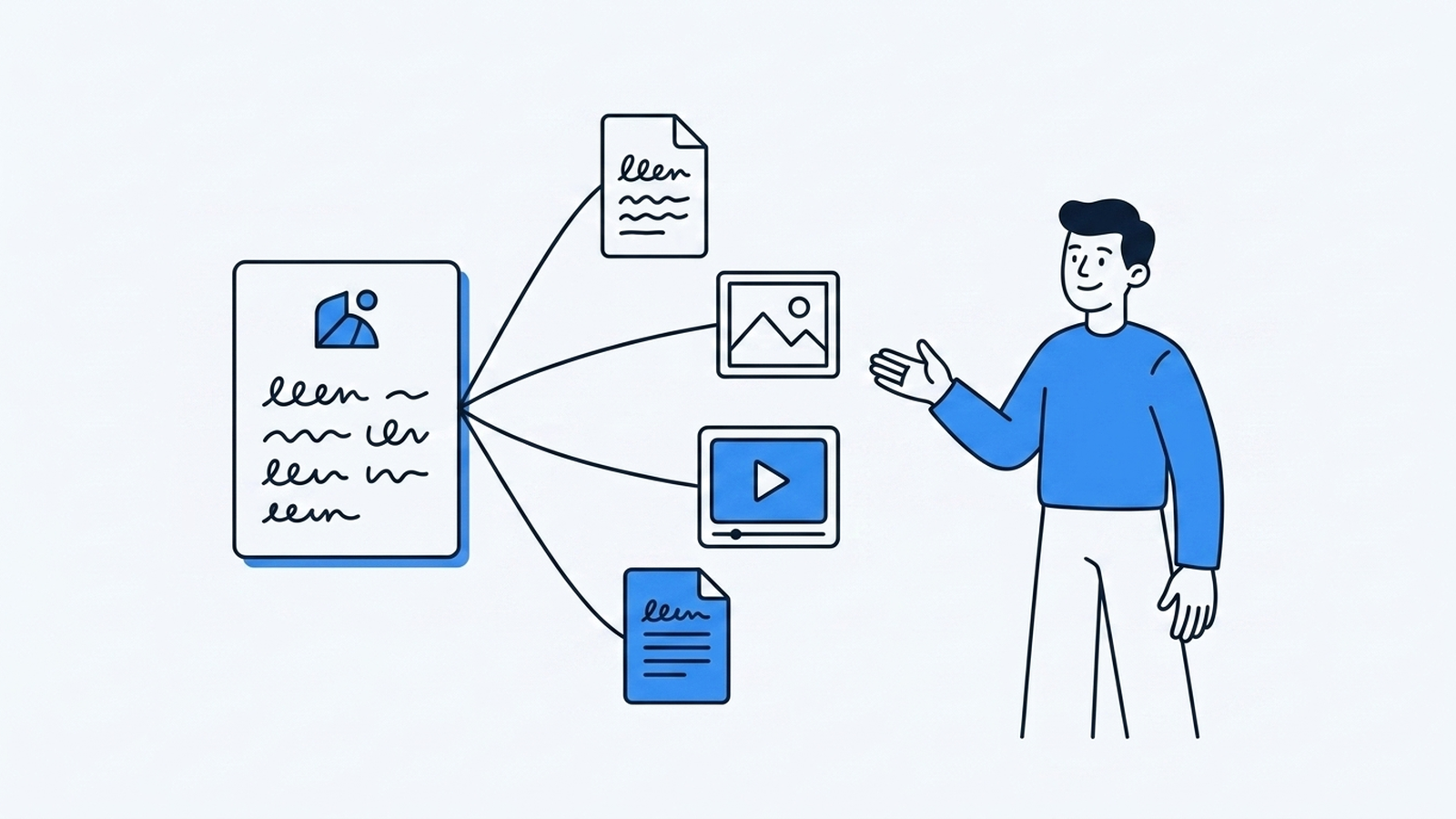
For content, you start small like this: define your brand voice and strategy once, and from then on let the blog, card news, detail pages, and videos inherit that voice automatically. One repeated explanation disappears, and the tone holds even as the channel changes. If you don't like it, you only edit the voice definition — so the cost of rolling back is small, too.
This is how Trail Studio works. Instead of standing up a grand new system, it threads the thing you repeat most — "make it on-brand" — through one place, automatically.
To sum up
Efficiency isn't a grand goal; it's a small habit. Break work into actions, ask "why?" at each step, start with what reaches widest, and try the smallest reversible piece. Content ops is the same. Re-examine the small things you repeat every week, and efficiency stops being a huge project you keep deferring — it becomes one small step you can take today.
Threading your repeated content work, on-brand and in one place — start with Trail Studio.
More posts
10 Psychology Principles That Make Copy Persuade
A single sentence can decide the sale. Ten buying-psychology principles for copywriting, each with an example and the words to use.
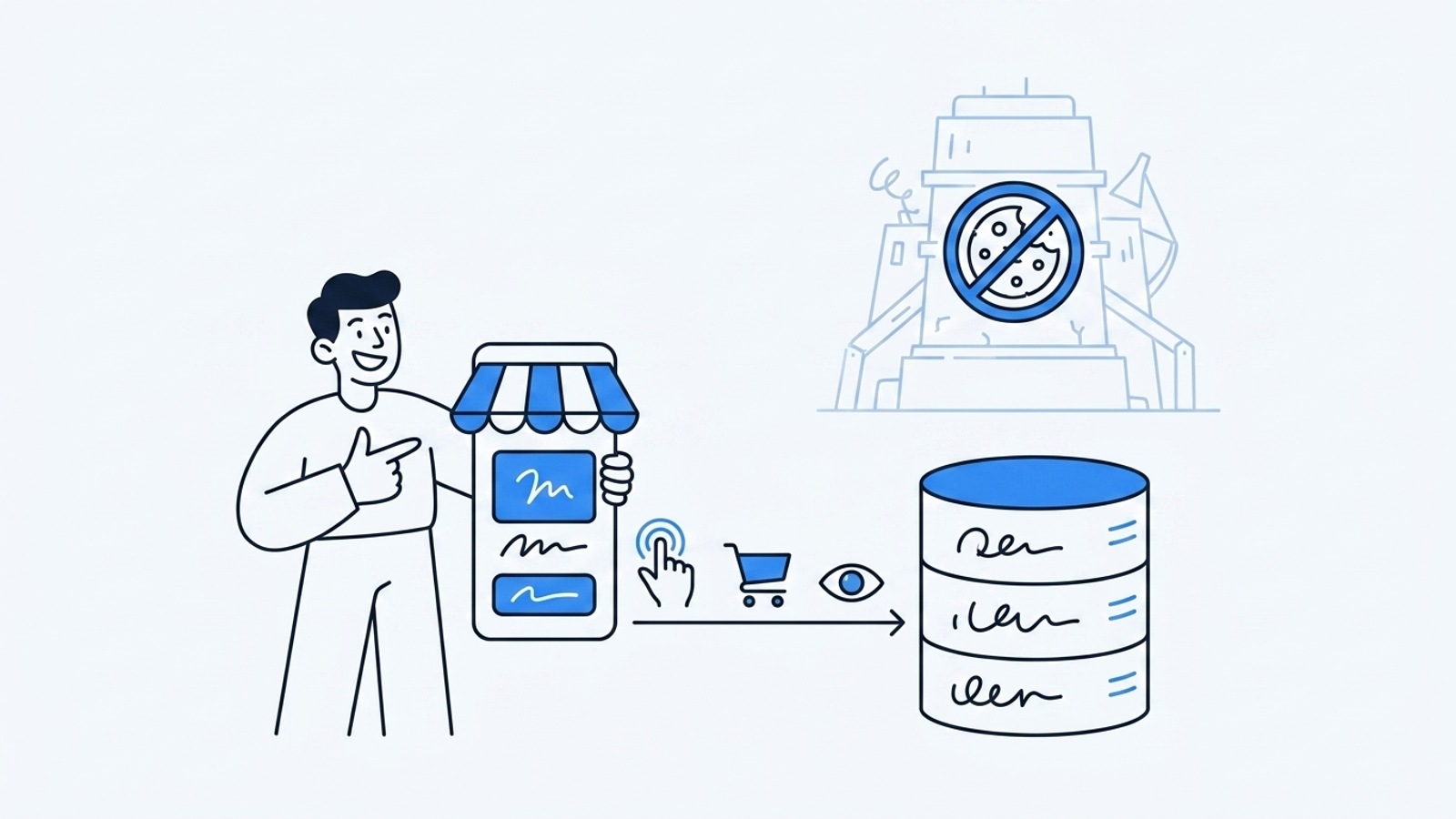
What Is First-Party Data?
As third-party cookies disappear, first-party data reveals customer intent directly. Here's a clear breakdown of what it is and the strategy every marketer needs to adopt.
Same AI, Different Results — Why?
Give people the same model and one ships a usable draft in ten minutes while another spends an hour fixing it. The gap isn't skill — it's context design. Here's how teams raise the floor on AI.