Give people the same model and one ships a usable draft in ten minutes while another spends an hour fixing it. The gap isn't skill — it's context design. Here's how teams raise the floor on AI.
Same AI, Different Results — Why?
These days everyone on a team uses the same AI tools. Yet the output varies wildly from person to person. One person pulls a usable first draft in ten minutes; another spends an hour fixing it and still mutters, "this isn't our voice." Same model, same tool — so why the gap?
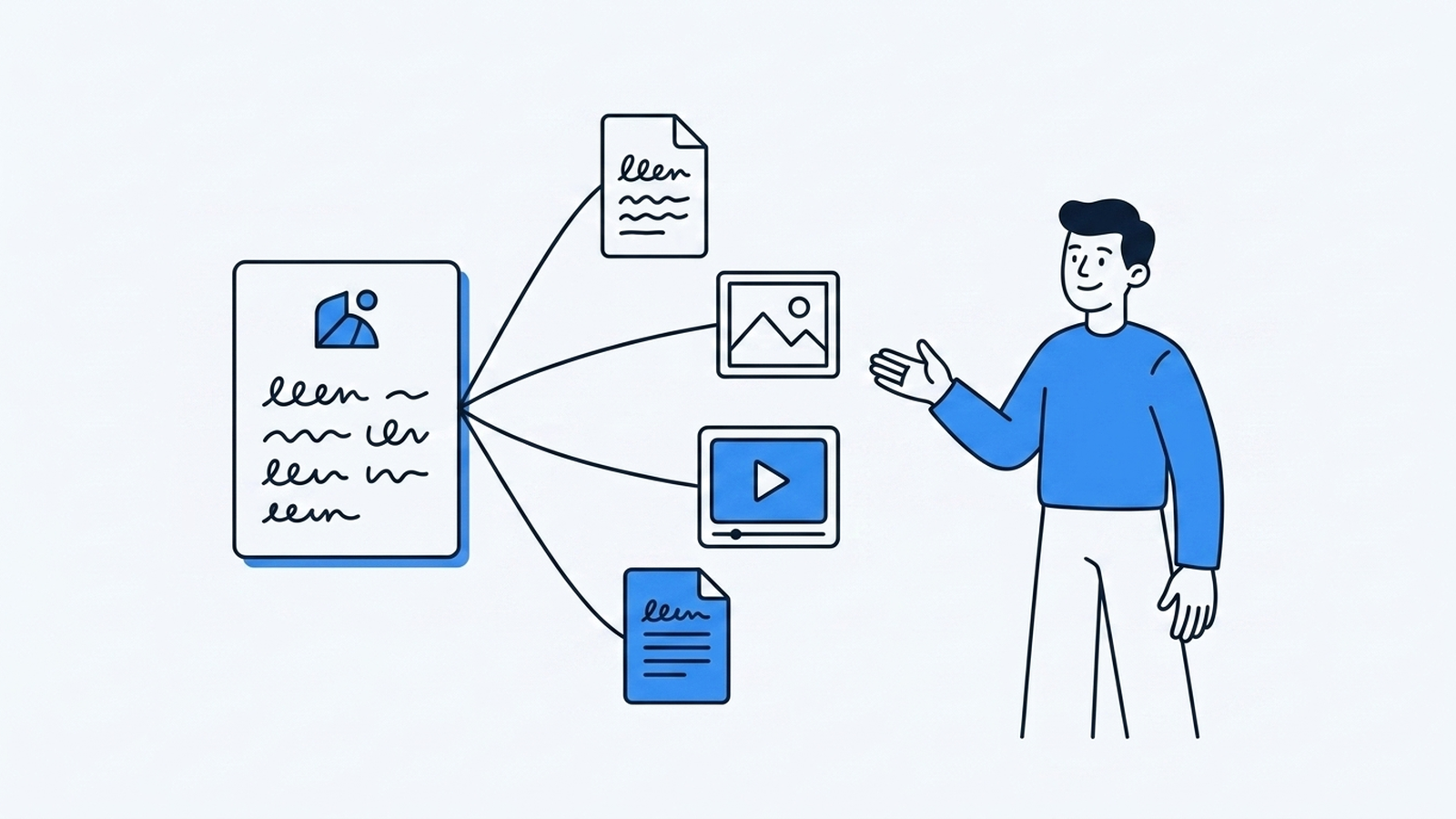
We tend to assume "some people are just good at AI." But look closer and the difference isn't writing talent or instinct. It comes down to how well you set up the context before the work even starts.
1. The gap between A and B is context design
Picture two people handed the same article to write.
- A — Before writing, they feed the AI their brand voice, the phrases to avoid, and a few past pieces that landed well. So the very first draft already sounds like them, and a light polish finishes it.
- B — They jump straight in with "write something on this topic." The AI returns something generic, and from there they spend an hour repeating "we don't write like this."
The difference isn't skill — it's whether the context was designed up front. AI only sounds like you to the degree you give it the context to.
2. AI adoption should be a system, not a knack
The trouble is that this know-how usually lives in one good person's head. When they step away or leave, quality goes with them. New joiners start the trial-and-error from scratch.
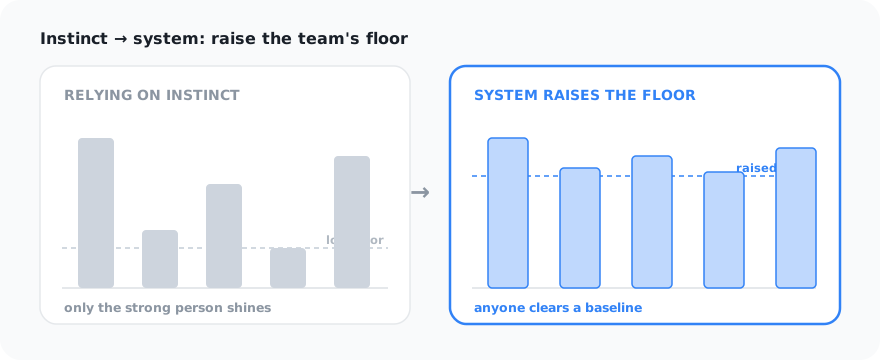
So what an organization should watch isn't the ceiling of its best person — it's the floor of the whole team. Raising the floor so that anyone clears a baseline matters far more than making one strong person stronger. And to do that, you have to turn that person's context design into a default everyone simply inherits.
3. Documents go stale; executable knowledge stays alive
The usual fix is a "brand guidelines doc." But a guide written in a wiki or Notion starts aging the moment it's written, and honestly, few people open it every time.
A better form is knowledge that reads as a guide to a human and as precise instructions to an AI — and that gets applied to every output automatically. Fix the tone in one place, and every result after that changes instantly. Not a document waiting to be read, but context that actually runs.
4. A content team's harness = automatic brand-context injection
Apply this to content operations and the answer gets clean. Define your brand voice, strategy, and the phrases to avoid once, and from then on let every blog post, card-news set, detail page, and video inherit that context automatically.
Now the gap between your strongest writer and a brand-new hire shrinks — because whoever makes it starts with the same brand context already in place. What used to lean on individual instinct becomes a system the team shares, and that's exactly the moment the floor rises.
This is what Trail Studio does. Define your brand once, and that context follows along no matter what content you make. The know-how of your best people becomes everyone's default, without re-explaining it each time.
To sum up
AI adoption is no longer a matter of individual instinct. It's moving into the territory of systems a team designs and ships. The key is defining context well once, so anyone starts from the same line.
Content ops is no different. Build your brand context into a system, and instead of hunting for someone who's "good at AI," you lift the whole team's floor. From there, content quality is held up by the system, not by a person.
Gathering your team's brand context in one place and threading it through every piece of content — start with Trail Studio.
More posts
10 Psychology Principles That Make Copy Persuade
A single sentence can decide the sale. Ten buying-psychology principles for copywriting, each with an example and the words to use.
What Is First-Party Data?
As third-party cookies disappear, first-party data reveals customer intent directly. Here's a clear breakdown of what it is and the strategy every marketer needs to adopt.
Efficiency Isn't a Grand Project
If you've ever stalled trying to build the perfect automation system first — here's an approach to content-ops efficiency that starts by re-examining the small, repeated tasks.